Climate change education: The key to achieving a clean and healthy environment
UNICEF trained 60 teachers from 33 communities across Armenia in project-based learning on climate change.

- Հայերեն
- English
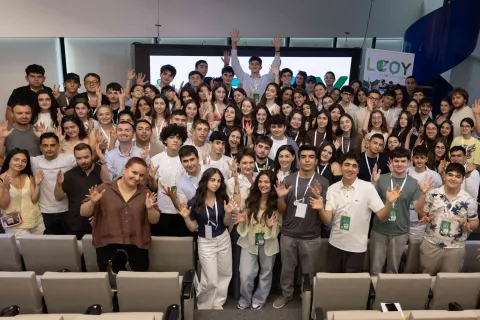
Starting from 2023, Armenia will introduce project-based learning as a learning approach for middle and high schools, aiming to develop 21st century skills among 7-12th graders. In August 2022, to support schools for a smooth transition and application of new methods, supported by the Austrian Development Agency, UNICEF and the National Center for Education Development and Innovation organized a five-day training of trainers for 60 teachers from 33 communities on the new approach. Over the next three months, these teachers will support 400 other teachers in the application of project-based learning in climate change in communities of Gegharkunik, Lori, Shirak, Syunik, Tavush, and Vayots Dzor.

“One of our first steps was to develop two training manuals about project-based learning on climate change together with the Ministry of Education, Science, Culture and Sports. These two manuals offer new pedagogical approaches to teachers of various subjects to plan, implement and monitor project-based learning on climate change,” says Mkrtich Dallakyan, Project Officer. “The Climate Change: Education Planning manual contains lesson plans, role-play prompts, debate ideas, and other activities for various subjects. Through the Climate Change: How to Implement Project Based Learning Activities manual, teachers can plan and implement project-based work, allowing students to get involved and actively contribute to the fight against climate change.”

Kristine Mardanyan, a social studies teacher at the secondary school of Gandzasar village in Tavush province, says they learned how to do step-by-step planning and evaluation of project-based learning. “I knew very little about this approach. As an expert in humanities, I had a lot to learn and discover. First and foremost, I learned about the fundamentals of climate change and why it is such a big issue globally,” she explained. For Kristine, each participant needed to be able to raise and discuss climate change issues specific to their region in the training. “We were able to form teams and develop small projects together to tackle specific issues. My own community, for example, has a serious waste management issue. We do not have the resources to sort it properly, nor do we have the culture [of properly sorting garbage]. I cannot wait to see what my students will come up with when they start working on their own projects,” Mardanyan said.

The principal of Vanadzor’s #3 elementary school, geographer Heghine Kostanyan, considers the training innovative and promising. She believes that climate change should be dealt with head-on. “We can directly reduce our negative impact on nature. For this to happen, it is necessary for everyone—especially young people, our future generation—to have a comprehensive understanding of the issue. Thanks to this training course, I learned how to implement project-based work: from choosing a topic, forming teams, and conducting research, to developing an action plan. I am sure that through project-based learning, our students will have the opportunity to apply their knowledge in practice and, as a result, acquire many new skills,” Kostanyan explained.
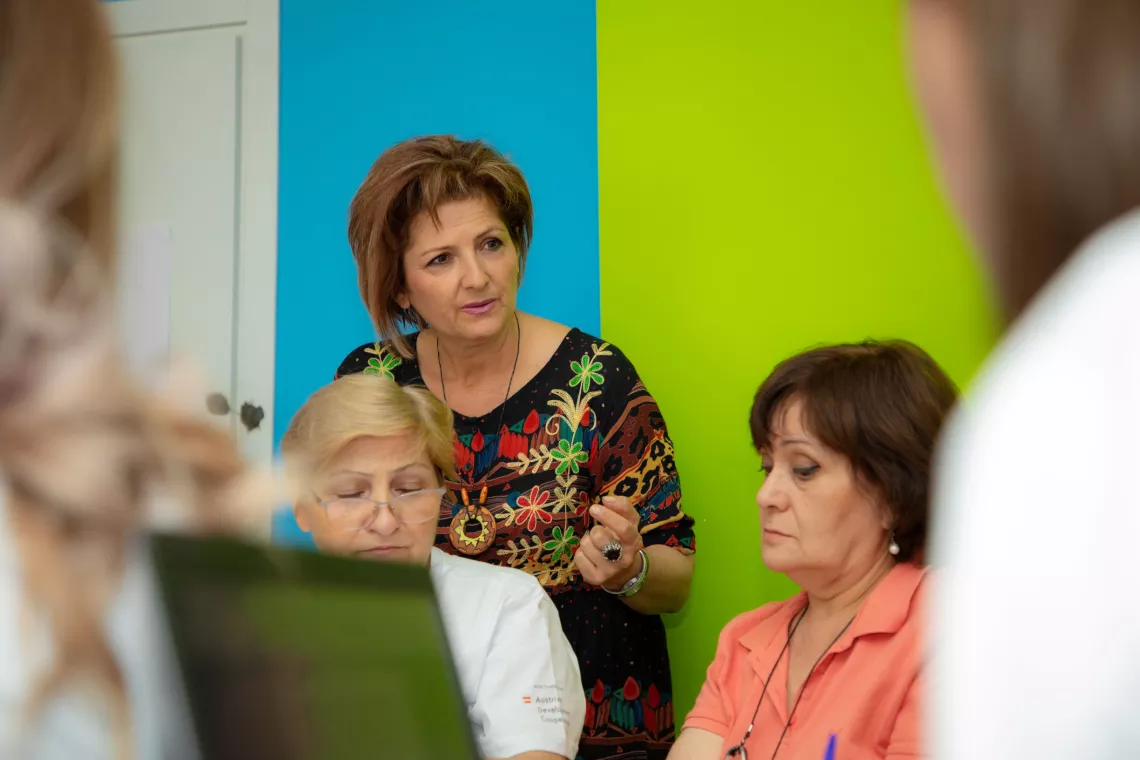
As the course trainer Sirine Kosyan put it, “Climate change is already knocking on everyone's doors. Through this coursework we are trying to support both teachers and young people to carry out project-based learning on climate change to bring about much needed change at the community level. We hope that with the help of this training and the manuals, teachers of various subjects at school will be able to include climate-change related activities in their course plan, also through extracurricular or club activities.”

Gagik Melikyan, Head of Education Content Development department at the National Center for Education Development and Innovation, says that environmental education is starting to become a more significant part of general education not only in Armenia but throughout the world. “Rather than just giving theoretical knowledge, we should emphasize the ability to apply that knowledge practically. Teamwork, research, and planning are some of the skills that we hope students to acquire through this process,” Melikyan said.

On July 28, 2022, the UN General Assembly declared access to a clean and healthy environment a fundamental human right. “We sincerely hope that students, in cooperation with their teachers, will create wonderful projects and become ambassadors of climate change, fighting for climate action in their communities. Education is key in the promotion of climate action,” Dallakyan says.

In Spring 2023, UNICEF and partners expect to get project proposals from young people and award over 50 projects with small grants for implementation to contribute to a clean and healthy environment in their communities.