Climate change and biodiversity as essential components of education

- Հայերեն
- English
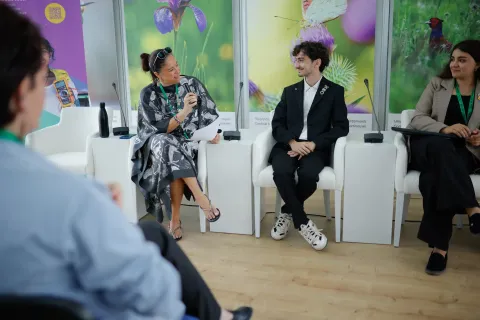
YEREVAN, 23 October 2026 - UNICEF and the United Nations Resident Coordinator’s Office, in cooperation with the Ministry of Education, Science, Culture and Sport of the Republic of Armenia, held a discussion titled “Biodiversity and Sustainable Development in Education” at the UN Pavilion in the COP17 Blue Zone.
The speakers included Anna Babajanyan, Deputy Minister of Education, Science, Culture and Sport; Alvard Poghosyan, UNICEF Armenia Education Specialist; and Arevik Anapiosyan, Partnerships and Development Finance Advisor at the United Nations Resident Coordinator's Office in Armenia.
Bringing together young people from Armenia, Argentina and Mexico, policymakers, education experts and representatives of international organizations, the event explored how climate and biodiversity education can move beyond individual projects and awareness campaigns to become an integral part of school curricula, teacher development and everyday learning.
According to Anna Babajanyan, Deputy Minister of Education, Science, Culture and Sport, fostering environmental awareness among students is one of the key priorities of the education system. “The most important thing we can do now to encourage environmentally conscious attitudes is to give students greater freedom to pursue their own interests and engage in projects of this kind. In other words, we need to provide them with opportunities and support to express their interests and preferences while contributing to the protection of the environment and ecosystems.”
The discussion highlighted the methodological resources developed as a result of cooperation between the Ministry of Education, Science, Culture and Sport and UNICEF with the support of the Austrian Development Agency, which help teachers integrate climate education into school curricula.
Between 2020 and 2025, the initiative supported more than 400 teachers in 33 communities to strengthen their capacities in project-based climate education, while 2,015 students implemented more than 275 local environmental projects.
“Armenia’s experience demonstrates that climate education can be practical and directly relevant to children’s lives when teachers receive the necessary support. Our next priority must be to build on these achievements and make such learning accessible to every child,” says Alvard Poghosyan, UNICEF Armenia Education Specialist.
“We cannot expect to achieve our climate and biodiversity conservation goals without equipping people with the necessary knowledge, critical thinking skills and agency to take action,” said Arevik Anapiosyan, Partnerships Advisor at the United Nations Resident Coordinator's Office in Armenia.
The event also featured a screening of an episode of the Sevanik animated series. Produced in cooperation with OnOff Studio, with the support of the Ministry of Education, Science, Culture and Sport and UNICEF Armenia, the series demonstrates how engaging storytelling and appealing content can make environmental issues accessible and understandable to young children.
Media contacts
About UNICEF
UNICEF promotes the rights and wellbeing of every child, in everything we do. Together with our partners, we work in 190 countries and territories to translate that commitment into practical action, focusing special effort on reaching the most vulnerable and excluded children, to the benefit of all children, everywhere.
For more information about UNICEF and its work for children, visit www.unicef.org.