Bridging the learning gap for children in Armenia
UNICEF and Teach for Armenia partner to model remedial classes for students of various ages.
- Հայերեն
- English
On 25-26 March 2025 UNICEF and Teach for Armenia Educational Foundation (TFA) brought together 21 teachers and education specialists in a two-day Teachers' conference focused on modeling remedial learning. Over the past five years, many school-age children in Armenia have faced significants disruptions in learning due to the COVID-19 pandemic and escalations of hostilties.
Following humanitarian response efforts, UNICEF and Teach for Armenia joined hands in 2024 to model a comprehensive approach to bridging this learning gap for children through remedial classes that will feed into the state programme for after-school classes. The teachers' conference aimed to take stock of the mid-semester progress and lessons learned, promoting collaboration and defining the next steps until the end of the programme in June 2025. The participating teachers shared their mid-term results and participated in practical workshops on teachers' mental well-being, prevention of emotional burnout, and development of mutual support mechanisms.

Overall, partners have noted a significant increase in knowledge of Mathematics and Armenian language among students as a result of the mid-term diagnostic of the programme. On the other hand, functional literacy issues had been recorded for 118 students out of 854 from 2-5 grades. The diagnostic tests showed that 93 of them have already significantly improved their reading, writing and math skills.
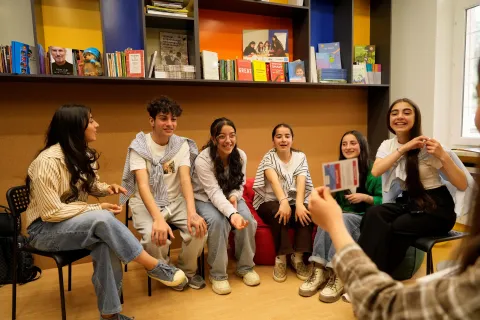
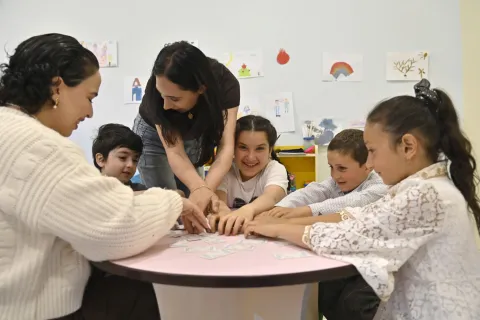
Teachers agreed that as a result of the remedial classes, students who had lacked confidence and had difficulty in engaging in active learning, are now able to actively participate in classes. Teachers shared experiences in how they worked to create a favorable environment in the classroom for both local and refugee students to respect the diversity of dialects.

“When education is interrupted by crises or displacement, students not only miss out on new learning opportunities but also lose the knowledge and skills they had previously gained. Over time this learning loss accumulated, making them fall behind their peers. Catch-up education is a key intervention to address learning loss, build student confidence, engagement and positive outlooks towards their education,”
“Over the course of this programme, I have myself observed how remedial classes have provided refugee students with the enabling environment to gain confidence and excel. Parent-teacher cooperation is also an important part of this process.”
Alexander Hakobyan, Managing Director of Systems Innovation at Teach for Armenia Educational Foundation, noted.
“Global developments and the TFA experience show that the personal qualities of a teacher can also have a turning point not only on students, but also on the school environment and on parental engagement. Today, expectations from teachers have increased. It is important to equip them with the necessary tools and model conducive attitudes. In this context, the results that we see so far from this joint programme are an important indicator that the applied approach and the proper use of psycho-emotional tools can have a significant positive impact on academic outcomes as well”.
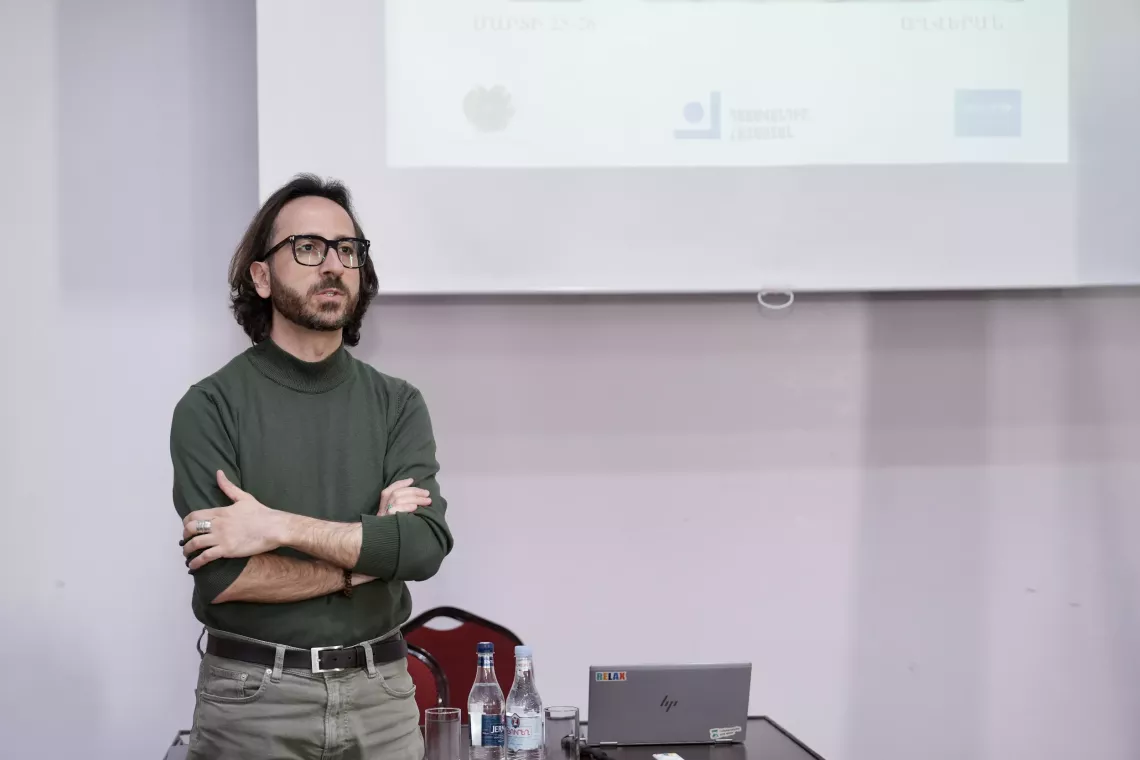

“Students thrive when they feel protected and are learning in an environment with a socio-emotional approach that values them. They are more actively involved in the classes, and their level of progress has increased,” shared Qristine Hayrapetyan, mentor-teacher and a graduate-ambassador of TFA's Teacher Leadership Programme and continued.
“In the 21st century, teachers are trying to open new locks with the old keys. As a result, children have lower level of motivation or interest to attend school and learn. The social-emotional learning approach has helped teachers gain agency with students and build trust. As a result, the remedial classes have become the warmest part of the day for students. They trust their teacher with sharing any kind of issues they might be experiencing and feel heard. They have also started to take part in various extra-curricular activities.”
“When you have over 35 students in class, it's hard even for the most experienced and knowledable teacher to meaningfuly engage each one of them in the learning process. Less active students hence tend to remain in the shadow. During the remedial classes, these students gain agency and work together on joint tasks. This motivates them to learn and gives them the flexibility and time to adjust,” said Anahit Chomaryan, participating teacher from Abovyan community.
The programme will continue until the end of the academic year, and, upon completion, a comprehensive analysis and assessment will be shared with the Ministry of Education, Science, Culture and Sports to advocate for the integration of the lessons learned into the state programme on after-school classes.
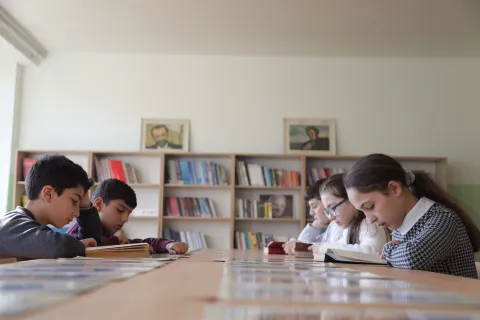
Since September 2024, UNICEF and Teach for Armenia have trained 329 teachers from 20 schools across 12 communities of Armenia on Universal Design for Learning and learners' diversity and inclusive education to support refugee and host community children in addressing their learning gap. Over 850 students from grades one to five from these schools have benefited from remedial learning with an individualized approach. The selection of the schools is based on the refugee student body enrolled.
In addition to remedial classes, UNICEF equipped 110 classrooms in these schools with school furniture and 'school in a box and recreation kits', benefitting 2,500 students.