Wheels of hope: New bicycles propel Village Health Workers to deliver lifesaving services
New wheels, renewed vigour. Bicycles are boosting services offered by Village Health Workers, helping them reach remote places where health interventions are needed the most.

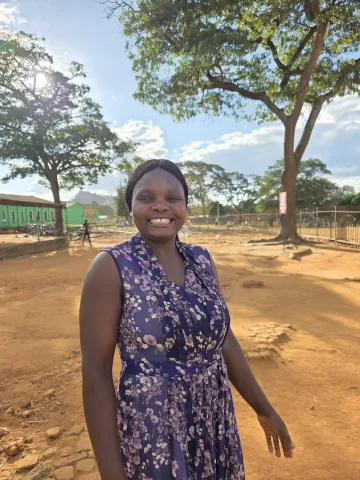
Mutoko, Zimbabwe—With her grandson strapped to her back, Evelyn Deera, a Villager Health Worker (VHW) in the rural Mutoko district, emerged from a bush path to reach the Katsukunya clinic. She parked her bicycle along a row of other blue two-wheelers, unstrapped the baby, and stretched her legs before joining other VHWs and the clinic’s nurse-in-charge for a routine monthly feedback meeting.
Before long, she was ready to ride back, her green satchel with a Health Resilience Fund (HRF) logo filled to the brim with medical supplies. Back home 20 kilometres from the clinic, dozens of people back home are counting on this trip for lifesaving health interventions that she provides.
“This is more than just a bicycle, it is a means to save lives, it carries the hopes of people in my village,” she said. “They are waiting for me,” she added, as she and other VHWs prepared to pedal off from the clinic in different directions back to their villages.
Bicycles distributed to VHWs such as Deera through the HRF, which is funded by the European Union, the Governments of Ireland and the United Kingdom and Gavi, the Vaccine Alliance, are ensuring speedy delivery of primary healthcare to people in rural communities that rely on VHWs for basic, but essential services.
Before receiving the bicycle this year, Deera endured hours of walking to and from the health facility to restock on commodities. In the village, she trekked up to 15 kilometres to reach homesteads and schools, forcing her to reduce the number of people she could visit in a single day.
“I would feel bad about not being able to fully render my services, but it would just be impossible to reach every needy person on foot. The distances we cover here are too long,” said the 52-year-old.
VHWs: a backbone of rural health
Many people in rural areas such as Mutoko live far away from health facilities, and often lack transport money. At times, transport services are unavailable or erratic, making VHWs such as Deera their primary source of health services.
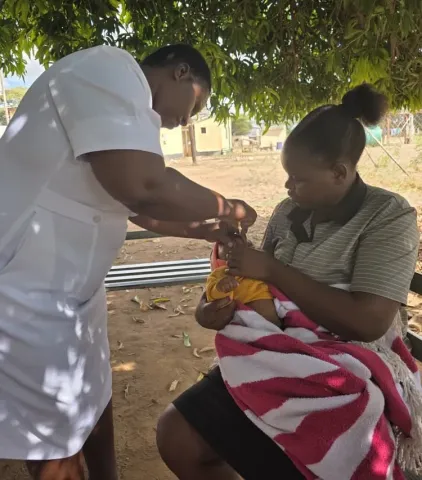
For Deera, this means waking up at dawn almost daily to do household chores such as cooking and cleaning before conducting door-to-door visits. The people who depend on her are diverse: from monitoring pregnant women to children needing Vitamin A and growth measurements, school teachers and village women requiring her services for nutrition programs, adults desperate for diagnosis and treatment of common conditions and non-communicable diseases, and people living with HIV who need counselling and therapy.
She also distributes mosquito nets to prevent malaria and provides health education on water, sanitation and hygiene issues to prevent outbreaks of diseases such as typhoid and cholera.
Aptly referred to as the backbone of Zimbabwe’s public health system in peri-urban and rural areas, VHWs are at the “the frontline of health services” and reach hundreds of thousands of people who would otherwise lack access to primary healthcare in hard-to-reach areas, according to the Ministry of Health and Child Care. In partnership with UNICEF, the ministry provides initial training that includes classroom set-up lessons and field work to apply their knowledge to real-life situations. They also undergo periodic refresher courses to capacitate them to deal with current and emerging threats such as malnutrition and non-communicable diseases among children.

VHWs also play a vital role in health facilities by tracking and reporting the disease burdens in their areas and referring people for higher care.
“I am always on high alert, I am an emergency service worker because people can call at any time. But nowadays I no longer panic when someone calls with a serious condition that needs immediate attention. The bicycle is a lifesaver,” she said.
Two-wheelers to the rescue
Tapesana Jojo, the nurse-in-charge at Katsukunya clinic, said 21 VHWs serve four wards and have a total population of just under 8,000.
“The furthest is 20 kms away from here. Other Village Health Workers are from the farms and there is no mode of transport so they used to walk. The bicycles are a great motivation, they are making their lives easier,” she said.

As part of the HRF intervention, the Ministry of Health and Child Care and UNICEF this year distributed 2,000 bicycles across the country this year as part of efforts to boost the capacity of VHWs to t eir work. Under the intervention, 5,000 spare parts were also distributed to VHWs whose rides needed repairs. VHWS and the people they serve also benefited from 15,000 hats, backpacks, and 10,000 items of medicines and equipment, while 9,488 VHWs received refresher training as part of an up-skilling process.
The HRF intervention aims to ensure that quality healthcare reaches everyone irrespective of geographical location or financial status.
Led by the Ministry of Health and Child Care, with technical support from UNICEF, the World Health Organisation, and the United Nations Population Fund, the intervention’s drive for equitable access to and quality of health care places special importance on women, newborns, children, adolescents, youth, and health emergencies.
Strengthening the health system to withstand shocks is another key pillar of the intervention.
Thanks to biking, Deera has, in recent weeks, been able to fully attend to Mutoko’s most pressing shock currently – the risk of malnutrition posed by a devastating drought induced by the El Nino weather phenomenon.
Like in other drought-hit parts of the country, the Government of Zimbabwe and UNICEF are scaling up nutrition interventions through Care Groups, a strategy involving trained VHWs such as Deera leading groups of six- to ten community volunteers. They are leading the establishment of community nutrition gardens and feeding programs for children 6 months of age with a special four-star diet porridge called Maworesa. It is made from locally available ingredients such as maize meal or millet, peanut butter, milk, fruits, eggs, beans and vegetable leaves.
“The school that I serve is 6 kilome res away. I have to travel longer distances to reach some communities where we are implementing the feeding program, so I was forced to reduce my visits to twice a week at most,” she said.
“I am now doing it daily. It’s not a problem anymore. I just ride,” she said, ensuring that her grandson, Delvin, was firmly strapped on her back and that the medical supplies backpack was correctly secured on her bicycle luggage carrier.