WASH upgrades breathe new life into health facilities in Harare, Chitungwiza and Mutare
: WASH project improves essential services in healthcare facilities in Harare, Chitungwiza and Mutare

Harare, Zimbabwe - Ruth Mutambara cringed at the painful memories of giving birth at Kambuzuma Polyclinic in the capital, Harare, in 2021. “It was a nightmare,” she recalled.
Running water was unavailable most of the time. The toilets were malfunctioning. Dogs feasted on clinical waste from bins in the clinic yard, including placentas. All she prayed for was to get back home with her baby, still safe.
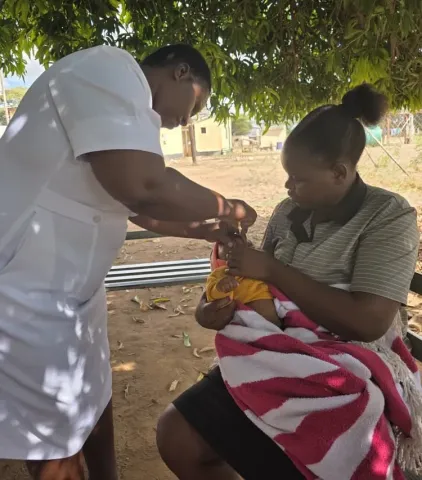
“It was a depressing time for me,” she said, holding her baby on her lap. “Toilets were always messed up, we didn’t have safe water to drink, and we couldn’t take a proper bath. I feared that my baby and I would contract diseases and wondered if it wouldn’t have been better to give birth at home,” she said.
Back at the clinic for a routine baby checkup in mid-September this year, Mutambara at the changes she saw. “Those girls are a fortunate lot; they get to give birth in hygienic conditions,” she quipped, motioning to pregnant women sitting on concrete slabs under a shed waiting to register to give birth at the clinic.
A substantial improvement of WASH facilities has given Kambuzuma Polyclinic a refreshing appearance, turning it into a modern facility where expecting mothers now look forward to a safe and joyous childbearing experience.

The clinic now boasts of water reticulation system with a solar-powered borehole and a 10,000-litre storage tank atop a steel stand plying the water to several taps. Eight hand washing basins equipped with hygiene-friendly elbow taps, six showers in the maternity ward, four repaired toilets, and a waste storage cage. complete the upgrades. Additionally, a dedicated water point committee composed of community members and HCF staff has been trained to ensure the proper operation and maintenance of improved WASH systems in the clinic.
“Residents can now visit our facilities with confidence because of this intervention,” said John Manyara, the Harare City Council Chief Environmental Health Officer, during a recent progress tour of facilities. “The situation was dire. A clinic is supposed to be a place for people to get well and not to contract infections, so when the maternity ward is not functioning well, they may decide to shun the place and give birth at home,” he said.
The improvements are a result of a project undertaken by the government, local municipalities, UNICEF, Action Contre la Faim (ACF), and International Medical Corps (IMC) with the support of USAID/Bureau for Humanitarian Assistance (BHA) to improve the quality of health care by upgrading essential services in health care facilities in several urban and rural areas in the country. Kambuzuma clinic is one of 75 healthcare facilities that have undergone significant upgrades in Zimbabwe to ensure improved and resilient WASH services with the support of USAID.
In the capital, Harare, 31 care healthcare facilities benefit from the project, as are 5 in populous Chitungwiza town and a similar number in Mutare district. The project is also supporting a total of 34 healthcare facilities in the Bulawayo and Beitbridge district. The U.S. Centers for Disease Control and Prevention (CDC) endorsed the assessment of 100 healthcare facilities in August 2021, which informed the implementation of WASH infrastructure upgrades in 2022. Thus, CDC and USAID/BHA provided complementary support to conduct WASH assessment and service improvements in Zimbabwe.
“There is a great improvement,” said Barbara Gohori, the sister-in-charge.
“Before, we had many challenges with water, hand washing points, waste management and bathing facilities. We would use just one staff toilet and buckets, and it was not infection-control friendly,” she said.

At Kambuzuma Polyclinic, the relief was palpable. A month before her delivery date, 8-month pregnant Winnet Mavura said she dreaded the day she would be admitted into the clinic’s maternity ward after hearing stories of painful experiences by women that had used the facility before the facelift.
However, the 21-year-old Mavura was charmed by the situation when she visited the clinic for a routine checkup in mid-September, days after authorities had unveiled the upgraded WASH facilities.
“Women in the township who gave birth here told me horror stories; they said I should prepare for the worst. But I am at ease now after what I saw,” she said.
Gohori, the sister-in-charge, said they had prioritised the maternity ward to protect women and newborn children.
She appealed for more support to improve facilities in other parts of the clinic. Community members of the water point committee cleaned the hospital yard and vowed to ensure the sustainability of the facilities.
Apart from the community, staff members are breathing a sigh of relief. From sharing barely functioning toilets and bathing facilities with patients, they now have their separate amenities. A previously rundown kitchen infested with rodents has been fitted with new cupboards and a sink.
For community members such as Mutambara, the woman who gave birth under unsanitary conditions at the clinic in 2021, the upgrades have ignited a ray of hope.
“I can’t wait to get pregnant again. I want to give birth here,” she said, giggling.