A Mother’s Journey to Save Her Child and Inspire a Community in Hopley
When Salome Kadete’s daughter was diagnosed with malnutrition, her world was filled with worry. With support from health workers and UNICEF, her child recovered — and Salome found a new purpose as a community nutrition champion .

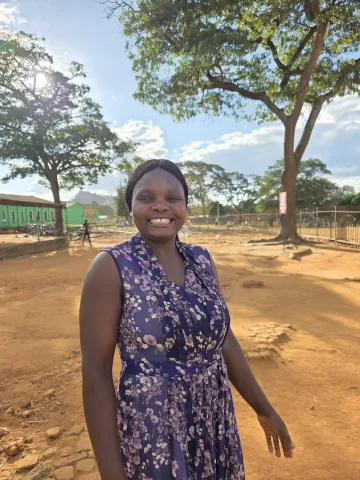
Salome Kadete, 30, playfully tickles her daughter’s cheeks as the little girl squirms on her lap, giggling at her mother’s touch. Just five months ago, moments like these were clouded by worry.
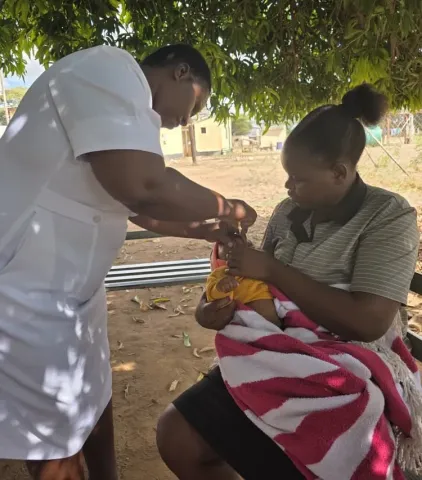
During a routine check-up in Hopley, a densely populated suburb on the southern outskirts of Harare, Salome’s daughter was weighed and her arm measured with a Mid-Upper Arm Circumference (MUAC) tape — a simple but vital tool used to detect malnutrition in children and adults. The results showed that her child was undernourished, and Salome was immediately advised to start her on Plumpy’Nut, a ready-to-use therapeutic food that helps children recover from severe acute malnutrition.
Salome, who is not formally employed, recalls the moment with a sigh.
“I was going with my baby for weighing, but for three months she was not gaining weight,” she says. “The nurses advised me that, given her heightage and weight, she needed to be given Plumpy’Nut. They gave me a month’s supply and explained the four-star diet to me — how it works and why it’s important.”
The “four-star diet” in Zimbabwe is a key public health strategy to combat malnutrition. It encourages caregivers to include foods from four main groups in a child’s daily meals: animal-source foods (like meat, eggs, or milk), staples (such as sadza, rice, or millet), legumes (like beans and groundnuts), and fruits and vegetables. Promoted by the Ministry of Health and Child Care, the City of Harare, and UNICEF Zimbabwe, this approach uses locally available foods to ensure children between 6 and 23 months receive balanced nutrition.
“Although I am not employed and my husband sells water in Mbare, which does not bring much, we have tried to use what is locally available to meet the needs of the diet,” Salome explains. “After two months, my child was taken off Plumpy’Nut because she was now healthy.”

Thanks to the joint efforts of the Ministry of Health and Child Care, the City of Harare, and UNICEF Zimbabwe — with funding support from development partners such as The Church of Jesus Christ of Latter-day Saints— children like Salome’s now have access to lifesaving Ready-to-Use Therapeutic Food (RUTF). This high-energy, peanut-based paste contains milk powder, sugar, vegetable oil, and essential vitamins and minerals. It is designed to be eaten directly from a packet, without the need for water or refrigeration, making it ideal for communities with limited infrastructure.
Hopley, where Salome lives, is home to around 200,000 residents. Established around 2005 as an informal settlement, it faces numerous challenges — from poor sanitation and the use of pit latrines that contaminate groundwater, to limited access to clean water and healthcare. The area is also a known cholera hotspot, with many families surviving on small-scale trading and low-income jobs.
Amid these challenges, health workers like Denford Nhamo, a Nnutritionist with the City of Harare Health Department, are making a difference.
“My name is Denford Nhamo, and I work in the Southern District,” he explains. “We’ve seen a great improvement among children we manage for malnutrition in the community. Tariro Clinic, for example, is one of our busiest facilities, with a high caseload of both moderate and severe acute malnutrition.”
He continues, “Just recently, our clinic team went for an outreach in the community and identified 20 children suffering from malnutrition. All of them were admitted and given Plumpy’Nut. This shows the burden we face, but also how outreach helps us reach those who might otherwise be missed.”

Denford says Salome’s case is one of many success stories. “When her child was screened, the nurses identified moderate acute malnutrition. We counselled her on the four-star diet, taught her how to prepare nutritious meals, and encouraged her to attend monthly growth monitoring sessions. After about two and a half months, her daughter had fully recovered.”
Salome’s transformation did not stop there. Motivated by her experience, she joined the local care groups — and today, she leads one.
“When my child was saved, I committed to joining the care groups,” she says proudly. “Because of the knowledge I gained, I became a lead mother in one of the groups.”
Care groups in peri-urban areas like Hopley play a crucial role in promoting health and nutrition. Comprising community members such as lead mothers, elderly women, men, and adolescents, these groups use creative methods — from drama and poetry to music and storytelling — to share information on child nutrition, WASH, and health. They also monitor children’s growth, link caregivers to clinics, and refer cases that need medical attention.

Salome’s transformation did not stop there. Motivated by her experience, she joined the local care groups — and today, she leads one.
“When my child was saved, I committed to joining the care groups,” she says proudly. “Because of the knowledge I gained, I became a lead mother in one of the groups.”
Care groups in peri-urban areas like Hopley play a crucial role in promoting health and nutrition. Comprising community members such as lead mothers, elderly women, men, and adolescents, these groups use creative methods — from drama and poetry to music and storytelling — to share information on child nutrition, WASH, and health. They also monitor children’s growth, link caregivers to clinics, and refer cases that need medical attention.
For Denford, empowering mothers like Salome is key to breaking the cycle of malnutrition. “The care group model builds ownership within the community,” he says. “When mothers become champions, the message spreads faster, and the results are sustainable.”
As Salome cuddles her daughter — now healthy and smiling — she reflects on how far they have come. “I’m happy my daughter is well again,” she says. “Now, I can help other mothers in my community so that no child goes hungry.”