A Visual Journey through a Dream School
Capturing the collaborative efforts to establish Dream Schools across Zimbabwe

In a recent survey, conducted by UNICEF children expressed that education is their most important right, further emphasizing their deep desire to see their school transformed into what they fondly termed "A Dream School.”
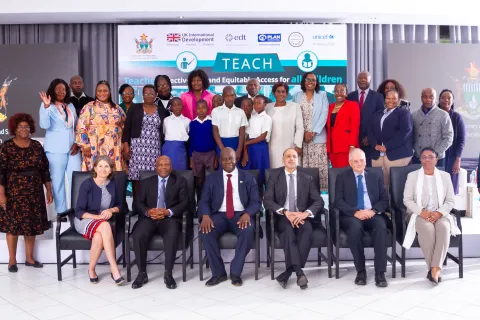
The African Union has called 2024 the Year of Education to transform education in Africa and build resilient education systems for increased access to inclusive, lifelong, quality, and relevant learning throughout the continent. Under the leadership of the Ministry of Primary and Secondary Education, UNICEF and its partners in the education sector, including the United Kingdom and the Global Partnership for Education, are rolling out programmes to promote access to quality education for all children and to develop all aspects that constitute a good school delivering all the services children need in school, turning their school into a Dream School
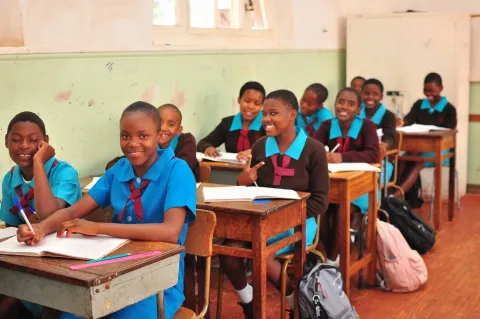
UNICEF envisions a Dream School as one that provides access to quality education in a safe learning environment, enabling every child to thrive and reach their fullest potential.

A Dream School has Early Childhood Development.
Early learning has multiple benefits for the child as well as the community. Quality early education sets a strong foundation for learning outcomes. Children who attend early education activities are more likely to stay in school and attain minimum reading and mathematics competencies in primary education and beyond. However, in Zimbabwe, pre-primary schooling remains a challenge, with only six out of ten children aged 3 to 5 enrolled in pre-primary education.
UNICEF advocates for governments and partners to invest in services that give young children, especially the most deprived, the best start in life. This includes increasing budget allocations for Early Childhood Development programming and expanding access to effective and essential early childhood development services in homes, schools, communities, and health clinics. This also involves integrating Early Childhood Development interventions into existing services and routine touchpoints.

A Dream School promotes Good Handwashing Practices.
Water, Sanitation, and Hygiene (WASH) are essential components of a healthy learning environment in schools. Access to clean water and proper sanitation facilities ensures that students can maintain good hygiene practices, reducing the spread of diseases, contributing to high attendance and promoting overall health.
Rolled out during the COVID-19 pandemic, the group handwashing stations are an innovative concept aimed at improving handwashing practices, hygiene, and sanitation in schools. This cost-effective concept helps ensure regular handwashing in schools to improve hygiene, health, and education levels of learners in under-resourced communities.

A Dream School has access to Digital Learning.
UNICEF is collaborating closely with various ministries in Zimbabwe to champion the implementation of digital learning in all schools across the Country. Through Government-led initiatives like the Learning Passport, learners can access continuous, high-quality, and flexible learning.
The Learning Passport is an innovative solution that allows students, teachers, parents, and caregivers to access their school curriculum, materials, multiple resources, online activities, and develop life skills.

A dream School promotes Good Nutrition and a Balanced Diet.
Students who receive adequate nutrition tend to demonstrate enhanced cognitive function, improved attention spans, and increased readiness to learn. UNICEF is providing technical and financial support to the Ministry of Primary and Secondary Education to implement a school feeding programme in 123 schools across five food-insecure districts, targeting 42,000 children. This support is building on the Government’s home-grown school feeding approach, empowering local farmers and building schools' capacity to provide nutrition services to schools. In addition to this, UNICEF is supporting other aspects of nutrition in schools across all provinces with services such as nutrition education, iron folate supplementation, promotion of physical activity, and promotion of healthier food environments.

A Dream School has access to clean and functional latrines.
Clean and functional latrines play a vital role in promoting learner welfare and hygiene in schools. They are also a key factor in creating a safe and healthy learning environment for all students.
UNICEF supported the construction of latrines utilizing the design that ensures inclusivity for people with disabilities and menstrual hygiene management, among other features.

A dream school is Climate resilient and Green.
In the face of climate change, it is imperative for schools to have climate-resilient facilities to ensure continued access to essential services like water. These facilities are vital for providing a conducive learning environment and enabling schools to adapt to changing climate conditions.
Climate-resilient schools can continue to provide quality education, even in the most challenging circumstances, ensuring that children have access to the education they deserve. UNICEF is advocating for investment in climate-resilient infrastructure so schools can not only mitigate the impacts of climate change but also contribute to building a sustainable future for generations to come.

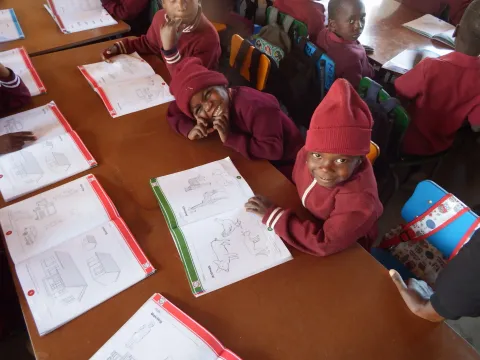
A Dream School has Learning Materials.
Learning materials are critical for enhancing the learning experience and ensuring that students have the support they need to succeed. Textbooks play a crucial role in this regard. They provide students with the necessary resources to study independently, reinforce what they have learned in the classroom, and access additional reference materials. Textbooks serve as a guide for both teachers and students, ensuring that the curriculum is covered comprehensively and that students have the necessary resources to succeed academically.
Additionally, learning materials can be used to cater to different learning styles and needs, making the educational experience more inclusive and effective for all students.

A dream school has Good Infrastructure.
Through the School Improvement Grant (SIG), disbursement modality to improve infrastructure, with a particular focus on the completion of classrooms and water, sanitation, and hygiene (WASH) facilities already under construction and the rehabilitation of those that need repairs. Support was given to disadvantaged rural schools in Zimbabwe through the Global Partnership for Education (GPE).

Play is essential in a Dream School
Play cannot be overemphasized. Children learn best through play. Play creates powerful learning opportunities across all areas of development – intellectual, social, emotional, and physical. Every Dream School promotes and incorporates play.
UNICEF promotes play through it’s positive-parenting, mental-health and Early Childhood Development programmes.