Bulawayo iconic school takes lead in self-sustenance initiatives
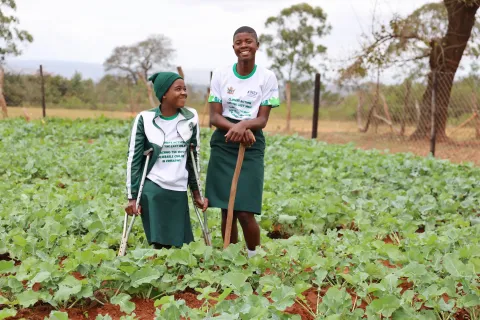
“The Green Cycle Project is a way for us girls to empower ourselves instead of waiting for help from others," Chirume said.

For 18-year-old Anita Chirume, finishing her final year at Bulawayo’s iconic Eveline High School is about more than just studying.
It is about an impactful venture called the Green Cycle Project, which is changing her community.
“The Green Cycle Project is a way for us girls to empower ourselves instead of waiting for help from others," Chirume said.
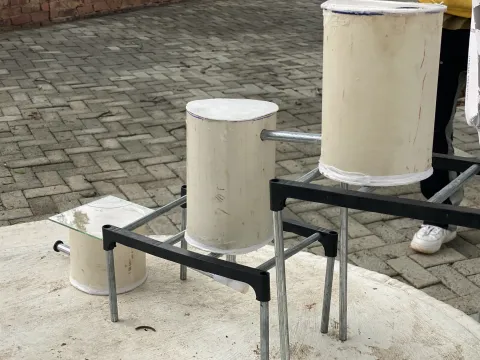
Chirume and her classmates collect old food and plant waste from the busy city markets and turn it into liquid and solid fertiliser in a thriving commercial production that is winning recognition even beyond Zimbabwe’s borders.
By selling the fertiliser, the girls aim to help their parents pay for school fees and fund their own projects. The learners are finding their own way to stay in school and helping the 116 old Eveline High School to become self-sustainable.
This student-led project is a perfect example of what the government wants for the whole country through the proposed new Zimbabwe Schools Financing Policy.
UNICEF is helping the government craft this policy, with funding from the Global Partnership for Education (GPE).
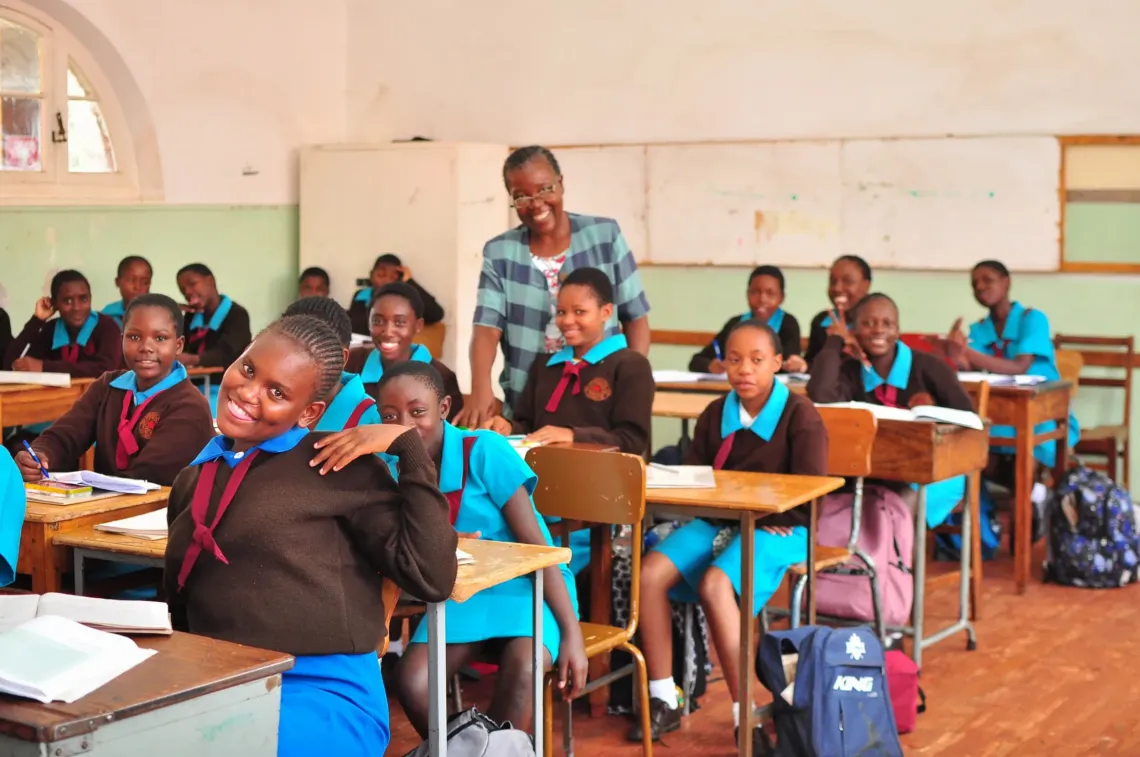
It is about an impactful venture called the Green Cycle Project, which is changing her community.
"The Green Cycle Project is a way for us girls to empower ourselves instead of waiting for help from others," Chirume said.
Chirume and her classmates collect old food and plant waste from the busy city markets and turn it into liquid and solid fertiliser in a thriving commercial production that is winning recognition even beyond Zimbabwe's borders.
By selling the fertiliser, the girls aim to help their parents pay for school fees and fund their own projects. The learners are finding their own way to stay in school and help the 116-year-old Eveline High School to become self-sustainable.
This student-led project is a perfect example of what the government wants for the whole country, as outlined in the proposed new Zimbabwe Schools Financing Policy.
UNICEF is helping the government craft this policy, with funding from the Global Partnership for Education (GPE).
The proposed policy is meant to ensure that school funding is fair, clear, and steady for every child.
By working with the community, Eveline High School is showing how schools can find creative ways to grow and succeed.
"We thought of this idea as a way of making money for ourselves to help pay our own tuition fees and to be able to fund our small projects, pay for courses and anything we may need," Chirume said. "Through this project, I have learnt to accommodate other people and to work as a team."
Innocentia Duve, the Green Cycle Project's media manager, said the learners had done a lot to change their community while also learning life lessons.
"We have learned a lot through this project," the Form 6 student said. "We learnt how to take care of our environment and operate a business."
Michelle Jeke, the Green Cycle Project chief executive officer, said the initiative had taught learners leadership skills while transforming their community.
"We want more people to use our fertiliser. I want our project to grow," the Form 6 learner said. "We are showing other learners that it is possible to solve problems that society faces such as poor waste disposal and also to develop our skills."

Community involvement key
Doris Ngwenya, the Eveline High School headmistress, said the institution was witnessing a renaissance largely because of its deliberate approach to involve the community in its development agenda.
“We have a deliberate approach to involve parents’ bodies, our alumni and the local community in our fundraising initiatives because we do not exist in isolation,” Ngwenya said.
“There are several organisations that adopt a few students by paying school fees and buying uniforms for them.
“We also have a number of projects that are ongoing or are in the pipeline that came about following consultations with the local community.”

Various projects in the pipeline
Andrew Soko, the School Development Committee treasurer, said Eveline Girls High School’s development and sustainability were not possible without the active involvement of the community.
Soko said the committee was pursuing various projects while working with parents and the business community to complement fees paid by learners.
“The school cannot survive without the support of the community,” he said. “In all the projects that we are spearheading as a committee, we seek buy-in from the community.
“One of the major projects we are pursuing is the revival of the school sports field,s and we are at an advanced stage of concluding a private-public partnership.
“The business community will benefit by getting space to advertise products and services, while our learners will have a safe area for their sporting activities.”
Loice Ngulube, the district schools inspector for Bulawayo Central, said that financing the operations of public learning institutions that involve communities ensures a whole-of-government approach to solving problems.
Ngulube said the success of the Eveline Girls High School projects was proof that community involvement benefited schools by widening access to resources.
“Schools belong to the community,” she said. “As a ministry, we facilitate the collaborative approach to educating the nation using the whole of government approach.
“The involvement of stakeholders is key because it creates a sense of ownership for the sustainability of the schools. It is gratifying to see the community making a commitment to help the government to educate the nation.”
She said that projects being pursued by Eveline Girls High School, with help from the government, were among the tasks set for the education sector in the National Development Strategy 1 (NDS1) and its successor, NDS2.
The objectives of the two economic blueprints are to achieve an empowered and prosperous upper-middle-income society by 2030.