UNICEF Zimbabwe Youth Advocate Desire Nyagura calls for child-centred response to climate change
At the Summit, Desire Nyagura made a powerful presentation, narrating how children back home in Zimbabwe, particularly girls, faced heightened risks and challenges associated with climate change-induced disasters.

Determined to have the youths' voices heard in climate change programming, UNICEF Zimbabwe participated in the recently held Africa Youth Climate Assembly and the Africa Climate Summit in Nairobi, Kenya.
The Africa Youth Climate Assembly (AYCA) was held from the 1st to the 3rd of September 2023 at the Kenyatta International Convention Center under the African-led Solutions to Global Challenges theme.
It was a precursor to the Africa Climate Summit (ACS) organised by the African Union Heads of State and Government, in partnership with the Government of Kenya, held at the same venue from the 4th to the 6th of September. It ran under the theme, Driving green growth and climate finance solutions for Africa and the world.
UNICEF Zimbabwe supported the Government of Zimbabwe delegation at the summit and the youth of Zimbabwe. UNICEF Zimbabwe Chief of Climate, Environment and Water, sanitation and Hygiene (WASH) Cindy Kushner and 18-year-old Desire Nyagura, a UNICEF Zimbabwe Adolescents Youth Advisory Committee member, attended the Summit.
On the day of the Youth Summit, UNICEF released a report that noted children in most African countries are at risk or extremely at high risk of the impacts of climate change.
The report Time to Act: African Children In The Climate Change Spotlight, reveals that despite the risks, only 2.4 per cent of the global climate funding targets children.
Children and young people are active stakeholders and agents of change
At the Summit, Desire Nyagura made a powerful presentation, narrating how children back home in Zimbabwe, particularly girls, faced heightened risks and challenges associated with climate change-induced disasters.
He highlighted climate change is contributing to water scarcity and has led to the sexual abuse of girls while in water queues as they wait up to 10 p.m. to access the precious liquid, compromising their safety.
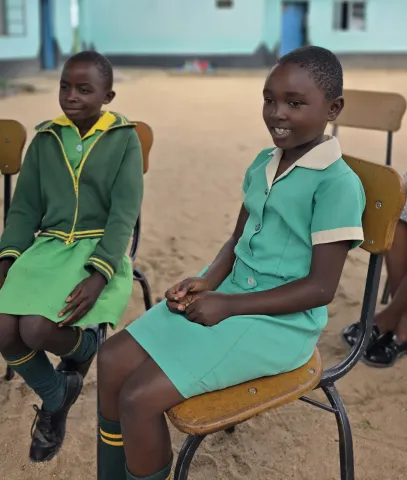
In the rural areas, Nyagura said children are forced to walk long distances to usually unprotected water bodies to fetch water. At the same time, recurrent droughts and flooding have led to food insecurity, malnutrition, lack of shelter and WASH services.
“The climate crisis has left a devastating trail of destruction and enormous implications on children and young people, while they contribute the least to its occurrence. Despite urgent, vocal and consistent calls from, young people, we are excluded from much of the climate agenda,” Nyagura said.
“Despite constituting 40% of the world’s population, children and young people have no formal role in climate policies and decisions. We are not considered in existing climate adaptation, mitigation, finance plans and actions. Yet, anything for us without us is against us,” Nyagura added.
He called for world leaders to adhere to the UN Convention on the Rights of the Child and Sustainable Development Goal 17, which harnessed partnerships between young people and adults in dealing with climate change issues.
He highlighted world leaders should stop viewing children and young people as a vulnerable group as they are active stakeholders and agents of change.
“Children are part of the solution to the climate crisis. If we are included in climate crisis initiatives, this will culminate in properly addressing heightened risks and challenges caused by climate change. Children and young people are explicitly and meaningfully engaged in only four per cent of the climate projects,” the 18-year-old said.
UNICEF works closely with Government to address climate change challenges
In Zimbabwe, UNICEF is working closely with the Government of Zimbabwe to prioritize children in climate change mitigation and adaptation efforts. UNICEF has worked with the Ministry of Environment, Climate and Wildlife to ensure children's needs are reflected in the revised National Adaptation Plan (NAP).
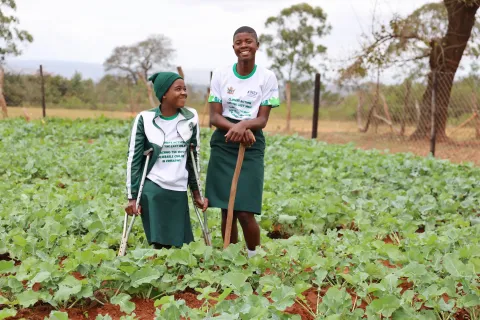
The revised NAP is now prioritising establishing nutrition gardens and increasing access to climate resilience of safe water, sanitation and hygiene in schools and communities. At the local level, UNICEF, along with the Food and Agriculture Organisation (FAO), is supporting the Government of Zimbabwe to develop a resilience model that integrates climate-smart agriculture, nutrition, and WASH services to enable rural communities in Matabeleland South to better adapt to climate change. UNICEF has also supported the City of Harare to develop a Climate Resilience Water Supply Plan.
In Nairobi, presenting at a side event on green skills at the Africa Youth Climate Assembly, Cindy Kushner highlighted the need to begin climate education early to ensure the foundations for green skills are built before youth are ready for the job market.
“The climate crisis is a child rights crisis. We need to ensure we address children's specific needs today and tomorrow. We are here to provide climate change solutions from children's perspectives,” Kushner said.
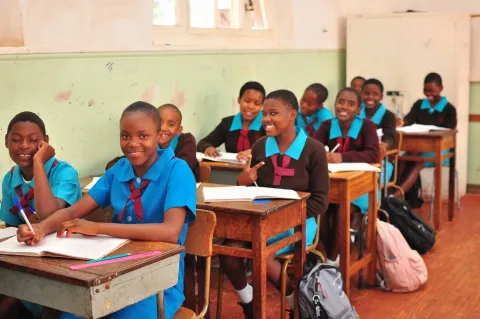
“Schools play an important role in addressing the climate change we face. Climate change should be mainstreamed through learning, and facilities in schools need to be climate change resilient. A Disaster Risk Management (DRM) Plan should be in place at every school. And schools should provide practical learning spaces which can foster environmental stewardship from a young age.”
Highlighting UNICEF’s new research showing a tiny fraction of climate finance going to children, she said UNICEF is working closely with the Government and partners to ensure that climate change adaptation and mitigation efforts are targeted to benefit children today directly.