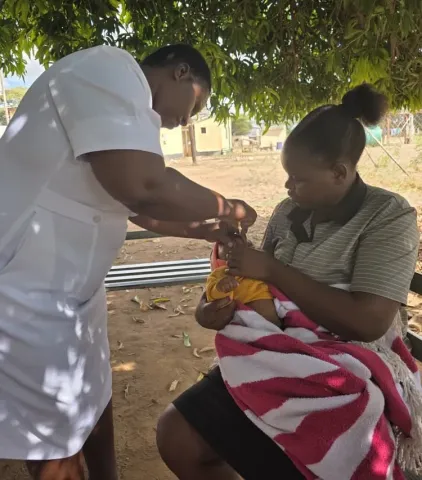
UNICEF & Eli Lilly and Company take on childhood non-communicable diseases in Zimbabwe
Although many non-communicable diseases are preventable and treatable, worldwide nearly a million people under the age of 20 die from such diseases each year.

Launching an initiative to educate community health workers and increase support and understanding of NCDs in children in Zimbabwe is part of an ongoing collaboration between the partners to support vulnerable communities and advance progress on global health goals.
“We have been looking forward to this day and are happy that we are here today. This project has brought pediatric NCDs back on the agenda,” proclaimed Dr Prisca Mureriwa, a paediatrician at Sally Mugabe Central Hospital in Harare.
Mureriwa’s remarks heralded the launch of a new initiative made possible by UNICEF and Eli Lilly and Company. In 2022, the collaboration directed $2.5 million to the country’s Ministry of Health and Child Care (MoHCC) to educate community health workers and increase support and understanding of various non-communicable diseases (NCDs) in children.
Through these measures, the UNICEF-Eli Lilly and Company partnership seeks to strengthen Zimbabwe’s healthcare system to better prevent, detect and treat childhood NCDs. The project is part of an ongoing collaboration to support vulnerable communities and advance progress on global health goals.

The lethal toll of childhood NCDs
At a project kick-off event in February, Zimbabwe government leaders spoke of the need better to understand the burden of NCDs among children and adolescents; NCD risk factors; and the adverse, long-term effects these diseases can have on individual health and well-being, economic security and mobility.
NCDs in children and adolescents include chronic respiratory disease, cancer, high blood pressure, heart disease, asthma, and diabetes. Although many NCDs are preventable and treatable, worldwide, nearly a million people under 20 die from such diseases each year.
"NCDs in children result from a combination of genetic, environmental and behavioral factors," Health and Child Care Deputy Minister Dr John Mangwiro explained at the launch. “When a young child is diagnosed with a non-communicable disease, this implies long-term treatment.”
Behaviours like tobacco use, insufficient physical activity, poor diet and excessive alcohol consumption can increase the risk of dying from an NCD. Children living in poverty are often at higher risk of such behaviours, while the costs of living with an NCD can drive individuals and their families further into poverty.
NCDs disproportionately affect people in low- and middle-income countries and often require unavailable or unaffordable treatments. Health interventions before, during and after pregnancy, and through childhood and adolescence can significantly reduce disease prevalence; however, awareness of and access to primary health care lags in remote and poor urban areas.
“The information gap is wide in Zimbabwe due to common myths and misconceptions on NCDs,” Dr Mangwiro explained. “This calls for the need for extensive NCDs awareness programs.”
Eli Lilly and Company has committed $14.4 million to support UNICEF’s work across pediatric NCDs in five countries: Bangladesh, Malawi, Nepal, the Philippines and Zimbabwe. Interventions in all five countries aim to strengthen data and health information systems for NCDs; establish and strengthen diagnosis, prevention, care, and treatment within primary health care and referral facilities; and support capacity building of service providers for the screening and improved management and treatment of NCDs.

Health interventions can boost Zimbabwe’s development
At the project launch, UNICEF Zimbabwe Chief of Health and Nutrition, Dr Alex Adjagba, said decreasing NCDs in children and adolescents can improve the country’s economy.
“The economic impact of chronic diseases is very high," he said. "We only focus on what is acute and what we can see now." Under the new project, he added, "we want to document the economic impact of NCDs in Zimbabwe.”
The prevalence of NCDs has implications for nutrition, education and the environment and requires a significant response from the public and private sectors to prevent and control. Dr Mureriwa noted, “The project is going to strengthen our policies on how we take care of our children with NCDs."
According to the World Health Organization (WHO), NCDs claim 41 million lives worldwide each year. Both UNICEF and Eli Lilly and Company have shown a commitment to reaching the UN’s Sustainable Development Goals for 2030 and meaningfully advance SDG 3.4 to “reduce by one-third premature mortality from non-communicable diseases through prevention and treatment and promote mental health and well-being.” Mitigating the physical, emotional and economic toll of living with an NCD will help millions of Zimbabwean children reach their fullest potential.