Solarisation eradicates digital and energy poverty in Zimbabwe schools
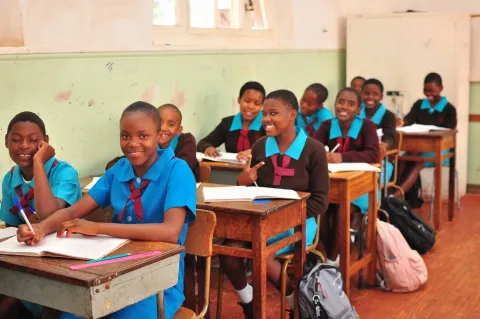
The solarisation of schools in Manicaland and Matabeleland Provinces has promoted e-learning at the institutions and improved the quality of education.

At Chidazuru Primary School, the digital revolution sparks excitement and empowerment among young learners. Praise Jokiyu, a bright-eyed Grade Seven student, proudly shares how weekly computer lessons have opened a new world of possibilities for her and her classmates. "I now know how to use a computer," she beams, explaining that these practical lessons happen three times a week, making technology a part of their daily lives.
However, the benefits extend beyond the classroom walls. The school's solarisation program has turned the energy kiosk into a vital community hub, where locals come to charge their phones, connecting even the most remote areas to the outside world.
Britney Mafara, another Grade Seven student, adds her voice to the chorus of excitement. "We have Wi-Fi, and when we're not in the computer lab, we can connect through smartphones," she says with a smile. "This helps us with our research on the Internet. I feel ready for my final exams because I've been able to access so much information online."
For these students, access to technology isn't just about learning new skills—it's about being part of a broader, digital world, and their enthusiasm is palpable.
Solarisation impacting schools
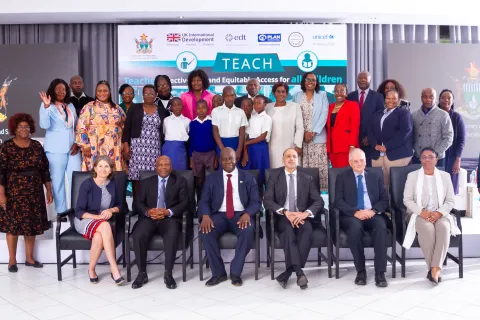
UNICEF Zimbabwe is solarising schools through the Education Development Fund (EDF) TEACH programme, funded by the UK Government in partnership with the Ministry of Primary and Secondary Education.
UNICEF has set its sights on ensuring that 150 disadvantaged P3 schools in Manicaland and Matabeleland South Provinces are connected to a 6.5KVA solar system and a wireless access point with a Wi-Fi radius of 300 meters.
According to the 2022 Population and Housing Census, Zimbabwe's electricity access rate stood at 62 per cent of the population. The same report states that 91.1 per cent of households that did not have electricity were in rural areas, compared to 9.9 per cent in urban areas.
Energy poverty reduces education quality, stifling access to teaching and learning materials.
The solarisation of schools makes education more flexible. It gives students access to the Learning Passport and other e-learning platforms, equipping them with world-class information communication technology skills in line with the new curriculum.
Therefore, the solarisation programme enables learners to access digital learning content for use at school and offline. This has had an immensely transformative and positive impact on education.
In Manicaland, schools were drawn from the Buhera, Chipinge, and Nyanga districts, while in Matabeleland South, it was the Beitbridge, Matobo, and Umzingwane Districts.
Already, 70 schools have been solarised and are awaiting commissioning and certification. The remaining 80 schools will be solarised by the end of the year.
Rudo Mwedzi, the Headmistress at Nyarukowa Primary School in Nyanga, could not hide her joy as she explained how solarisation benefits her school's pupils and teachers.
“What is very clear is that solarisation of schools assists staff retention. Before this development, teachers would come and go due to a lack of electricity. This was affecting the smooth flow of lessons. However, since our school's solarisation, staff retention has improved significantly,” she said.
Like 69 other schools, Nyarukowa Primary School was connected to a 6.5KVA solar power system in April this year. The system provides power to the school’s administration block, one computer lab with 40 power charging points, and lighting and charging stations in teachers’ houses so that they can work both at school and at home.
Rudo said that before the solarisation of her school, their computers were lying idle.
“We are now using computers to type our examinations. We are also printing the examinations here, reducing our costs. Our neighbouring secondary school also benefits as we have allowed them access to the computer lab when preparing for their examinations.
“Our students are also getting practical computer lessons. We are preparing them for the future because almost every job today requires some technical knowledge,” said Ms Mwedzi.
Mr Paul Gada, a teacher at Nyarukowa Primary School, spoke about the reliability of solar energy.
“Solar energy is reliable. There are no disruptions in our work, and this is increasing the quality of education for our students. We usually mark our students’ assignments at home, so a reliable energy source is of the essence,” said Mr Gada.
A community changed
Following the solarisation of the schools, dependable power has set the foundation for information communication technology in the formerly marginalised schools, and there is hope that the digital divide between rural and urban school children will finally be narrowed.
During interviews with school authorities and learners, the excitement is palpable.
Elisha Mafara, the Headmaster of Chidazuru Primary School in Nyanga, said the school’s computer lab and staff houses are now connected to solar power, allowing teachers to work anytime.
“The solar project has made our lives more comfortable. We have lighting in our houses, and teachers have ample time to prepare for their lessons. Computers connected to the Internet have a wealth of knowledge that can be accessed anytime. I expect a higher pass rate in this year’s examinations,” said Elisha.
A teacher at the same school, Irene Munyengeterwa, said that students charged their gadgets in the community before the school was solarised.
“The situation was terrible. Imagine walking long distances to get to the shops or people’s houses to charge our phones. A lot of teaching time was being lost,” she said.
“This program promoted e-learning at our school, and we are now using online educational videos to complement the traditional text-based materials for our classes, and l have noted that the students are engaging with the information more dynamically,” said Irene.