Powering rural communities through solar energy in Zimbabwe
UNICEF’s Solar interventions in health facilities improve service delivery for women in rural areas in Zimbabwe

Patricia Bhebhe, 23, cannot wait to hold her little bundle of joy. The expectant mother of 2 is especially excited to deliver at a safe, recently renovated health facility for the first time.
During her previous pregnancies, Patricia would walk up to 10 km to reach Jahana Rural Clinic, situated in Gokwe South district in Zimbabwe’s Midlands Province. The facility provided maternity waiting shelters for expectant women over 35 weeks. However, due to its previous state, Patricia and many other women in the surrounding communities did not feel comfortable delivering there.
“The waiting mothers’ shelter was inhabitable. Due to the lack of electricity, it was too dark at night and no one would feel safe there especially for us as pregnant women. Water access was also a challenge. I opted to deliver at home than to come to the clinic,” Patricia explains.
Through the Sustainable Energy for Health Facilities Program (SE4HF), supported by the Government of Sweden and the Health Development Fund (supported by the UK, Sweden, Ireland, EU and Gavi) UNICEF has completed the installation of a high-power solar system at the clinic, improving the quality of service delivery for Patricia and other community members.

Up to 32.5% of health facilities in Zimbabwe lack electricity and many more do not have stable power supplies, compromising health service provision. Medical equipment cannot be operated or sterilized further impeding the implementation of infection prevention measures. Patient diagnosis, vaccination initiatives, or cooling of medical products such as blood or drugs are challenged by irregular or inadequate energy supply.
In addition, it is difficult to provide quality maternal and new-born services, especially for complicated pregnancies and premature babies. Women are often told to carry candles and torches for use during deliveries. This results in women choosing to deliver at home as they see no added benefit in delivering at the health facility as pointed out by Patricia. The sister-in-charge at Jahana Clinic says this is changing thanks to the SE4HF interventions.
“With the recently installed solar system, we are slowly witnessing an increase in the number of women delivering at the facility including night deliveries,” says Eice Moyo adding that the solar system has also improved the facility’s vaccination programme.
“Our lives have been made easy even in terms of providing the COVID-19 and other vaccines. Now, we can work until late ensuring that all the queuing people have received their jabs.”
Equally, under the SE4HF programme, the clinic now has piped water with access points for the facility and another created to cater to the surrounding community members.
Gokwe is generally regarded as a very dry region and water access is a major challenge. Communities often have to travel long distances to the nearest isolated water points, usually a borehole near either a school or a hospital. However, not all boreholes are mechanized, making it laborious for most women and children to get the precious liquid.

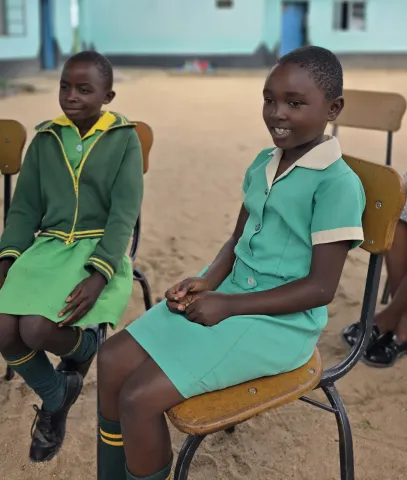
Young women and girls in the area also expressed their happiness about this intervention noting that it was previously very difficult to travel long distances to fetch water.
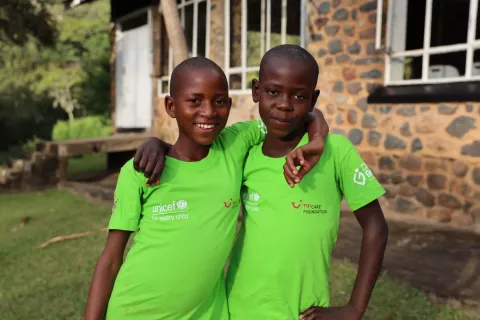
“We used to travel very long distances to get water, at times getting to school very late. But now, we can get our water here at the clinic, all our water troubles are gone,” shares sisters Sthandeni Dube and Faith Dube as they fill up their buckets with fresh water.
Jahana Rural Clinic is among the 30 health facilities that have received solar installations.
Thanks to the SE4HF programme, the facility is now a safer haven for Patricia as she awaits her bundle of joy.