Integrated Outreaches positively impact Vulnerable Adolescent Girls in Sanyati, Zimbabwe.
Facing multiple threats, adolescent girls in an area rife with artisanal miners lean on integrated outreach services for empowerment.

Zimbabwe, Sanyati After getting vaccinated against multiple diseases such as cholera and cervical cancer and receiving extensive education on Sexual and Reproductive Health Rights (SRHR), Modeline, 10, and her group of friends felt safer and wiser as they left school for home.
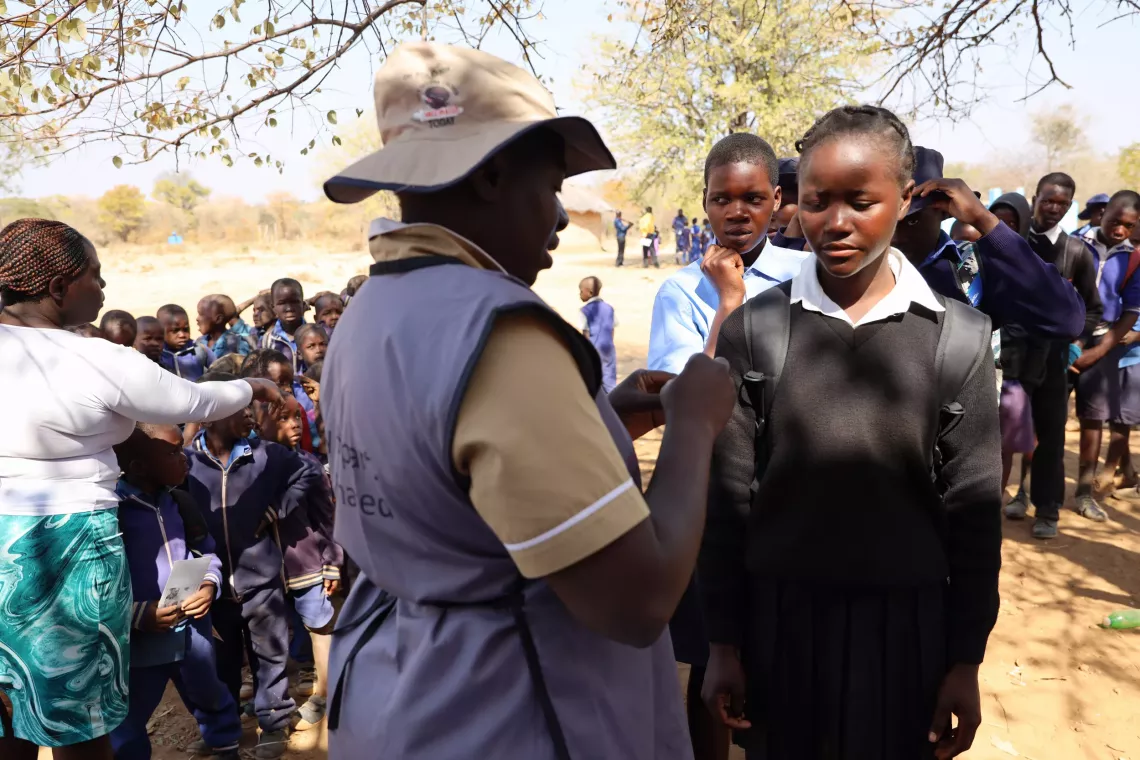
An integrated outreach programme by the Ministry of Health and Child Care in partnership with UNICEF had just been conducted at their school in Sanyati district. Schoolchildren and adults from the community gathered to receive various primary health care services.
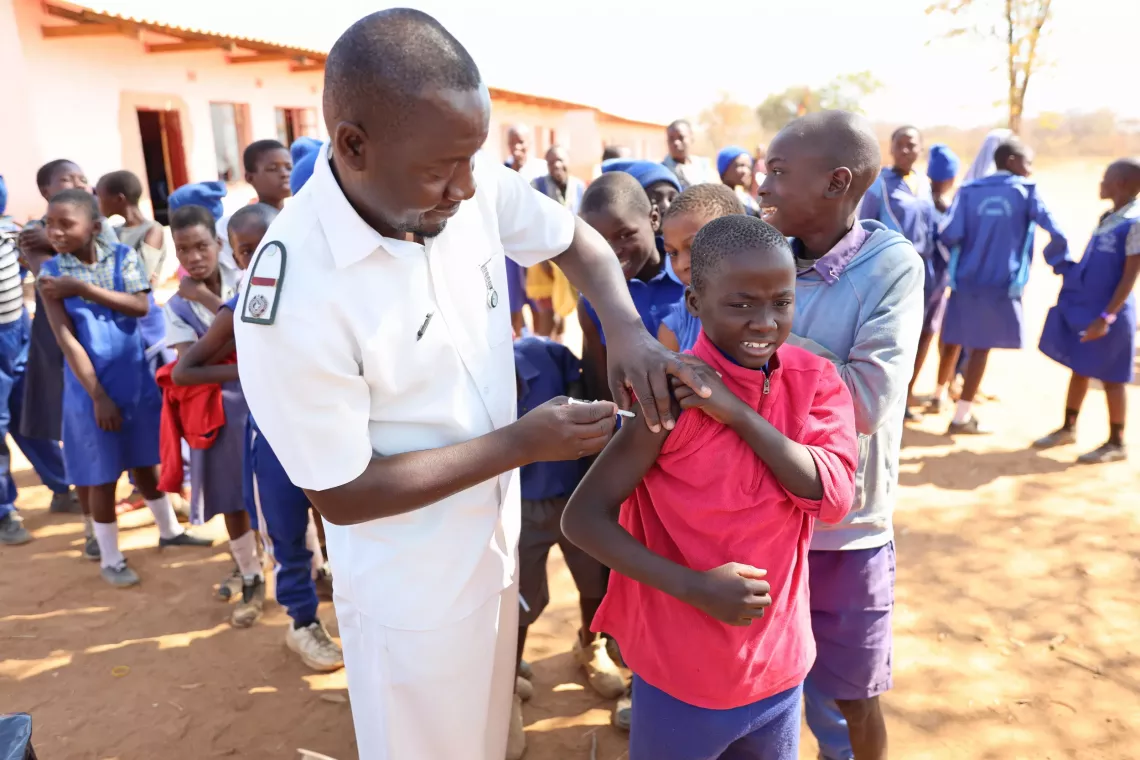
“My dream is to be so successful that my parents don’t have to work as artisanal miners,but that cannot happen if I am not healthy,” said Modeline after receiving a jab for the Human Papilloma Virus (HPV) vaccine to protect her from contracting cervical cancer. Zimbabwe has the world’s highest incidences of cervical cancer, which kills more than 1,000 women each year.
By June 2024, over 126,000 girls received HPV1 vaccination, and 68,277 received HPV2 vaccination cumulatively in 11 districts where the outreach programmes are taking place.

“My dream is to be so successful that my parents don’t have to work as artisanal miners,but that cannot happen if I am not healthy,” said Modeline after receiving a jab for the Human Papilloma Virus (HPV) vaccine to protect her from contracting cervical cancer. Zimbabwe has the world’s highest incidences of cervical cancer, which kills more than 1,000 women each year.
By June 2024, over 126,000 girls received HPV1 vaccination, and 68,277 received HPV2 vaccination cumulatively in 11 districts where the outreach programmes are taking place.
However, cervical cancer is not the only threat to Modeline ambitions of being a doctor one day. Like other adolescent girls across the country, Modeline faces complex and multiple challenges ranging from poverty, early pregnancies and child marriages to maternal deaths, physical and sexual violence, HIV infection and dropping out of school.
The outreach programme, supported by GAVI, the vaccine alliance, with funding from the Government of France, is bringing much-needed SRHR services closer to home and is vital in alerting adolescent girls to signs and risks of sexual abuse. They are also proving a key empowerment tool for girls to be confident enough to fight for the full realisation of their dreams in a community where they increasingly face threats due to drought-related poverty in an area where farming is a key source of food and income for many families.
The devastating drought caused by the El Nino weather phenomenon has left girls in Sanyati at the risk of sexual abuse by artisanal miners who flood the gold-rich area and use money to bait vulnerable girls into abusive and risky sexual relations, said Keith Tazviwana, the school health coordinator at Shingirirai Secondary School.
He gave the example of a recent case. A young learner at the school was forced to drop out, and a police case opened after an artisanal miner 25 years her senior lured her into a sexual relationship, he said.
Tazviwana said SRHR educational sessions at the outreach points could help to prevent such cases.
Tazviwana said the situation in the area is also putting adolescent boys at risk, as many are tempted to drop out of school and join artisanal mining, where they become exposed to vices such as drugs, alcohol, and unsafe sex.
“It is in early adolescence when these learners begin to develop tendencies that they will forever regret, such as experimenting with sex; they will be experiencing all these emotional and physical changes to their bodies, so they need great care. The outreach programme helps cement some of the things we teach them in class,” he said.
Boys, along with girls, listened attentively as health staff at the outreach programme talked about the dangers of drug and alcohol abuse, as well as the importance of education during an outreach educational session.
There is a need to protect adolescents. Providing them with a holistic package of interventions is critical for a youthful country such as Zimbabwe. Close to 2 million of the southern African country’s 15 million are adolescents between 10 and 19 years old.
“They are our future,” said Ellen Marara, the District Nursing Officer for Sanyati.
“We striving to catch them up with SRHR information and services at this critical age. Adolescence is a make-or-break period for these girls. The outreach, therefore, becomes more than just an event to offer vaccines; it is an opportunity to inspire them to envisage a better future for themselves,” she said.