Expanding Access to Quality Education: The Power of Digital Learning in Zimbabwe
Learning Passport Offline Hub bridges the digital divide

In a world where digital access often determines educational success, many learners in Zimbabwe remain disconnected, unable to access the tools they need to thrive.
Before the Learning Passport Offline Hub was installed, the same was true for Chidazuru Primary School. Digital learning was a distant aspiration, seemingly out of reach.
Nestled in the mountainous region of Nyanga, Zimbabwe, this rural school is now experiencing a transformative shift, providing its students with a tangible opportunity to succeed and advance their education.
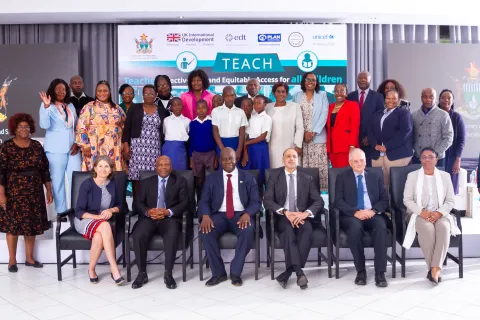
Under the leadership of the Ministry of Primary and Secondary Education, a team from UNICEF, including Guillaume Michels, Programme Specialist and Global Chief of Deployment for the Learning Passport, and Anna Childs, Digital Learning Specialist for the Eastern and Southern African Region (ESAR), traveled to different schools across the country to engage with students and teachers, gaining a deeper understanding of their experiences with the Learning Passport Offline Hub.
For the remote school of Chidazuru, the installation marked a monumental shift, especially considering the school’s long struggle without electricity until April 2023, when it benefited from UNICEF's solarization project. Until then, most children in this marginalized community had never used a computer, as without electricity meant no access to computers and connectivity.
Ms. Munyengeterwa, the deputy head teacher, vividly recalls the challenging learning environment and the significant obstacles the school faced before gaining access to the digital learning platform.
"Among many challenges, one of the biggest problems we faced at Chidazuru Primary School was the lack of textbooks. We didn’t have enough—an entire classroom had to share just one," she explains.
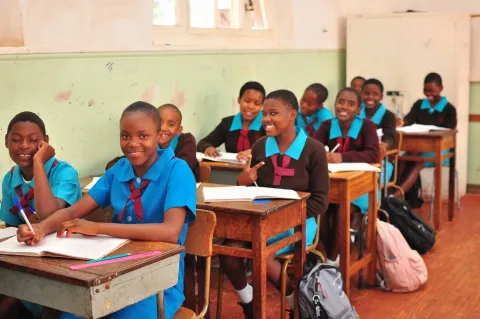
The school has 308 learners and only seven teachers, with some classes having a teacher-student ratio as high as 1:50. The environment was far from conducive to quality learning, as teachers struggled to teach all subjects and explain concepts due to the lack of resources and teaching capacity. The introduction of the Learning Passport has brought about a transformative change, providing teachers with valuable resources and giving students access to a range of child-friendly digital education tools and content that they can use to learn independently and at their own pace.
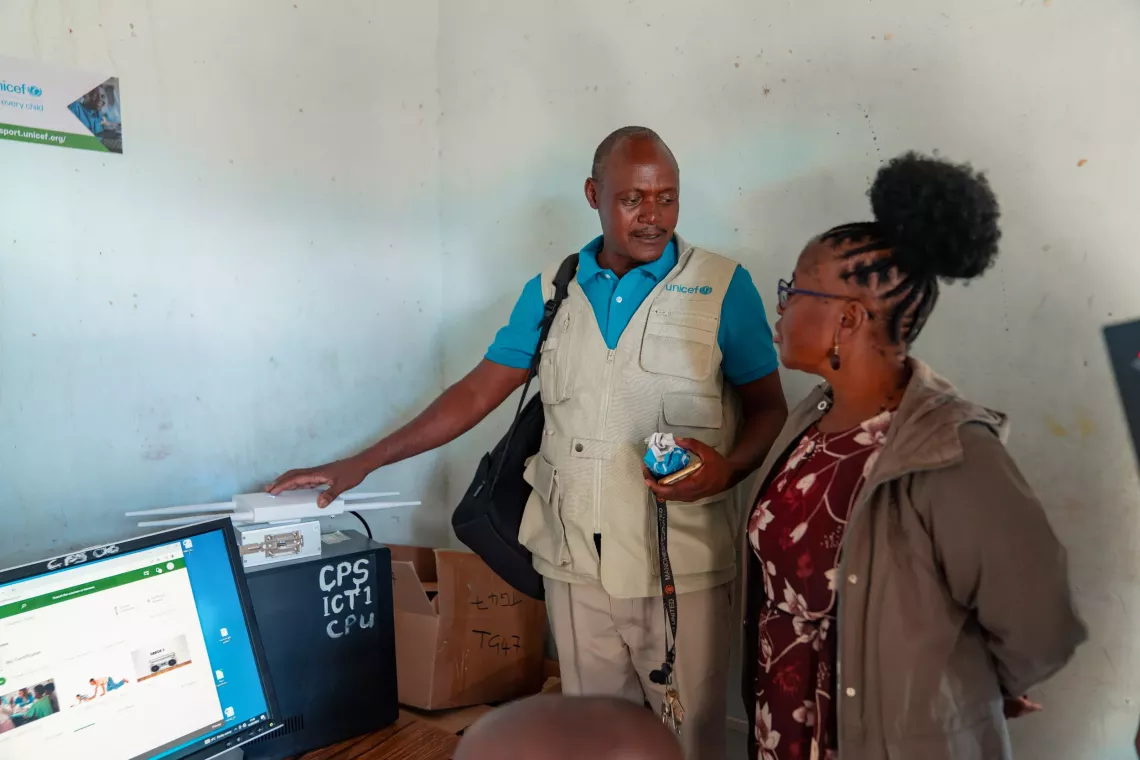
Teachers are optimistic about the potential impact of the Learning Passport, as they are already witnessing improvements in children’s self-confidence and communication skills.
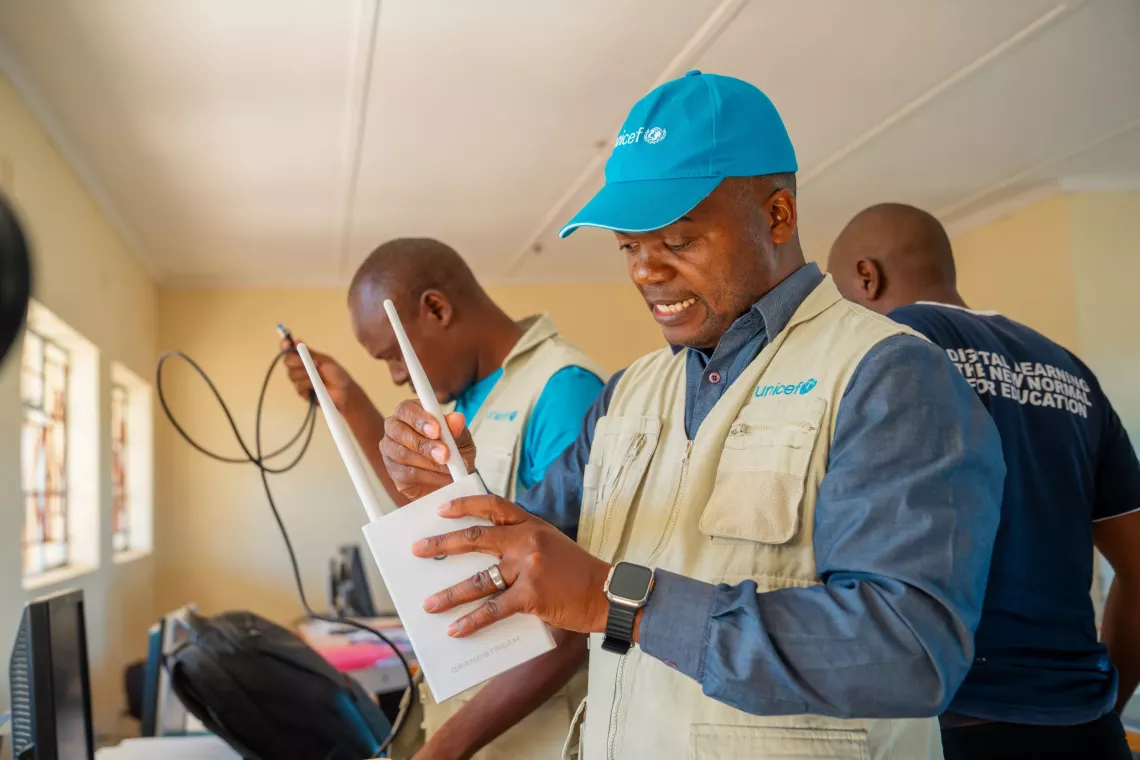
“Digital learning is the way forward in this ever-changing world, and the Learning Passport Offline Hub is an effective tool that combines elements like blended and virtual learning with mobile technologies. This increases access to education and knowledge while empowering learners with the mindset and capabilities they need to succeed,” said Stephen Sunguro, UNICEF Technology for Development Officer in Zimbabwe.
The offline hub is critical for schools like Chidazuru, located in remote areas with limited or unreliable internet access. The offline server stores customized, curated, and contextualized high-quality educational content from the national curriculum, providing consistent access to digital resources without the need for an active internet connection. This not only reduces costs but ensures uninterrupted learning.
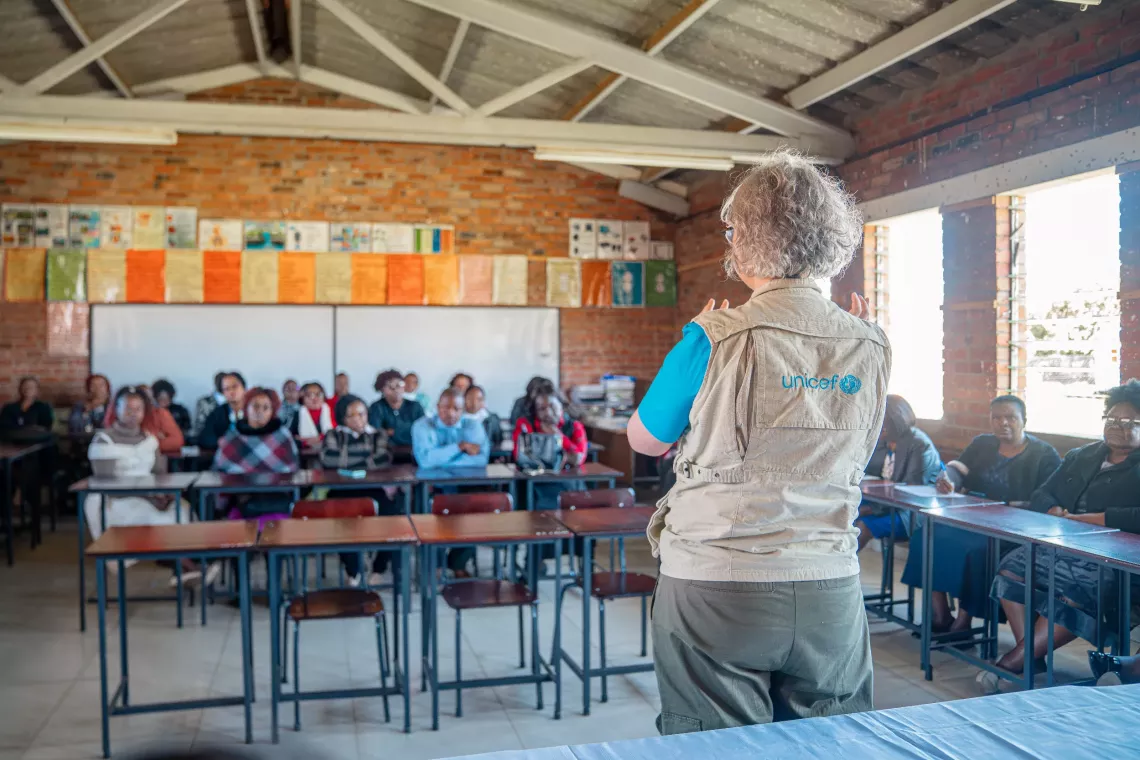
As part of the visit, UNICEF installed an offline hub device and conducted blended learning training for teachers at Nyangani Highschool, another school within the Nyanga area. Anna Childs, Digital Learning Specialist, facilitated the training and highlighted the opportunities it brings to enhance learning.
“In the training, we discussed various techniques for overcoming challenges such as large classrooms and limited devices. One approach that was well received by teachers is station rotation,” she noted.
Station rotation is an instructional strategy where students rotate between different learning stations or activities. Each station typically focuses on a different aspect of the lesson, allowing students to engage with the content in varied ways. For example, while one group works on solving a math problem, another can work through a tutorial on the Learning Passport platform. This is a great way to make use of the Learning Passport in a classroom where there are more students than devices.
The impact of the Learning Passport extends beyond rural areas. In schools across Zimbabwe, including urban areas, learners benefit from the offline server as internet access remains a significant challenge due to high data costs. This innovative solution is designed to bridge the digital divide for schools and learners who lack adequate resources to access internet connectivity.
At Westlea Primary School in Harare, students have been using the Learning Passport Offline Hub for three years, maximizing its resources, particularly the examination corner where they can access past examination papers. This has contributed to a steady increase in the pass rate, which now stands at 95%.

Looking ahead, UNICEF is actively exploring new partnerships to ensure the Learning Passport becomes even more accessible. A collaboration with Econet, the largest telecommunications company in Zimbabwe, is set to promote affordable access to the Learning Passport for more students across the country.
Guillaume Michels, Global Chief of Deployment for Learning Passport, emphasizes the broader mission: “UNICEF and its partners are investing in digital technology so that every child in Zimbabwe has access to quality education and can thrive in an increasingly digital world.”
UNICEF’s partnership with the Ministry of Primary and Secondary Education has been essential in driving the ongoing success of the Learning Passport program. The Ministry’s leadership in content development and platform management has ensured that the Learning Passport is fully aligned with national educational standards and is finely tuned to meet the unique needs of Zimbabwean students. This strong collaboration continues to expand digital learning opportunities, paving the way for enhanced educational outcomes and a brighter future for learners across the country.