ERVHIZ intervention transforms a school into a community hub
From theory to practice. Pupils at rural schools now not only learn about multiple uses of water using solar to power the reticulation and get to use it following ERVHIZ intervention

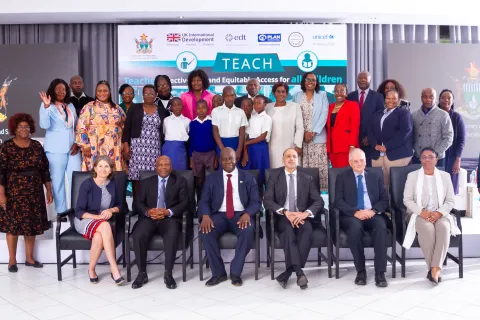
At a recent event, dignitaries stood from their chairs. They applauded in admiration as Clementine Nkomo, a Grade 4 pupil at Lufuse Primary School in Insiza district, performed a dramatic show of poetry and cards to highlight how an integrated approach to the multiple uses of water can save lives.
But for the nine-year-old, there is something even better than the applause.
Unlike before, she can point to practical life experiences and benefits at school and home: a solar-powered water pumping system on the school grounds stands next to flourishing nutrition gardens separately run by pupils and community members. A resultant school feeding programme. Age, girl and disability’ friendly latrines at the school and at homesteads and taps providing easy access to safe water for drinking and general hygiene, including washing hands.
For Nkomo, everything is beginning to make sense now.
“I have been making these cards for two years. But apart from what we read in books and told by the teachers, all these functions of water were just a dream, a life lived by fortunate people elsewhere,” said Nkomo after her show, adding that people used to rely on unsafe water from a distant river that often dried up.
“It was all theory from books at Lufuse, but it is now a reality because of ERVHIZ,” she said.
She was referring to the European Union-funded Enhanced Resilience for Vulnerable Households in Zimbabwe (ERVHIZ) project being rolled out in Matabeleland South districts such as Insiza, Matobo, Gwanda, Plumtree, Mangwe and Bulilima.
The intervention is anchored on integrating water, sanitation, hygiene and agriculture and nutrition to boost community and household resilience against a complex and unfolding humanitarian situation in a province severely affected by climatic change and economic hardships.

Funded to the tune of US$13 8 million, the intervention is being implemented by the Government of Zimbabwe with technical support from UNICEF and FAO and local partners such as Welthungerhilfe, Nutrition Action Zimbabwe, Goal Zimbabwe, Christian Care, Sustainable Agriculture Technology and Save the Children.
In Insiza, children and community members are showcasing the ERVHIZ intervention's benefits.
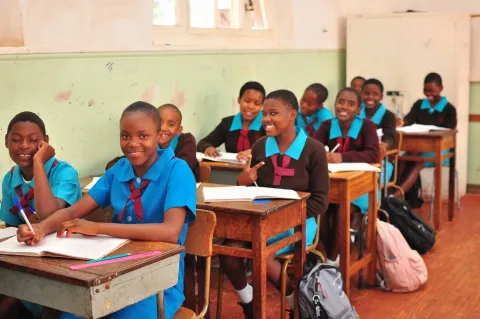
“Our pupils can now put into practice what they learn in the classroom,” said Rodger Moyo, the headmaster of Lufuse Primary School, which has an enrolment of 130 pupils. The ERHVIZ intervention helped resuscitate a piped water scheme that also serves the school and the community.
Tap water at the school ensures pupils can wash their hands after using the toilets or before and after eating. Menstruating girls are nowadays more comfortable coming to school because the availability of water inside the toilets allows them to wash up, change reusable pads and return to class comfortably.
Although the area was parched and rivers dry, the school established a nutrition vegetable garden and started rearing chickens in June. The two projects have helped the institution complement the Government of Zimbabwe-led school feeding programme.
“Some children come from impoverished families where getting a single meal daily is difficult. They are now getting a balanced diet from the crops they grow at school, so they are learning farming activities and at the same time contributing to their own nutritional needs,” he said.
Previously, absenteeism was rife, with many children opting to hunt for food in the bushes, accompanying their parents to collect food aid or joining gold panners in the area, said Moyo.
“I realise that whenever the children eat at school, they want to remain here playing sports or studying. We are recording almost 100 per cent attendance these days,” said Moyo.
Excess produce from the agricultural projects run by teachers and pupils has become a cash cow for a school previously reliant on parents who are too old or poor to pay fees timeously.
Separately, 54 community members farm on a 1 5-hectare plot in the schoolyard, and surrender a fifth of their crop earnings to the school.

“ERVHIZ did not just bring water. It taught us that if we are healthy, we can be self-sufficient and achieve a balanced diet and economic independence through agriculture,” said Melusi Dube, a community health facilitator trained under the ERVHIZ project. Dube said 114 households rely on the water point, and many have built toilets to eradicate open defecation and set up home nutrition gardens as part of the intervention.
The ERVHIZ project-induced synergy between the school and community members is bearing fruit for both parties and going a long way to ease the burden on impoverished families.
As a result of the profitable collaboration, the school is now focusing on reducing the cost of sending children to school, said Moyo, the headmaster.
“We are discussing the possibility of reducing our school levies from US$20 to 15 dollars because we now have money coming into our coffers. We are also thinking of choosing some disadvantaged children from the school and paying fees for them to achieve the government's goal of education for all,” said Moyo.