Empowering Zimbabwe’s Youth: Champions of Climate Action
From Local Conference of Youth to COP28- How children are shaping the future of climate policy

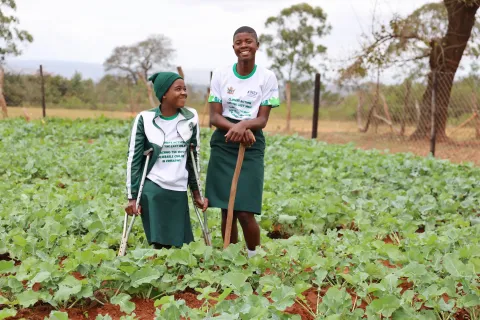
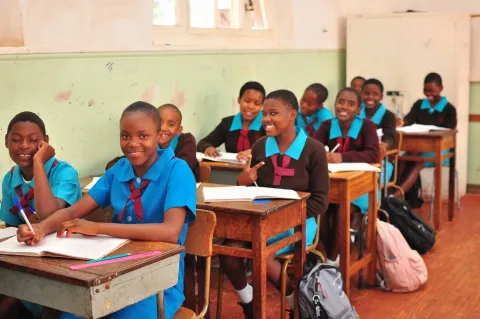
The Local Conference of Children and Youth (LCOY) in Bulawayo, Zimbabwe, witnessed the emergence of a dynamic generation of climate change advocates. With participants as young as eight-year-olds to adolescent youth activists on climate change, coming from various corners of the country, these change agents were united by a common goal: ‘Youth Empowerment for Climate Action’.
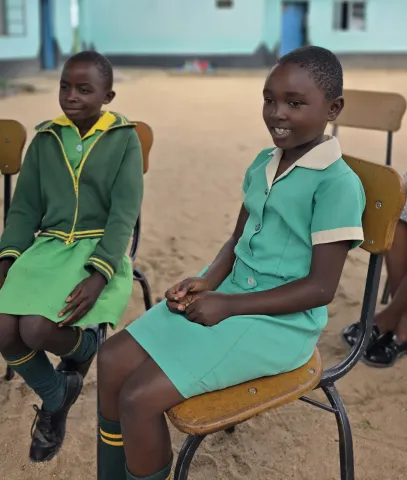
Seemingly timid, eleven-year-old Andile Machazi, a member of the Environmental and Ecological club at Henry Louw Primary School and one of the participants, described her first LCOY experience as bittersweet.
"I am so grateful I had the opportunity to attend this conference; I really learned a lot," she said with a fading smile. "But I wish everyone at my school could join because I know most of my friends have no idea how big the impact of climate change is and the role we play as children to fight it."
Climate change is a global challenge, hence requiring urgent action from everyone. Children and young people are the most vulnerable to climate-related impacts due to their low resilience and relative adaptive capacity as they are still developing physiologically. Comprising a majority youth population, with 43% of the population under 18 years old, Zimbabwe was ranked as "high risk" to climate-induced disasters in the 2021 UNICEF Children's Climate Risk Index.
There is an urgent need for young people to be acknowledged not only as victims of climate change but also as agents of change. There is need to harness their innovative potential and putting them at the centre of climate policies, strategies and plans as well as including them at the decision-making table of the climate agenda.
Over the past few years, children and youth in Zimbabwe have shown an improved understanding of climate change; however, there remains a gap, as capacity building is still needed to enhance their actions toward reducing emissions, gaining better access to climate finance, and participating in climate policy conversations to ensure that the commitments to the UNFCCC's Paris Agreement are adhered to.
The LCOY on Climate Change provided a platform for children and young people to discuss and strategize on how to effectively address climate change while developing their COP 28 position. Further, the LCOY provided an opportunity for young people to come together, share ideas, and contribute to national and global efforts to address climate change. The young people were empowered to identify ways in which they can become part of the conversation for climate action at global platforms.
Mr. Kelvin Bako, Youth Focal Point in the Ministry of Environment, Climate and Wildlife and LCOY coordinator, highlighted the importance of such forums in including the voice of children in the Climate Agenda and for key platforms like COP28.
"By discussing critical issues related to climate change, the children have been empowered to influence policy on climate change," said Kelvin, who exudes a youthful persona. "From the LCOY edition, participants developed a youth position paper on Climate Action, which will be included in the Zimbabwe COP28 position paper."
As part of LCOY, the children and youth discussed the 2023 COP 28 agenda items, which are: Loss and Damage, Action on Climate Empowerment (ACE), Global Stock Take on Adaptation, Just Transition, Article 6, and Climate Finance. From this discussion, the position paper was developed and will be incorporated into the Government of Zimbabwe's COP 28 position on each of the agenda points. Regarding climate finance, young people urged the government to secure a COP decision on climate finance for children while calling for the government to ensure that young people constitute 20% of the official COP delegation. Young people also called for a COP decision on Adaptation and Resilience that includes provisions to recognize the importance of increasing the resilience of social services for children. Regarding ACE, children reiterated the need for continuous empowerment and engagement in climate change programming and called for more climate information in a simplified, less-technical manner which they can easily understand.
Andile, who cherishes the interaction she had with young people and presentations from climate civil society organizations, government agencies and the private sector, is determined to make a difference at her school.
"Together with our teacher Mrs. Maseko, the Environmental and Ecological club has decided to introduce afternoon sessions to educate our peers on Climate Action and the role we need to play as students," said the adolescent, her tone gentle but showing conviction.

UNICEF advocates for children and young people to be actors of change and have their voices heard in climate financing, adaptation, and mitigation efforts. LCOY is a platform created to advance these efforts and provide meaningful participation by children in shaping the future that will be theirs. Working with children and the Government of Zimbabwe, UNICEF is supporting child-sensitive climate policies and climate action programs, such as the Clean Green Zimbabwe (CGZ) Initiative, which strives to harness the power of children and young people to be environmental stewards and mobilize collective actions in schools and communities.
#ForEveryChild, Climate Action.