Cash transfers give Mangwe villagers a lifeline
Households praise ‘life-saving’ intervention

Mhlanguli Mpofu will forever be grateful for being one of the beneficiaries of a cash transfer programme targeting Zimbabwe’s vulnerable households after the money saved his daughter’s life.
Mpofu (42) from Madabe Village in Matabeleland South’s Mangwe District said his six-month-old daughter suffered from a life-threatening hernia problem soon after birth.
The father of four said they spent the family’s entire savings as they sought treatment for their daughter from traditional medicine practitioners, which left them on the brink until the intervention.
“Our youngest daughter was not well, and we spent a lot of resources consulting traditional healers to no avail,” said Mpofu, who survives through menial jobs around the community close to Zimbabwe’s border with Botswana.
“When we started receiving money through the cash transfer programme we took her to hospital,” he added. “She is now a very healthy baby, and I am very grateful for the assistance from UNICEF and partners.”
Mpofu’s household is among the 2 427 that are beneficiaries of the cash transfer programme in the district being implemented by Ministry of Public Service, Labour and Social Welfare, UNICEF and partners with financial support from the Government of Germany through the Kreditanstalt fur Wiederaufbau (KfW) Development Bank.
The programme provides support to vulnerable families to deal with reduced income and scarcity of access to water and food as well as sending children to school.
Devastating El Nino
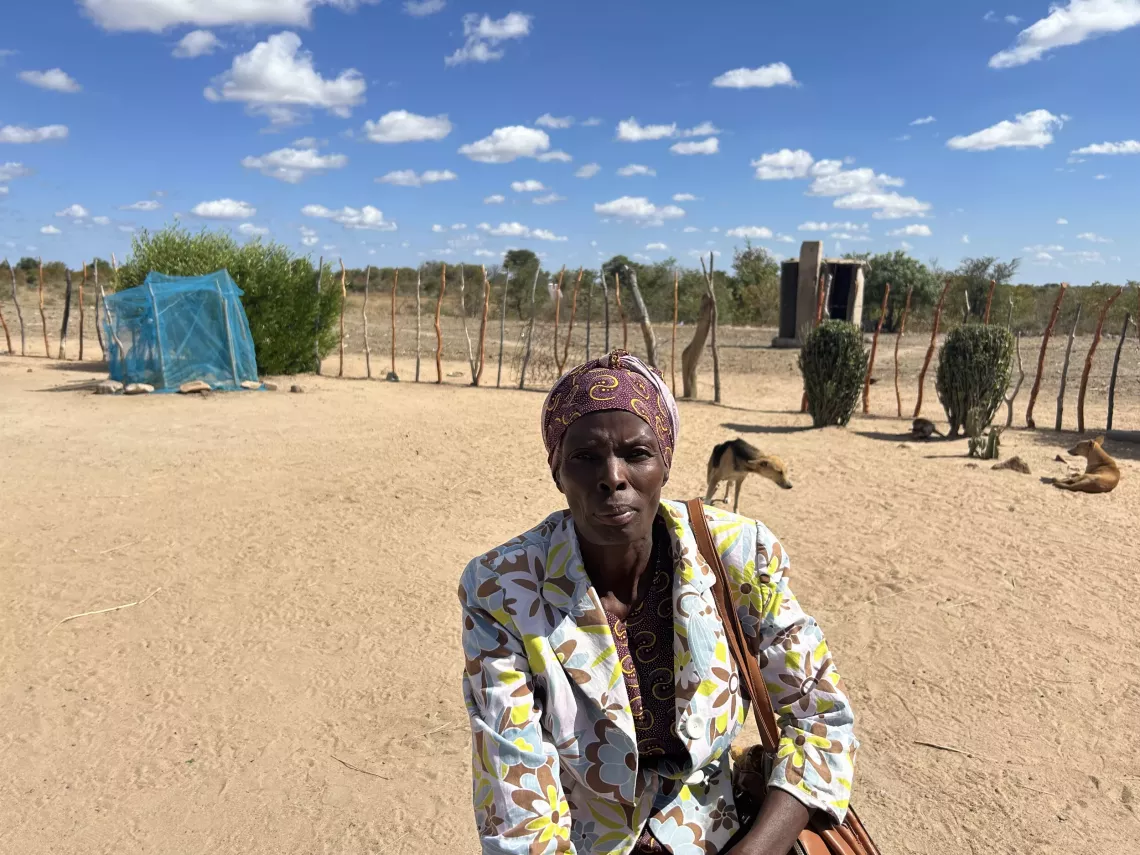
In Mangwe, a semi-arid district that receives very little rainfall, the programme came at an opportune time for many households that are battling for survival in the face of a devastating El Nino-induced drought that wiped out entire crops and exacerbated water shortages during the just ended agriculture season.
“The situation is bad,” Mpofu said. “As you can see, there is nothing in the fields and this is the second season without any harvests due to the drought.
“I used the money from the cash transfer programme to buy some clothes and uniforms for the children. I also hired someone to repair the fencing on our fields and we bought grain as well.”
“I initially wanted to buy a small herd of cattle with the money, but our daughter fell sick, and she became the priority.”
Another villager, Sipho Moyo (57), joined a savings club in her community and started a poultry project, which is now helping her to take care of her grandchildren.
“I was facing a serious crisis as I was struggling to take care of my grandchildren,” Moyo said.
“I joined a savings club where we are contributing US$10 a month and we use the fund to give out soft loans to fellow community members, who repay them with some interest.”
“This has changed our lives a lot. I am now able to buy my grandchildren food and pay school fees for the one in high school.”
She uses the money from her poultry project to buy goats and her ultimate goal is to invest in cattle, a symbol of wealth in the community.
‘We had nothing’
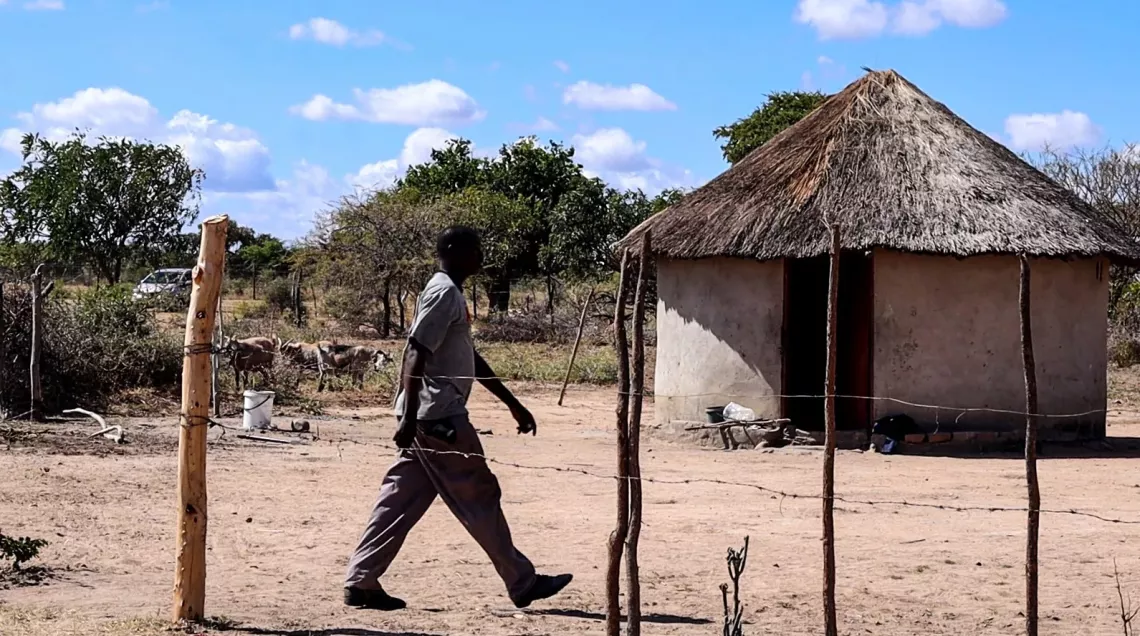
Sixty-six-year-old Mkhumbulo Mpofu, also from Madabe Village, says the cash transfer programme would not have come at a better time as most people in the community are struggling to cope with the effects of the El Nino weather phenomenon.
“The money has helped the community a lot because we had nothing at all,” he said. “We have been hit by a severe drought and there has not been enough rains for the past two years.”
“I was able to pay school fees for my grandchildren, bought uniforms and food for them to eat.”
The elderly villager takes care of scores of grandchildren whose parents emigrated to South Africa and Botswana where they are struggling to find jobs.
Criswell Nyakudya, the Matabeleland South provincial social development officer, said cash transfer programmes were vital in alleviating poverty, especially in drought years.
“Cash transfers have assisted us a lot to bring food on the table for vulnerable families,” Nyakudya said.
“They help our most vulnerable households to graduate from poverty to a better quality of life.”
“In Mangwe the money came at a time when many families were struggling with the effects of the drought and we were hoping to cover more households, but resources were limited.”
Zimbabwe is experiencing one of the worst El Nino induced droughts, which has coincided with serious public health emergencies related to cholera and polio, putting the country into a complex and multi-dimensional humanitarian crisis.
The drought has created numerous health issues affecting children, including disease outbreaks, infections and respiratory illnesses as well as increased levels of malnutrition.
UNICEF this month launched a US$84.9 million appeal to fund its emergency response aimed at assisting children and women affected by the El Nino crisis in Zimbabwe.
It is envisaged that the funding will provide life-saving interventions to 1.34 million people, including 866 000 children, amidst the complex humanitarian crisis that has been exacerbated by water and food shortages.