Rebuilding Hope After the Lundazi Floods
UNICEF is protecting children through safe water and hygiene promotion to strengthen community resilience

Lundazi District, Zambia, January 2026: Since late December 2025, heavy rains have affected Zambia’s Eastern Province, triggering devastating floods across Lundazi and Lumezi districts. Thousands of families and children have been affected as rivers burst into their banks. A dam was submerged by floodwaters, homes were swept away, and entire communities were cut off from basic services.
The floods have hit Lundazi District hard, destroying water systems that families relied on every day. With the main treatment plant submerged, more than 40,000 people lost access to safe drinking water. For children, the situation is especially worrying: the risk of cholera and other illnesses has increased, many have had to leave home and miss school, and their nutrition, safety, and overall wellbeing are under growing strain.
Families have lost more than just shelter – food supplies have been damaged, livelihoods that are often dependent on agriculture have been disrupted as crops are flooded, and safe spaces for children in their home and outside disappeared. Mary Nyirenda describes this reality:
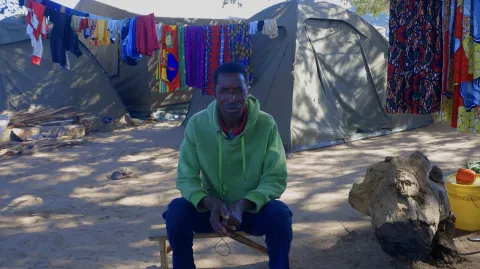
“My house collapsed on 28 December 2025. Everything was damaged: 17 bags of maize, the mealie meal, everything,” she says quietly. “We are left with only one bucket that I use to fetch water, bathe, and wash plates at the same time. The children are now hungry. We only eat once a day, when before we used to eat properly.”
Within a week from the flood, Mary had to build a temporary wooden shelter, fragile and exposed to continued rains, and barely able to protect from mosquitoes and diseases, where she and her husband moved in with her seven children:
“The house we sleep in now is very small, we all sleep together, and we don’t have mosquito nets. Two of my children currently have malaria and are on treatment as we speak. The children are often sick with stomach problems,” Mary shared.
UNICEF, in collaboration with the Ministry of Health, the Zambia Red Cross Society, World Vision, and the Catholic Relief Services, has been on the ground in Lundazi and Lumezi since December 2025, delivering immediate life-saving assistance to affected communities.
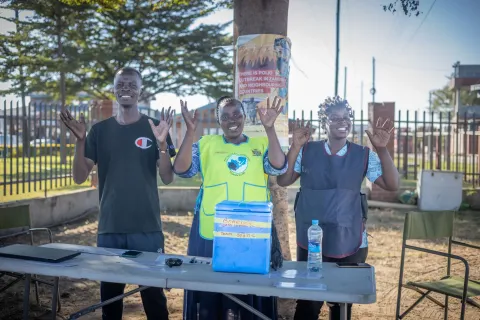
UNICEF has been helping communities prepare for and cope with the floods by sharing easy to understand information on how to prevent cholera, diarrhoea, and other diseases. More than 7,000 leaflets and posters were given out in both English and Nyanja to make sure families know how to stay safe. UNICEF also trained community volunteers so they can spread important messages, listen to people’s concerns, and support their neighbours when floods hit. In addition, UNICEF has provided chlorine and essential hygiene supplies to help families keep their water clean and reduce the risk of sickness.


These efforts have enabled Community-Based Volunteers and Health Care Workers to scale up their response, continue flood preparedness messaging within communities, and sustain the distribution of chlorine, with Mary, as many others from the communities affected, seeing the difference:
“Luckily, the health people came and taught us about chlorine. They brought it to our home, and now we have seen improvement in the children’s stomach sicknesses,” she says.
Beyond immediate humanitarian relief, UNICEF is strengthening local systems to improve long-term resilience. More than 75 Community-Based Volunteers have been oriented across 4 health facilities directly impacted by the floods, with virtual orientations provided to 11 additional facilities to promote future flood preparedness and anticipatory actions.

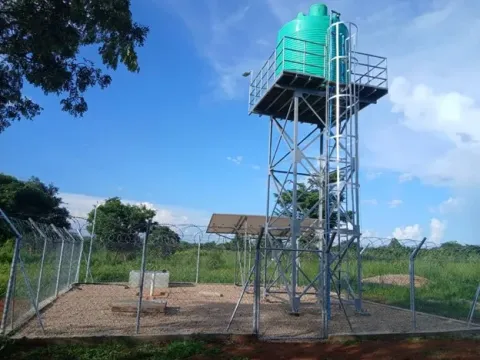
UNICEF has also provided three hand pumps, to be installed in three flood-affected communities, four water testing kits, strengthening access to safe water sources and water quality monitoring, strengthened coordination and provided technical support for the planned installation of three boreholes in urban clinics. These efforts were possible thanks to the financial support from the Government of Canada, the Republic of Ireland, and the European Union.
These investments aim not only to respond to the current emergency, but also to reduce vulnerability to future climate-related shocks. Despite the rapid response, significant needs remain. Continued rains threaten further flooding, and the risks to children’s health, nutrition, protection and education remain high. In this context of constrained resources, partners are working together to ensure that every child and every family remain safe, protected, and supported throughout the rainy season. As communities rebuild, families like Mary’s stand as a reminder of both the vulnerability caused by climate shocks, and the strength that emerges when communities, government and partners stand together.