Reaching every child with life-saving polio vaccines in Zambia
To reach mobile, missed and underserved children, polio teams complemented house-to-house visits with vaccinations at high-traffic public locations

Western Province, Zambia June 2026 -- Square, blue cooler boxes were a common sight across the six targeted provinces for the second round of the Polio campaign, which was implemented in Zambia from the 2nd to 5th of June, 2026. Vaccination teams were on a mission to reach as many children under five as possible, by administering the oral vaccine against polio.
Healthcare workers (HCWs) and Community-based Volunteers (CBVs) carried the blue cooler boxes packed with vaccines and went door-to-door in residential areas and in remote villages. They also went to markets, bus stops, nursery schools, and reached border posts. For example, in Sesheke, Western Province, a vaccination team was stationed at the busy Katima Mulilo border between Namibia and Zambia to reach any children crossing with their parents who had not yet received the second-round dose at home. Norah Nawa, a nurse at Katima Mulilo Urban Health Centre, said her team had vaccinated about thirty-five children on the first day of the campaign and twenty-one children on the second day. Norah said:
It's good to be here so these children are not missed. We are assured of herd immunity by reaching children in all the possible places where they can be.
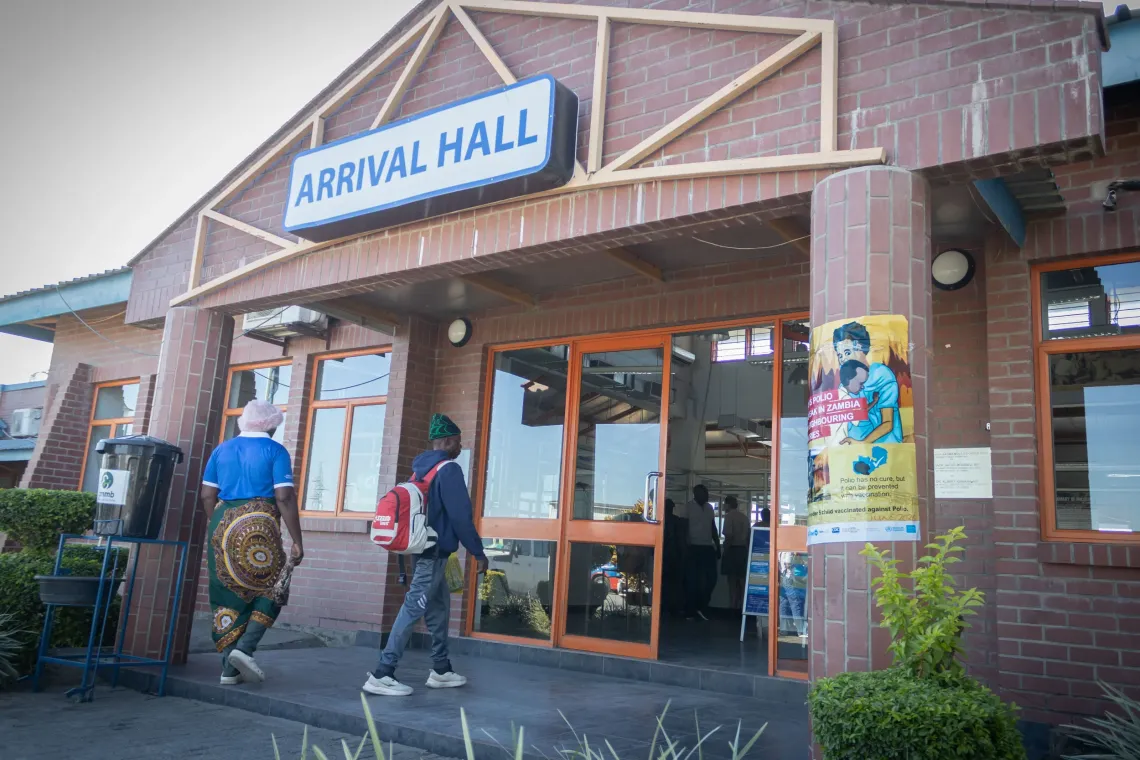
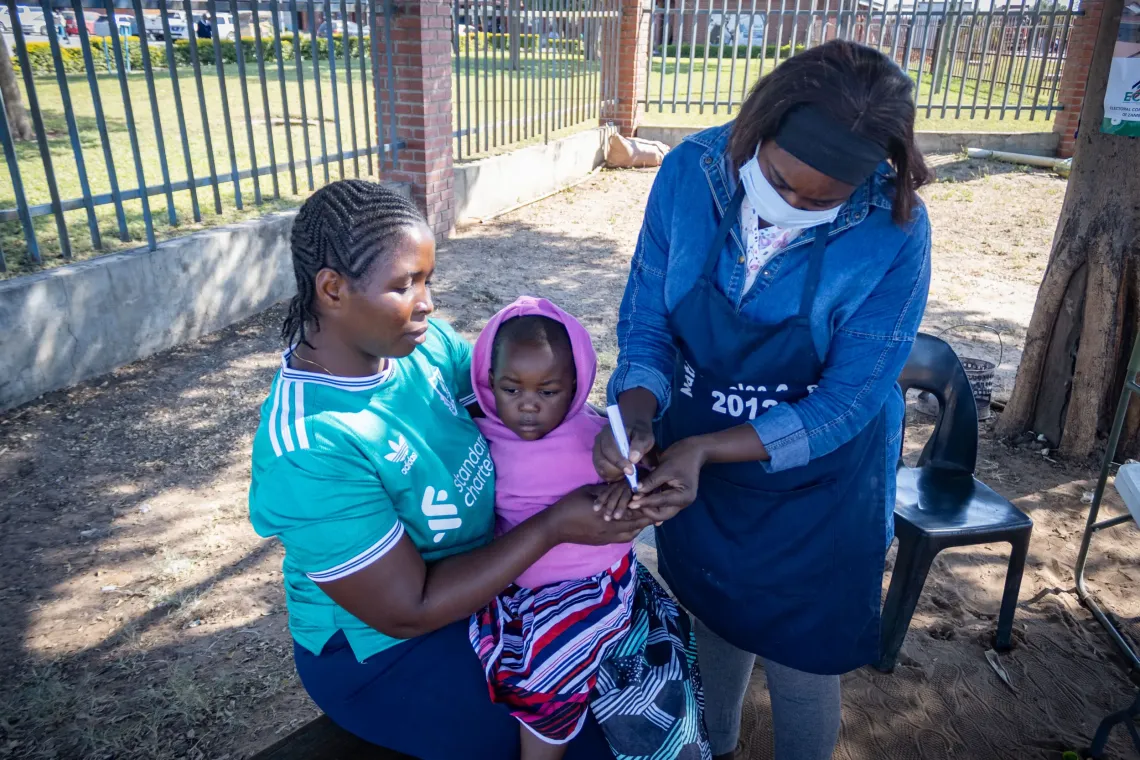
For various reasons, such as lack of reliable childcare, some parents and caregivers usually bring their children along on their work activities. Memory P. Lutangu, 28, is a chitenge trader who lives in Katima Mulilo but buys her stock in Sesheke. She often brings her two-year-old daughter, Lubomba Hachizibe, with her as she shops to restock her products. When she arrived at the border, Memory was happy that the vaccination team was nearby, so Lubomba didn't miss out and received another critical dose of the vaccine against polio.
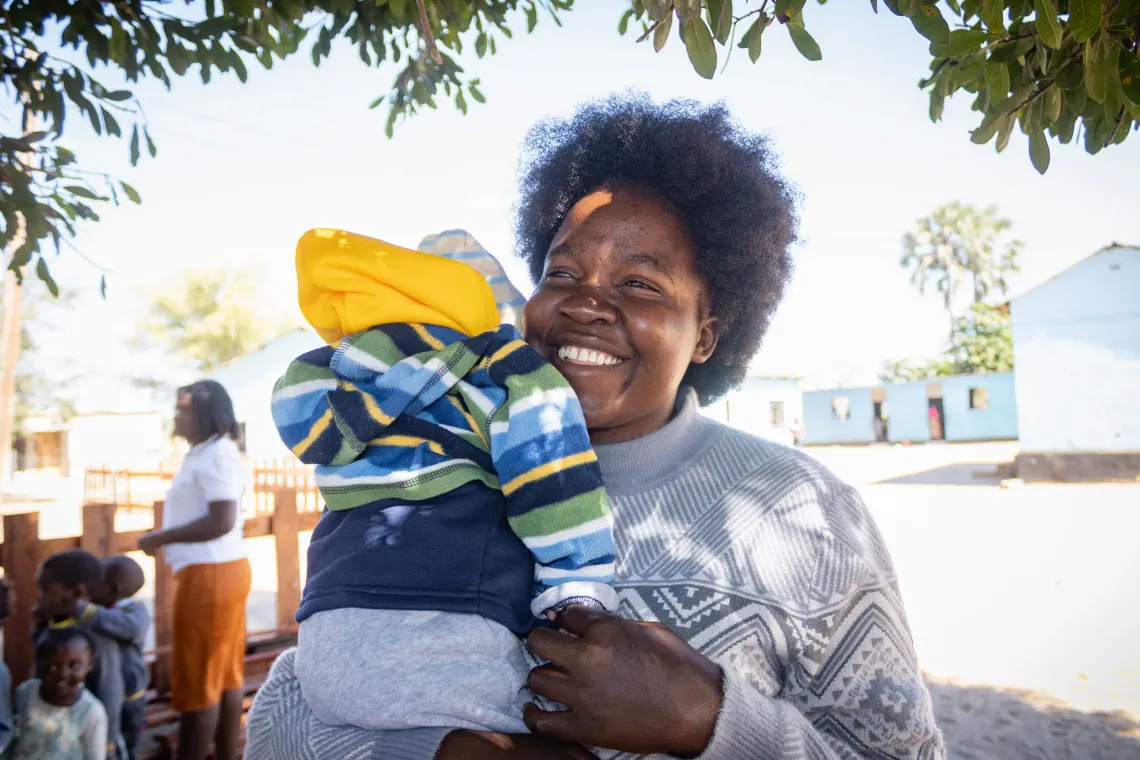
Similarly, Prisca Chamulwanda takes her three-month-old baby to work after recently returning from maternity leave. Prisca teaches grade five at Confidence Academy Pre and Primary and took advantage of the visiting vaccination team to ensure her son, Micah, received the vaccine. “I bring my baby to daycare and most often he’s in his crib in class with me. It was good that the vaccination team came to the school today and I'm using this opportunity to get him immunized.”
The Deputy Head Teacher of the school also welcomed the idea of supporting and helping parents by allowing vaccination teams to reach schools.
The parents don't have to take their children to the clinic or wait at home for the door-to-door teams
said Nosiku Mercy Lisulo. The vaccination team from Sesheke Urban Clinic was able to give over forty children under five the second dose of the polio vaccine and ensure they are closer to being better protected against poliovirus through multiple doses of oral polio vaccine. Parents gave consent to the school administration to allow their children to receive the vaccine there.
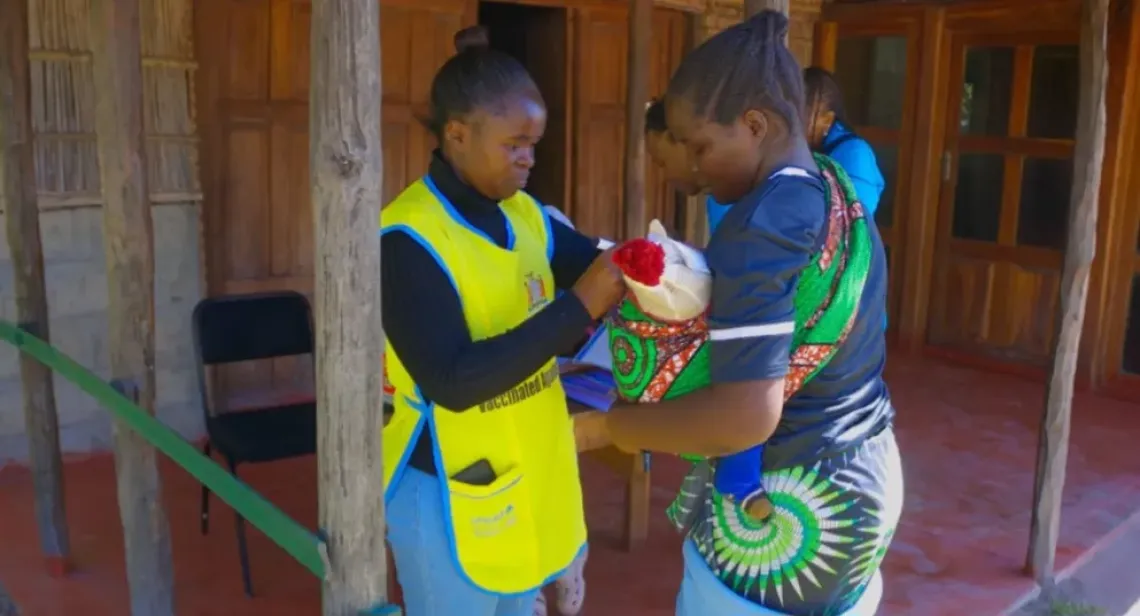
Having vaccine teams present in other areas such as markets and bus stops also helps those who are mobile in the area, such as Namenda Likando, 21, who met a vaccination team at Harbour Transit Point in Kalabo District. This is the last stop before the bridge that goes into the Liuwa National Park where Namenda’s village is situated. Positioned outside the Africa Parks Office, the vaccination team could clearly see those walking across the bridge and easily spotted Namenda and her baby. The team from Liyoyelo Health Facility in Kalabo provided one month old Justin with a first dose of the vaccine before Namenda crossed the bridge to her village, where she expected to stay for some time.
Having vaccination teams stationed in places such as border posts and bus stops often stirs the interest of men who want to learn more about health services. “The men are curious and are actually champions for us because they encourage their partners to bring the children to the clinic for immunization,” said Namakando Memory Simangolwa, a nurse also from Katima Mulilo Urban Health Center.
Healthcare Workers took the opportunity to sensitize the men about other vaccines and also promoted Routine Immunization and Primary Health Care services.
From schools to border areas, the second round of the polio campaign demonstrated that combining house-to-house vaccination with strategically located fixed and transit vaccination points is an effective approach for reaching missed children and interrupting poliovirus transmission. Communities also know where to be best positioned and keep track of missing children.
The polio campaign is led by the Zambia Ministry of Health with support from the Global Polio Eradication Initiative (GPEI), including WHO, UNICEF, Rotary International, and the generous financial support of the King Salman Humanitarian Aid and Relief Center (KSrelief), the Kingdom of Saudi Arabia and the United Arab Emirates (UAE). The campaign targeted six provinces across the country, including Western province, reaching more than 3.9 million children and bringing Zambia one step closer to a future where every child is fully immunized and protected against preventable diseases like polio.