As Lundazi rebuilds from the floods, Lottie goes door to door protecting children
Supported by FCDO, Community-based Volunteers support early detection and prevention of malnutrition and waterborne diseases in flood-affected areas in Zambia

LUNDAZI, Eastern Province, Zambia, March 2026 --- Lottie Nkhata is a 29-year-old Community-Based Volunteer (CBV) living in Lundazi where he visits households each week to help ensure children are healthy and safe. Recent floods in Lundazi and Lumezi districts, in Zambia’s Eastern Province, have put children at increased risk of malnutrition. Floodwaters hit the area late in December last year, severely disrupting livelihoods of more than 40,000 people. Water swept through villages and rose inside homes, causing many structures to collapse. As families now focus their limited resources and energy on rebuilding shelter, children are at greater risk of malnutrition due to reduced access to adequate food.
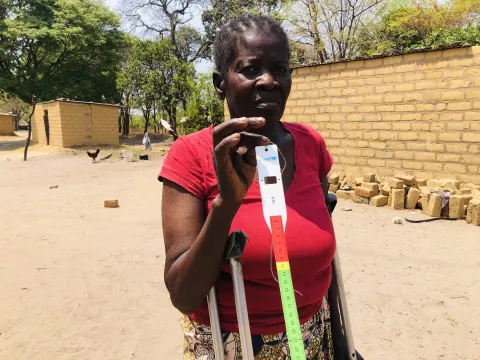
We saw water flow into our community, and it kept rising inside our house until it collapsed. Now I am looking for money to pay for rent, something I never planned for.
She now lives in a rented room with her children. She fetches water from a communal source and seeks casual work to support her family. Like many parents in the community, much of her time is spent earning an income to pay rent and support recovery, leaving less time to prepare diverse, nutritious meals for her children.
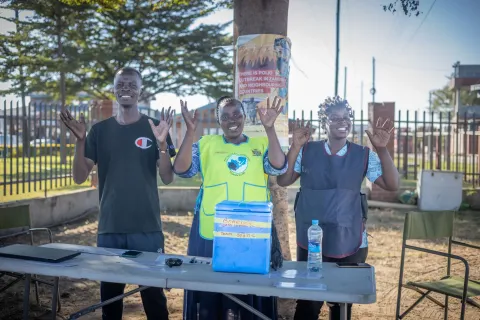
Since February, Community-Based Volunteers like Lottie have been supporting families affected by the floods. They check the safety of water in their communities, share life-saving information on the prevention of cholera and other waterborne diseases, and screen children for malnutrition, risks that increase when floods disrupt access to safe water, sanitation, and food.
As Lottie moves from house to house to meet families, he carries essential, life-saving tools, including a Mid-Upper Arm Circumference (MUAC) tape to screen for malnutrition, a registry book, and referral forms. These tools allow him to identify cases early and ensure timely referral for treatment.
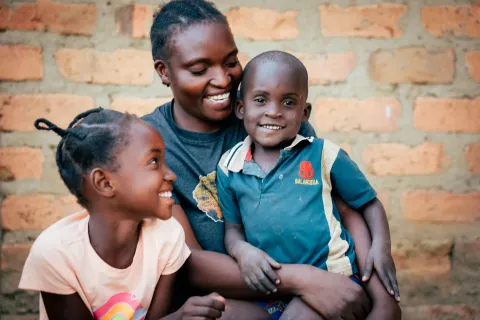
On this day, Lottie visits the home of Esnart to provide support to her and her five-year-old daughter, Agness. One of the key activities Community-Based Volunteers carry out is screening for malnutrition using the MUAC tape. Lottie greets the family and asks Agness to stand still. Carefully, he finds the midpoint between her shoulder and elbow, wraps the tape around her left arm, and threads it through the buckle.
Lottie looks at the indicator window: the colour shows green. This is a sign of hope. The green colour indicates that Agness is well nourished. He records her name and measurement in his book and shows the result to Esnart, so she understands her daughter’s nutrition status. He explains that the green colour means Agness has sufficient muscle and fat for her age, and she can continue feeding her as she has been.

The floods have also left standing water across communities, creating breeding grounds for mosquitoes and increasing the risk of malaria. Lottie carries testing kits and checks residents, especially children, for symptoms such as fever and chills. If a test is positive, he fills out a referral form and accompanies the family to the nearest health facility to ensure the child receives adequate treatment.
Community-Based Volunteers like Lottie also educates families on sanitation and hygiene to prevent water- and vector-borne diseases such as cholera and typhoid. They visit water collection points, advise families how to keep water safe, and demonstrate proper handwashing using soap before handling food.
After finishing his visit with Esnart, Lottie continues to the next household. He moves from home to home, determined to ensure that no child slips from the green zone into the yellow or red zone, while making sure every child is safe from cholera and malaria. As families rebuild their lives, Lottie remains on the frontlines, protecting the health and future of children in his community.
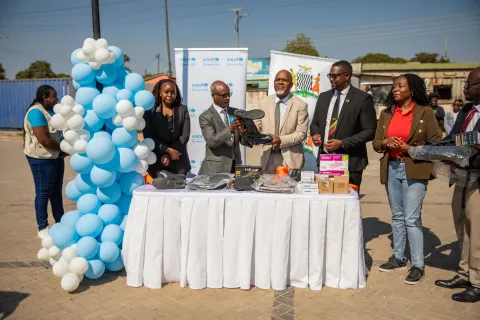
UNICEF is grateful for the support from the United Kingdom’s Foreign, Commonwealth & Development Office (FCDO), which has enabled the training of 150 Community-Based Volunteers to support communities and children affected by floods in Zambia with essential emergency knowledge and assistance, reaching more than 45,000 people, with CBVs conducting door-to-door visits to more than 10,000 households in the affected districts. These efforts are helping to protect children’s health and support families as they recover from the floods.