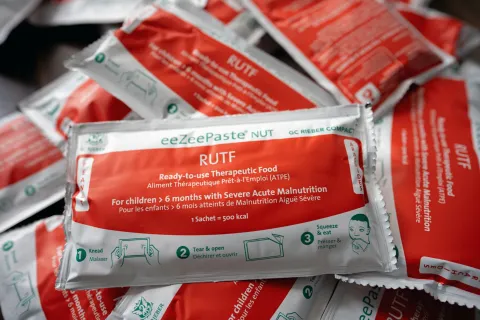
How Family MUAC is Changing Lives in Kanyama Village
An Irish Aid-supported nutrition programme empowers families, Community-Based Volunteers and people living with disabilities to detect and respond to child malnutrition early

KANYAMA Rural Health Center, Mwinilunga, September 2026 --- In Kamawu village in Mwinilunga district, protecting a child from malnutrition is becoming a responsibility that starts at home. Armed with a simple Mid-Upper Arm Circumference (MUAC) tape and the knowledge to use it, caregivers and community-based volunteers (CBVs) are learning to recognise the warning signs of acute malnutrition before it becomes life-threatening.
For years, detecting malnutrition among children in Kanyama was largely the responsibility of health workers and community-based volunteers. Children could be screened during under-five outreach sessions, but these visits were often only once a month, making it difficult to monitor changes in a child’s nutritional status between visits.
Today, a simple strip of coloured tape is helping change that.
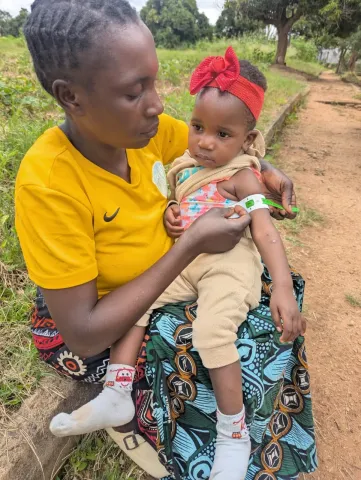
Known as Family MUAC, the approach enables caregivers to screen children for acute malnutrition at home using MUAC tape. In Kanyama, the programme is bringing screening closer to families while giving caregivers a more active role in protecting their children’s health.
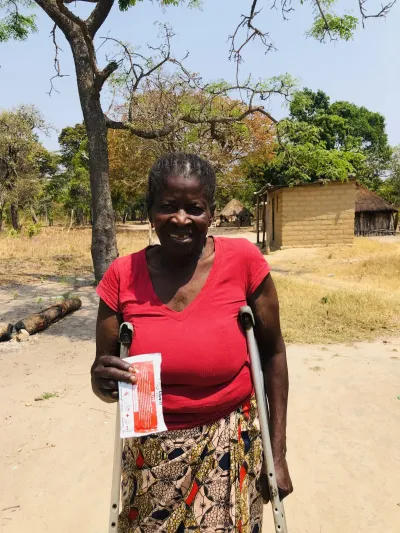
Among those embracing the approach is a 76-year-old grandmother, Elisa Kazhibaki, living with a disability who has become a Family MUAC champion in her community. Her story demonstrates how the right combination of household support, community knowledge and early action can turn families from passive recipients of services into active champions of their children’s health and nutrition.
Before she became disabled, she was able to cultivate her own field, producing enough food for her household and some surplus for sale. Her disability changed her ability to work and move around, but it did not take away her desire to contribute to her community.
“Disability is not the end of the world,” she says. “Even they can involve themselves in health issues that actually matter. It doesn’t have to be Family MUAC only.”
Her journey into Family MUAC began through her son, CBV, who was involved in training caregivers. She learnt about the approach and saw an opportunity to contribute despite her limited mobility.
“I just thought despite my disability it is a good way to also contribute to my community through this small gesture,” she says.
Bringing nutrition screening into the home
Before Family MUAC, identifying malnutrition early was difficult for many families.
Kazhibaki recalls that it was not always easy to know when a child was beginning to become malnourished. Often, by the time signs became noticeable, the child had already been malnourished for some time.
Although her disability prevents her from travelling long distances, she has found ways to encourage caregivers nearby to screen their children and continues to perform MUAC checks on her grandchildren.
Her role may be modest in physical reach, but she believes its impact can be significant.
Cash support creates room for healthier choices
Kazhibaki’s experience also demonstrates how social protection can complement community nutrition interventions.
She became a beneficiary of the SCT programme under the Ministry of Community Development and Social Services after being enrolled through the community welfare assistance structures, with support from a local social welfare volunteer.
The cash transfer has transformed her household in ways that go beyond food.
For years, she did not have a house of her own. With support from the cash transfer, she was able to buy iron sheets and construct a home where she now lives.
The support has also helped her household meet education-related needs.
“Before it was hard to buy books and school uniforms for my grandchildren, but we have been able to buy with the help of the social cash transfer,” she says.
The assistance has also improved the household’s ability to plan for nutrition and respond when children become sick.
The family can plan how to use the money for food and nutrition and can arrange transport to take a sick child to a clinic when necessary, including hiring a motorbike.
For Kazhibaki, social protection and community nutrition support are therefore connected: one strengthens the household’s ability to cope, while the other helps families identify and respond to nutritional problems early.
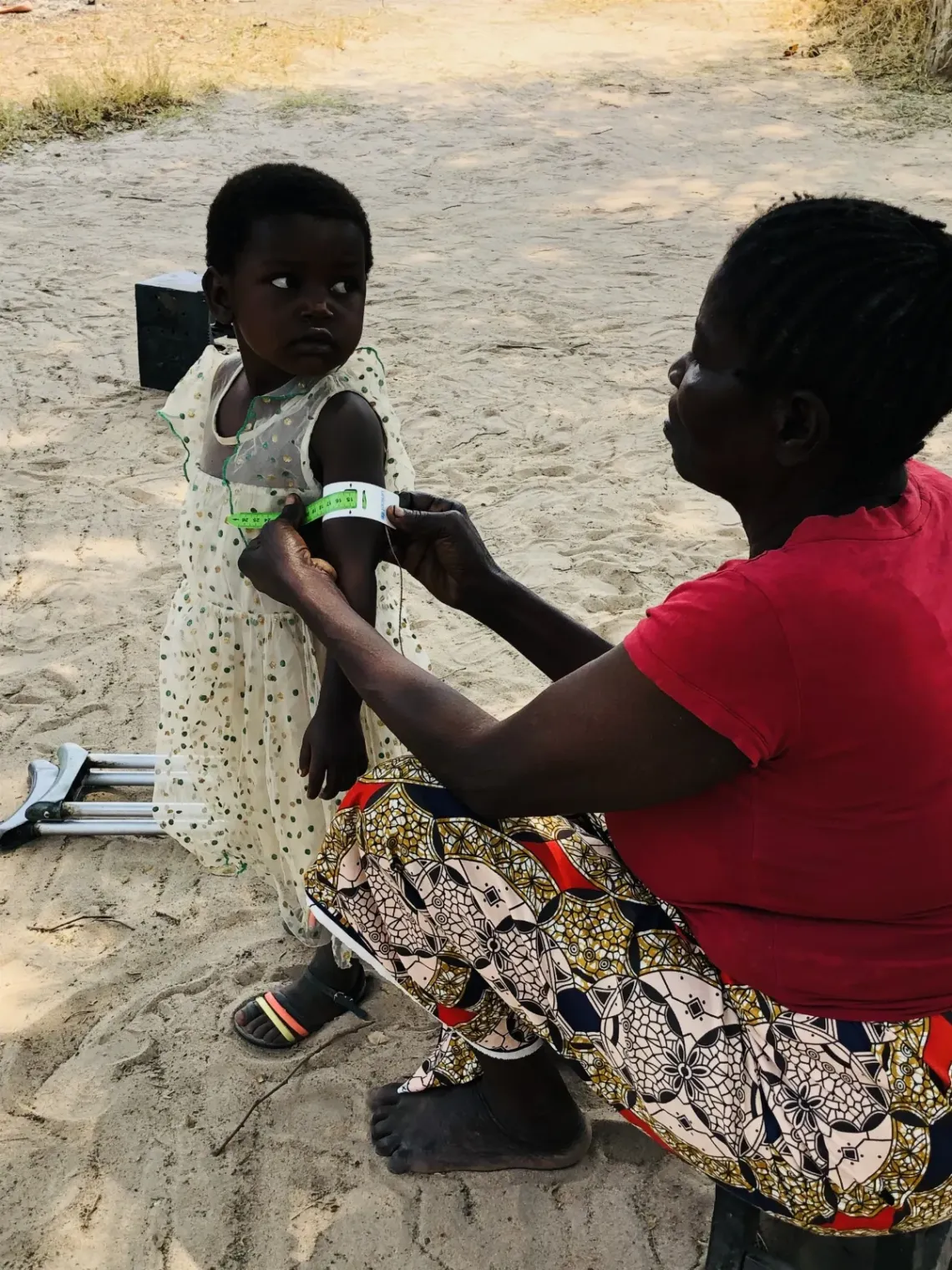
Family MUAC has changed that by putting a screening tool directly into caregivers’ hands.
During training, caregivers learn to use the MUAC tape and understand its colour codes. Green indicates that the child is in a good nutritional state and monitoring should continue. Yellow indicates moderate acute malnutrition and requires action, while red indicates severe acute malnutrition requiring urgent attention and referral.
For Kazhibaki, practising with her own grandson helped turn training into something practical.
" I remember practicing doing MUAC with my grandchild and that helped because I was actually monitoring my grandson’s MUAC," she says.
Although her disability prevents her from travelling long distances, she has found ways to encourage caregivers nearby to screen their children and continues to perform MUAC checks on her grandchildren.
Her role may be modest in physical reach, but she believes its impact can be significant.
Cash support creates room for healthier choices
Kazhibaki’s experience also demonstrates how social protection can complement community nutrition interventions.
She became a beneficiary of the SCT programme under the Ministry of Community Development and Social Services after being enrolled through the community welfare assistance structures, with support from a local social welfare volunteer.
The cash transfer has transformed her household in ways that go beyond food.
For years, she did not have a house of her own. With support from the cash transfer, she was able to buy iron sheets and construct a home where she now lives.
The support has also helped her household meet education-related needs.
“Before it was hard to buy books and school uniforms for my grandchildren, but we have been able to buy with the help of the social cash transfer,” she says.
The assistance has also improved the household’s ability to plan for nutrition and respond when children become sick.
The family can plan how to use the money for food and nutrition and can arrange transport to take a sick child to a clinic when necessary, including hiring a motorbike.
For Kazhibaki, social protection and community nutrition support are therefore connected: one strengthens the household’s ability to cope, while the other helps families identify and respond to nutritional problems early.
A community changing its attitude
A local CBV working in Kanyama says Family MUAC has changed the way caregivers understand and respond to malnutrition.
The CBV has trained 53 caregivers and reached about 119 children, with follow-ups conducted every one to two weeks.
Caregivers are trained in groups and those who struggle with the MUAC procedure receive additional training and are tested again until they can use the tape correctly.
The CBV recalls identifying a child who appeared unwell during an infant and young child feeding counselling session. A MUAC check showed the child was in the yellow zone.
The child was immediately initiated on community-based management, and after a month the MUAC had improved to the green zone.
Such cases illustrate the value of early detection.
The facility nutrition focal point and environmental health technician says Family MUAC effectively moves screening from the health facility into the home.
Instead of health workers having to screen every child themselves, caregivers can identify children who may be at risk and seek assistance early. This allows health facilities to concentrate more on complicated cases while CBVs provide community-level support and referrals.
“Family MUAC puts the caregiver at the centre of child’s nutrition,” the facility official explains, because caregivers are the people who are with children every day.
Inclusion is part of the solution
Kazhibaki’s participation also highlights the importance of including people living with disabilities in community health programmes. For her, becoming a Family MUAC champion has restored a sense of purpose and strengthened her voice in the community.
“Children’s health is very important,” she says. “When I speak about the importance of Family MUAC, caregivers give me a listening ear.”
Community health workers say people living with disabilities should not be excluded from community programmes simply because of their limitations.
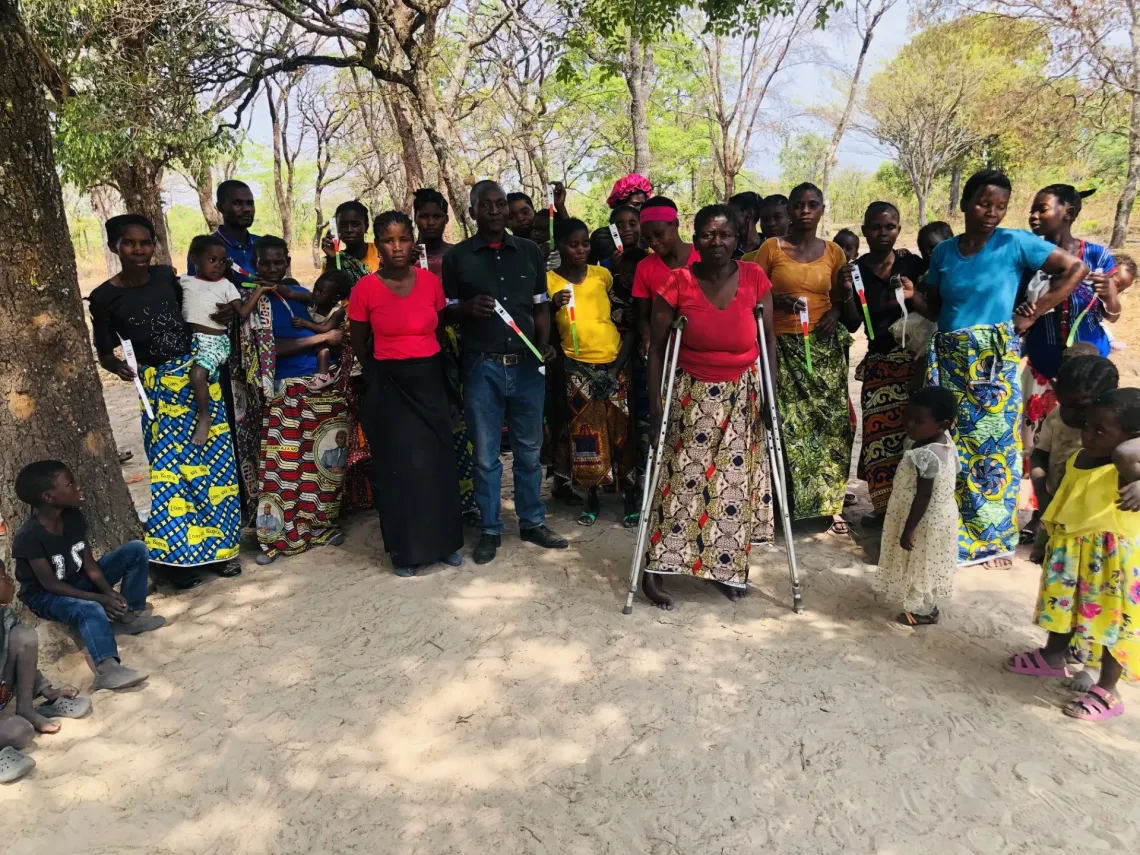
Kazhibaki hopes Family MUAC will reach more areas of Kanyama Chiefdom that are not currently benefiting from the programme.
Her message to others living with disabilities is simple: find a way to participate.
“Disability is not the end of the world,” she says.
For Kazhibaki, a small strip of tape has become more than a tool for measuring a child’s arm. It has become a way to serve, speak up and help protect children before malnutrition becomes severe.
And in Mwinilunga district, that small gesture is helping bring the collaboration malnutrition closer to home.
Thanks for the support from Irish Aid, UNICEF is proud to partner with the Government of the Republic of Zambia, through the Ministry of Health, to bring life-saving interventions closer to children and families, especially those living in hard-to-reach communities where access to essential services can be a challenge.
Sustaining and expanding approaches such as Family MUAC, alongside social protection and inclusive community engagement, is therefore not simply an investment in nutrition, it is an investment in children’s survival, development and future.