Bringing Nutrition Closer to Home
Olipa’s Recovery Through Family MUAC

Gwembe District, Southern Province, Zambia, February 2026---In Gwembe District, Southern Zambia, many families continue to struggle with food insecurity as recurring droughts and floods damage crops and strain livelihoods. The story of one-year-and-five-month-old Olipa Musaka, shows how early nutrition interventions, particularly through the Family MUAC (Mid-Upper Arm Circumference) approach, can save children’s lives.
Olipa was born into a family of five. Her early life was marked by hunger, as her mother, Joseline, 30, had no stable source of income to support her children. The prolonged drought during 2024 and 2025 made an already difficult situation worse: food became scarce, prices rose, and the youngest and most vulnerable child in the household, Olipa, was the most affected. She began vomiting frequently and grew visibly thin and weak.
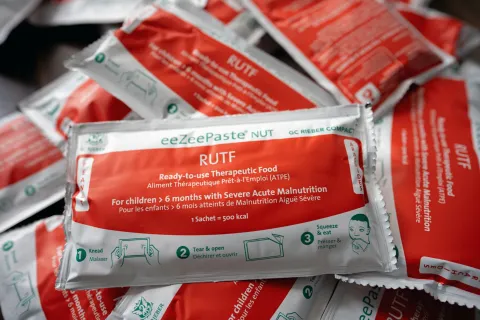
A visit to the health facility revealed that Olipa was suffering from Moderate Acute Malnutrition (MAM). She was then enrolled in a nutrition programme and provided with Corn Soya Blend Plus (CSB++) to support her recovery. But with severe food shortages at home, Joseline was forced to share the CSB++ with all her children. She also struggled to continue with her nutrition review appointments, which required her to walk approximately 14 km, nearly three hours, to reach the health clinic. Without consistent visits and treatment, Olipa’s condition deteriorated to Severe Acute Malnutrition (SAM).
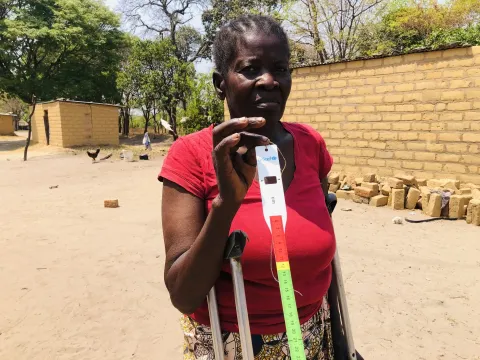
Hope returned to the household when the Family MUAC screening approach was introduced in her community. Thanks to the knowledge provided by trained Community-Based Volunteers, Joseline learned how to measure the mid-upper arm circumference of her children and where to access nutrition services closer to home. Now she knows how to monitor her children’s nutrition status and seek timely care.
When support reached the community, little Olipa weighed just 9.5 kg, and her tiny arm showed she was undernourished. Her mother received two packs of CSB++ each week to help her daughter gain strength. At the next visit, Olipa’s weight had gone up to 10 kg, and her arm measurement showed improvement too. Two weeks later, she weighed 10.7 kg and continued to grow stronger. Her steady progress was a sign that the help she was receiving was truly making a difference in her recovery.

The introduction of the Family MUAC screening has shortened the distance we need to walk to access nutrition services. Before, I had to walk long distances to the health facility. Now, I know how to monitor my children’s nutritional status through the MUAC screening. It has made life better for me and for other mothers as well,
Joseline, Mother of Olipa
UNICEF appreciates the vital support from the United Nations Central Emergency Response Fund (CERF) and the Foreign, Commonwealth & Development Office (FCDO). This support is helping ensure children receive lifesaving nutrition services when they need them most. Working closely with the Ministry of Health and Plan International, partners are extending climate-resilient nutrition interventions to families in even the hardest to reach communities in Gwembe and Sinazongwe districts, in Southern Zambia. These collective efforts are helping safeguard the well-being and future of Zambian children.