Children Present National Children’s Manifesto to Political Parties Ahead of the 2026 General Elections
Young people from all ten provinces call for peaceful, inclusive and child-centered elections during high-level engagement convened by the Zambia Centre for Interparty Dialogue at the Mulungushi International Conference Centre
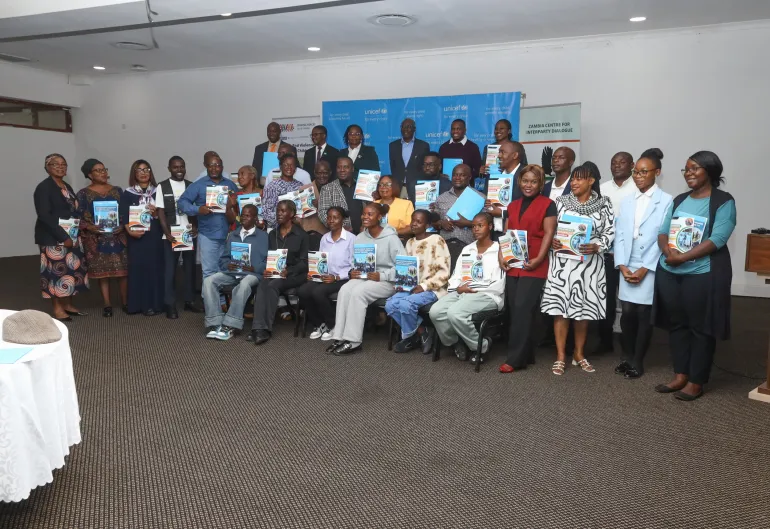
LUSAKA, Zambia, 14 May 2026 – Children from across Zambia have today formally presented the National Children’s Manifesto to representatives of political parties during a high-level stakeholder engagement dialogue convened by the Zambia Centre for Interparty Dialogue (ZCID), a neutral platform promoting peaceful and inclusive democratic participation, ahead of the 13 August 2026 General Elections.
In the manifesto, children identified poverty as the root cause of challenges affecting their education, health, nutrition, protection, and overall wellbeing. They stressed that access to education must go beyond enrolment to include quality learning, safe facilities, adequate teachers, appropriate learning materials, and inclusive support for all learners.
They also raised concerns that hunger, poor healthcare, unsafe water, and unhealthy environments are undermining children’s dignity, wellbeing, and ability to learn. In addition, children called for stronger protection systems to address violence, abuse, and child marriage, strengthen access to justice, and ensure universal birth registration, while improving water, sanitation, and hygiene (WASH) services that affect children’s health, dignity, and school attendance—especially for girls. Children further urged political actors to uphold ethical, child-sensitive communication that protects children from exploitation and harmful messaging.
The engagement brought together political party representatives, child representatives, Members of Parliament, civil society organisations, and development partners to amplify children’s voices in the electoral process.
“As a neutral platform for dialogue, the Zambia Centre for Interparty Dialogue is committed to ensuring that children’s voices are heard ahead of the 2026 General Elections. We urge all political actors to promote peaceful and inclusive participation that protects the rights and well-being of every child,” said Ms. Doreen Njovu Kabwe, Executive Director of the ZCID who also noted that election periods negatively affect children through fear, stress, violence, and instability, highlighting the need for peaceful and child-sensitive processes. “Children demand honest, accountable leadership that keeps promises, uses resources responsibly, and includes children in decision-making,” she added.
The Children’s Manifesto was developed through nationwide virtual consultations conducted with children aged 10 to 17 across all ten provinces of Zambia. The consultations were facilitated through a partnership between the Joining Forces Alliance (a consortium of six NGOs working in child rights) and UNICEF Zambia and further informed by a nationwide U-Report poll that enabled children to share their concerns, aspirations, and recommendations on issues affecting their lives.
“We are proud to have supported children across all ten provinces to safely share their experiences, concerns, and aspirations ahead of the 2026 General Elections. This manifesto is a powerful reminder that children want a peaceful, inclusive, and accountable Zambia where their rights and voices are respected,” highlighted Ms. Chilobe Muloba Kambikambi, Chairperson of the Joining Forces Alliance.
Ms. Anita Manika, Child Representative and Junior Mayor of the Greater City of Lusaka, emphasized the importance of protecting children during electoral periods and ensuring their voices are heard in national decision-making processes.
“Every child deserves a peaceful, inclusive, and safe environment where they are heard, protected, and empowered to thrive,” said Ms. Manika. “As we approach the 2026 elections and beyond, we urge leaders, political parties, communities, and all stakeholders to protect children’s rights before, during, and after the elections.”
Ms. Manika noted that children across Zambia used the consultations to openly share their lived experiences regarding survival, protection, development, and participation, while also reflecting on the impact political tensions and violence have had on children during previous election periods.
The event also featured opening remarks from Hon. Joseph Munsanje, Chairperson of the Parliamentary Caucus on Children, who spoke on the importance of child participation, child protection, and ongoing collaboration with UNICEF in advancing children’s rights and wellbeing in Zambia.
The presentation of the Children’s Manifesto marks an important milestone in promoting meaningful child participation in governance and democratic processes. It also seeks to encourage political leaders and aspiring candidates to commit to peaceful elections and policies that prioritize the rights and welfare of children.
“As Zambia prepares for the 2026 General Elections, it is both timely and essential that we listen to the voices of children. Inclusive democratic processes are strong when they reflect the perspectives and aspirations of all citizens, including children. Their contributions through this Children’s Manifesto remind us that leadership must be grounded in accountability, equity, peace, and a shared commitment to the well-being and future of every child in Zambia,” stated Mr. Tinkhani Msonda, UNICEF Zambia's Deputy Country Representative (a.i), while reassuring children that UNICEF will continue to work closely with Government, civil society, communities and young people to advance children’s rights and respond to their needs.
The Joining Forces Alliance and UNICEF call on all political parties and candidates to place children at the centre of their party manifestos and policy commitments by prioritizing investments in education, health, nutrition, child protection, WASH, social protection, and mental health services. Political leaders must commit to peaceful, child-sensitive campaigns and take concrete action to protect every child’s rights, wellbeing, and future.
The conveners reaffirm that children are not merely passive beneficiaries of care, but active citizens whose voices and perspectives must be included in shaping Zambia’s future.
Key Recommendations:
- Prioritize investment in child-focused services by addressing poverty, improving access to quality education, healthcare, nutrition, protection, and WASH services.
- Strengthen child protection systems to prevent violence, abuse, child marriage, and ensure universal birth registration and access to justice.
- Promote peaceful, child-sensitive elections by protecting children from violence, harmful political messaging, and exploitation during campaigns.
- Ensure inclusive governance by engaging children in decision-making and holding leaders accountable for commitments affecting children’s wellbeing and future.
The children of Zambia are calling on leaders to place children at the centre of national development and the 2026 electoral process. Their message is clear: when children are safe, healthy, educated, protected, and heard, Zambia becomes stronger, fairer, and more prosperous for everyone.
As part of the Children’s Manifesto presentation, stakeholders also launched the Child Safeguarding Guidelines for Political Parties during the 2026 General Elections. The guidelines provide a comprehensive framework to ensure that children are protected from violence, exploitation, abuse, intimidation, and political manipulation throughout the electoral process.
Grounded in Zambia’s child protection and electoral laws, the guidelines outline minimum safeguarding standards for political parties, candidates, campaign teams, and supporters, while promoting safe, ethical, and non-partisan participation of children in civic processes. They further reinforce accountability and the responsibility of all political actors to uphold the rights, dignity, privacy, and wellbeing of every child before, during, and after the elections.
Note to Editors:
You can find here: the children’s manifesto
Key requests from children to political parties include:
- Child-safe elections (zero tolerance): Protect every child from political violence, intimidation, hate speech, and exploitation before, during and after elections.
- No use of children in campaigns: No recruitment or use of anyone under 18 for rallies, mobilisation, messaging, “cadre” roles, or any political activity; strict internal enforcement for breaches.
- Essential services must not be disrupted: Elections will not interrupt children’s access to schooling, health (including immunization and mental health), protection services, WASH and social protection, and public resources for children will not be diverted to campaigns.
- Quality, inclusive education with basic minimum standards: Political parties are urged to prioritise free, inclusive, quality education by ending hidden school fees, investing in early childhood and foundational learning, and using resources (including Constituency Development Fund) to fix overcrowded classrooms through more teachers and better-maintained infrastructure; guaranteeing a minimum learning package in every school (desks, core textbooks, WASH and basic repairs); providing targeted support for the most vulnerable learners (girls, children with disabilities and those in hard-to-reach areas); strengthening school counselling and child protection; and expanding social protection so poverty does not keep children out of school.
- Health, nutrition and WASH for child survival and dignity: Political parties are urged to commit to stronger child- and adolescent-friendly health services by increasing health financing toward the 15% Abuja target, ensuring every facility has dedicated child/adolescent service points, confidential counselling, essential medicines, equipment and staff, and expanding community-based primary health care through a professionalised community health worker programme to reach hard-to-reach areas; to tackle hunger and malnutrition by scaling school feeding first in the most food-insecure areas, setting minimum nutrition standards, promoting healthy school food environments; and to protect children’s health and dignity by strengthening WASH and environmental health (reliable water, hygiene, waste management and enforcement of pollution laws), providing free menstrual products and menstrual health education with safe private facilities in schools, and expanding nutrition counselling, growth monitoring and community outreach on hygiene, immunization and healthy diets, including linking social cash transfers to nutrition support.
- Stronger child protection and accountability: Political parties are urged to deliver real child protection and safety by fully implementing the Children’s Code Act (child‑friendly courts, strengthened child protection police, and child‑sensitive justice), enforcing zero tolerance for all violence against children and ending child marriage, investing in stronger child protection systems through more and better‑deployed social welfare officers and improved case management, reinforcing family support and social protection to prevent unnecessary separation of children from families, and accelerating universal birth registration so every child has legal identity and access to services and protection.
Partner Media Contacts:
Zambia Centre for Interparty Dialogue
Ms. Sophie Kaoma
+260-977583911
[email protected]
Joining Forces Alliance
Mr. Hermis Maunda
+260-979597429
[email protected]
Media contacts
About UNICEF
UNICEF promotes the rights and wellbeing of every child, in everything we do. Together with our partners, we work in 190 countries and territories to translate that commitment into practical action, focusing special effort on reaching the most vulnerable and excluded children, to the benefit of all children, everywhere.
For more information about UNICEF and its work for children in Zambia, visit www.unicef.org/zambia.