Battling malnutrition in Yemen
Protecting children with life-saving support amid surging cases of acute malnutrition

- English
- العربية
At 12 months, Abdullah weighed only 4 kilograms and started recurrent diarrhea and vomiting with a fever.
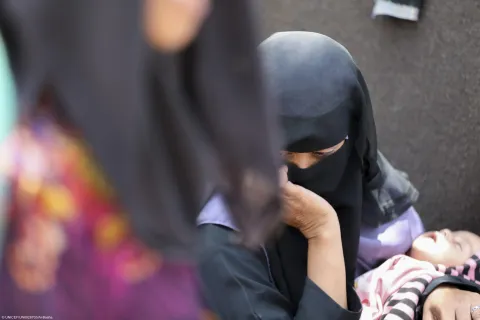
“I was running from one hospital to another as his condition did not improve. For nearly one month, I frantically took him to five different hospitals until he was finally referred to this clinic in Mokha. I was so worried because he was not reacting when I brought him here,” said Nisreen, the 35-year-old mother of Abdullah.
Displaced in Hudaydah, in the west of Yemen, Nisreen and her seven children are bearing the brunt of the silent yet devastating impact of nearly 10 years of conflict: malnutrition. The family is living on a tight thread with barely enough to survive each day with the sporadic income of Nisreen’s husband who works as a fisherman. The condition of Abdullah, the youngest son, sharply deteriorated after Nisreen started feeding him with water mixed with starch and sugar without other alternatives.
Following five days of intensive treatment at Mokha Hospital with rehydration solution and therapeutic milk, Abdullah started to gain weight and now smiles back to her mother as he plays with a toy. While Abdullah was lucky enough to have recovered, millions of children do not make it to health facilities due to a lack of access to healthcare facilities and transportation costs.
In Yemen, an increasing number of children are falling victim to severe acute malnutrition, amid an economic collapse that has pushed families into abject poverty. Especially in the West Coast areas, including where Abdullah lives, disease outbreaks, high food insecurity, and a lack of access to clean drinking water are driving up acute malnutrition, which could be fatal if untreated.

According to the Integrated Phase Classification (IPC) Acute Malnutrition Analysis released in August, the number of children under the age of five suffering from acute malnutrition, or wasting, soared by 34 per cent from the previous year to 600,000 children, in areas controlled by the Government of Yemen. Notably, the districts of Mokha in Taizz, and Khawkha and Hays in Hudaydah on the West Coast areas experienced “extremely critical” levels of acute malnutrition (IPC AMN Phase 5) for the first time with more than 30 per cent of children experiencing acute malnutrition.
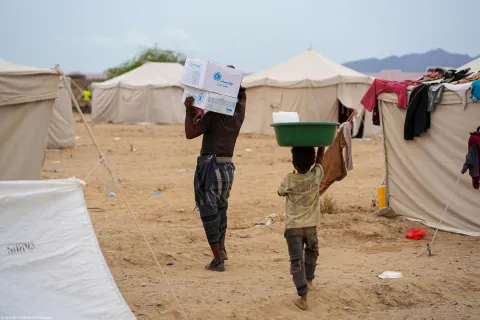
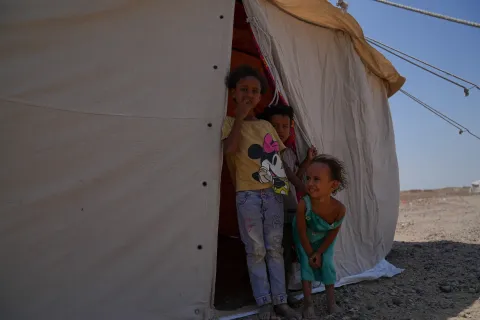
The situation is particularly dire for displaced families. “We live in a tent given to us six years ago. It is now completely torn apart. In winter, we tie blankets from inside and in summer, we are exposed to heat and rain. All of us live in a single room,” said Nisreen, who believes the harsh living conditions may have made her children vulnerable to diseases and malnutrition.
“Sometimes the children cry because of hunger as I have nothing to give them for breakfast, lunch and dinner. I was heartbroken, seeing them hungry yet I had nothing I could give,” she said, adding that two other children also suffered from malnutrition.

Muhammad Essam, a doctor in the nutrition department of Mokha Hospital, a referral facility treating severe cases with complications, says that the spread of diseases and flooding in recent months have compounded the situation. “In addition to the lack of health awareness about family planning and the importance of vaccination, the torrential rain has demolished homes and displaced families. The spread of cholera, malaria, and dengue fever are also exacerbating the severity of malnutrition.”
His department usually receives around 100 to 120 cases per month and the 22 beds in his department are not enough to accommodate all the patients. “We set up temporary beds and try to receive more patients, but we see a rising demand and more resources are needed,” he said.
A lack of awareness about the right nutrients is another factor exacerbating the situation. In the fully packed nutrition department, several infants were seen with swollen bodies, the condition triggered by a severe protein deficiency.
“This is due to many mothers feeding their babies with only water mixed with sugar without feeding them with the right types of nutrients. It is also an important part of our work to educate and raise their awareness on proper feeding practices.”
UNICEF provides operational costs to 37 therapeutic feeding centers (TFC), countrywide, including Mokha Hospital and over 4,789 outpatient centers (OPT). It also provides Ready-to-Use Therapeutic Food (RUTF) and supports the treatment of children suffering from severe acute malnutrition across the country. But to save vulnerable children from slipping into malnutrition, urgent support is needed to expand a comprehensive response to prevent malnutrition and scale-up treatment services in case preventive efforts fail.
“To effectively tackle the alarming nutrition situation among children, we must address the root causes of malnutrition, including inadequate diets, poor infant and young child feeding practices, and insufficient WASH (water, sanitation, and hygiene) services. A comprehensive approach that encompasses nutrition, feeding practices, and essential services is crucial for ensuring the survival, growth, and development of these vulnerable young lives’, said Faraja Chiwile, UNICEF Chief of Nutrition in Yemen.