

Climate Resilience
A liveable future for every child

- English
- Tiếng Việt
Challenges
The evidence is clear: climate change threatens every child’s ability to survive, grow, and thrive. Their physical and psychosocial vulnerabilities are exposed and services that are vital for their development are disrupted. They lose schooling, nutrition, health care, and access to safe water and sanitation services. Critical social and child protection services are cut-off, just when they need them most.
For Viet Nam, in the firing line as the 13th most affected country by climate change globally in the past two decades, its children and women are increasingly at high risk. With climate change the existential threat of our times, every child must be protected and resilient to ensure they have a liveable future.
Solutions
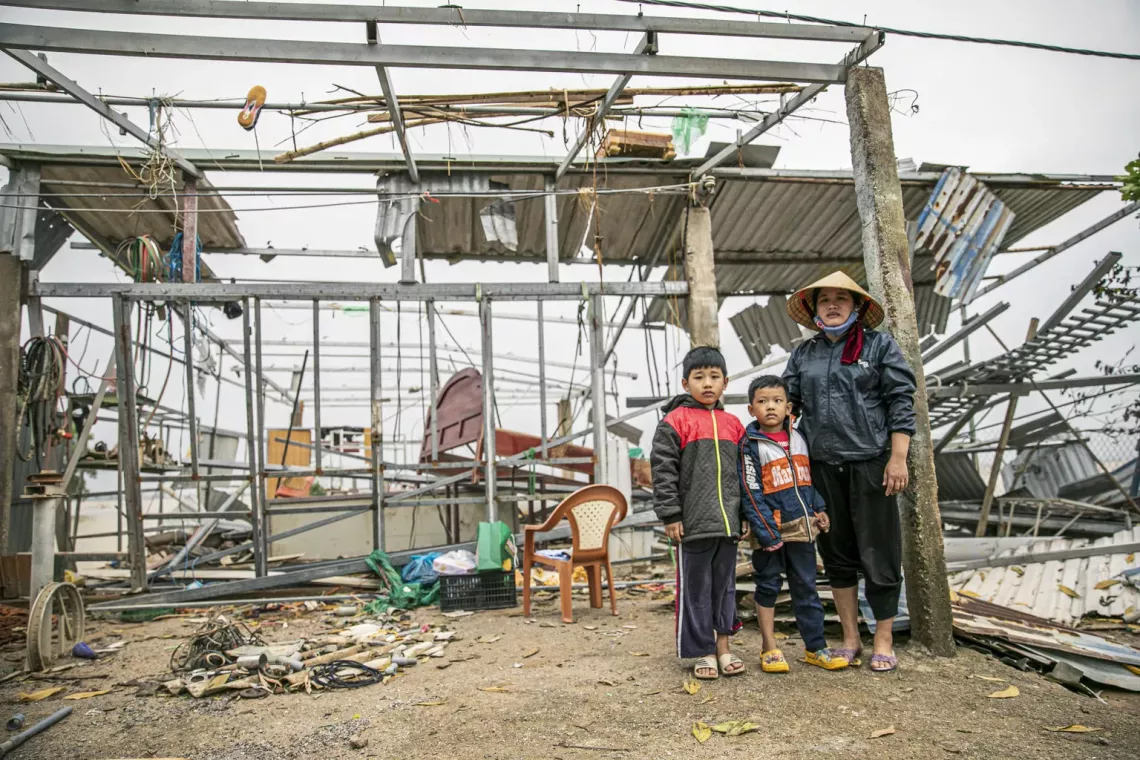
Children, women and their communities cannot be left to face the climate challenge alone.
Children, women and their communities cannot be left to face the climate challenge alone.
Building their resilience and adaptive capacity to withstand intensifying climate change impacts is imperative. That is why UNICEF is driving a Net-Zero Climate Resilience for Children approach that places them at the centre of climate action and disaster risk management strategies. This initiative delivers solutions through partnerships with government, communities and children focused on child-centred evidence and planning, inclusive, gender- and child-responsive climate policies and budgets, grassroots action as well as child- and adolescent-led climate and environmental solutions.
In education, we are helping to build a climate-smart system that promotes green skills, environmental conservation and climate action among children to take into their communities. This greening of children’s learning outcomes is vital if tomorrow’s decision-makers are to help meet national emissions pledges.
As part of the country’s critical shift to climate-resilient and low-emission water, sanitation and hygiene services, we promote the use of low-cost net zero toilets, rainwater capture and solar power rolled out to schools and communities, especially for underserved populations affected by drought, salt intrusion and natural disasters.
In health, we help scale-up climate-resilient health infrastructure, including cold chain systems in hard-to-reach areas, in step with generating evidence on air pollution and its impact on maternal and child health. To meet the nutrition needs of vulnerable populations, especially in disaster-prone provinces, UNICEF is building the capacity of health workers and monitoring systems to ensure effective responses.
We also work to ensure a child-sensitive and shock-responsive social protection system is in place, with flexible cash transfers and effective referral systems to essential services targeting vulnerable populations. The child protection safety net is also being widened through support of the social service workforce, with data collection and monitoring to ensure the most remote communities are safeguarded. In addition, our holistic parenting programme helps parents navigate changing environments, by meeting children’s mental health and psychosocial needs.
You can be the change for children!
Help UNICEF provide children and families with critical essential services for health and nutrition, education and protection.
Impacts

UNICEF is working to ensure Viet Nam’s children and women have the resilience to respond to the climate crisis as the defining issue of our times. Through harnessing the transformative power of the Net-Zero Climate Resilience for Children approach cutting across our work with all partners, by 2026 an estimated 28 million children and their communities will benefit from improved climate and environmental policies in Viet Nam.
Results will include more children and their communities in high-risk provinces being better prepared to mitigate the impacts of climate change by accessing climate-resilient basic services: health, nutrition, education, child and social protection, as well as water, sanitation and hygiene.