The journey of a vaccine: a journey at optimal temperatures for its conservation
UNICEF supports the strengthening of the vaccine cold chain and the Expanded Programme on Immunization in Venezuela
- Español
- English
Vaccination saves millions of children each year around the world. Their effectiveness depends on ensuring that they are kept at the right temperatures throughout the journey, from the time they are manufactured until the moment of vaccination.
In Venezuela, UNICEF supports national authorities’ efforts to strengthen the cold chain, which makes it possible for vaccines to reach every child in perfect condition.
But what the cold chain is, we talked to Melvin Morán, Immunization Specialist at UNICEF Venezuela. He explains that the cold chain is the process to store, manage and distribute vaccines in a limited temperature range to guarantee their potency (protection against preventable diseases).
The cold chain must be tracking throughout the journey of a vaccine, i.e., in a limited temperature range for no losing its potency. Once a vaccine loses its potency, it cannot be regained or restored.
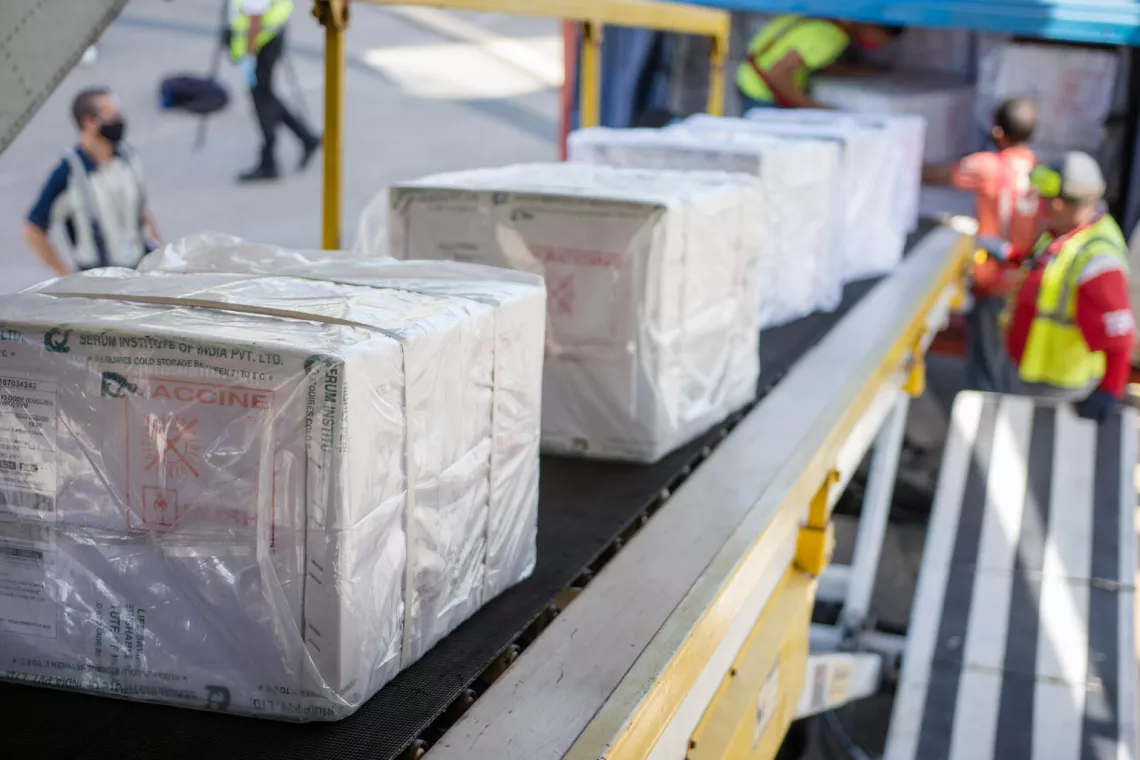
Melvin says that as soon as the vaccines arrive in the country, they are unloaded from the plane in cold boxes and then transported in refrigerated vehicles to the national and regional storage facilities, in coordination with the authorities.
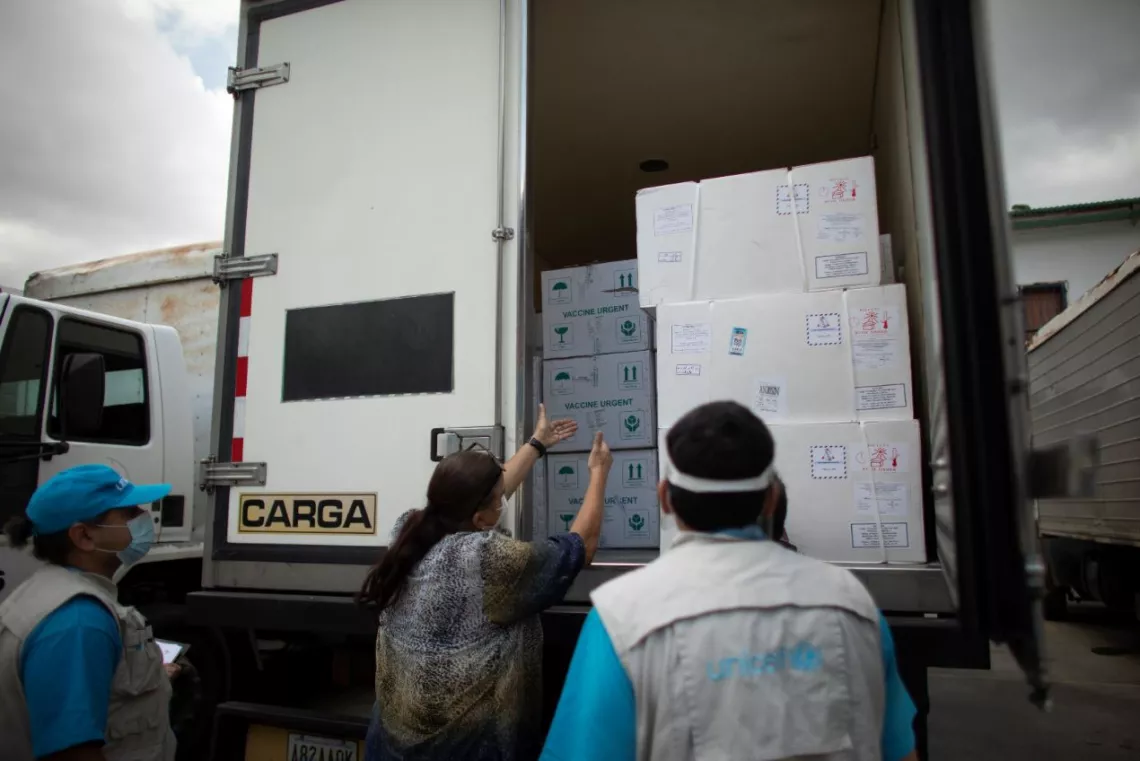

“Once vaccines are received, they must be stored at the proper temperatures, according to the type of vaccine. Today, for example, we are receiving almost 2 million doses of the polio vaccine, which requires a cold chain between +2° and +8°C”, says the Immunization Specialist during a visit to the country’s national vaccine storage facility.
“We also have other cold rooms where we store vaccines that must be kept at negative temperatures, i.e., below 0°C”, he adds.

As part of its work plan in Venezuela, UNICEF contributes to procuring the vaccines agreed by the health authorities for the country’s national immunization programme. UNICEF also checks that the doses delivered comply with international quality standards and that a continuous temperature monitoring device accompanies each delivery.

The storage facility, however, is not the final destination; next, the vaccines must be transported to the immunization posts. This requires special carrier boxes, lined with ice packs to keep the vaccines at the appropriate temperature and equipped with continuous temperature monitoring devices. Health workers are responsible for conducting these temperature checks from the point of dispatch to the point of use where the vaccines are administered to children. This process ensures that the quality and potency of the vaccines remain unchanged.

“To ensure vaccines can be transported and properly stored, UNICEF Venezuela is strengthening the cold chain by acquiring cold boxes, vaccine carriers, freezers, solar refrigerators, refrigerated vehicles, and boats with cooling systems to transport vaccines in hard-to-reach river areas, as well as power plants that enable the chain to operate”, says Melvin Morán.
“We are providing thermometers that will alert health workers to any change in temperature so that they can check that the vaccines are at the right temperature”, he adds.

With this equipment, UNICEF Venezuela supports the country’s efforts to strengthen and maintain its cold chain, thus ensuring the quality of the vaccines that reach children and their mothers.

During the pandemic UNICEF has remained on the ground, supporting efforts to ensure that vaccines travel safely throughout the country. But the need is growing and so we are calling on the international community to support UNICEF efforts to ensure that every Venezuelan child is immunized against preventable diseases.