

Child Poverty
Establishment of country-specific measurement for child poverty and a system to its regular estimation
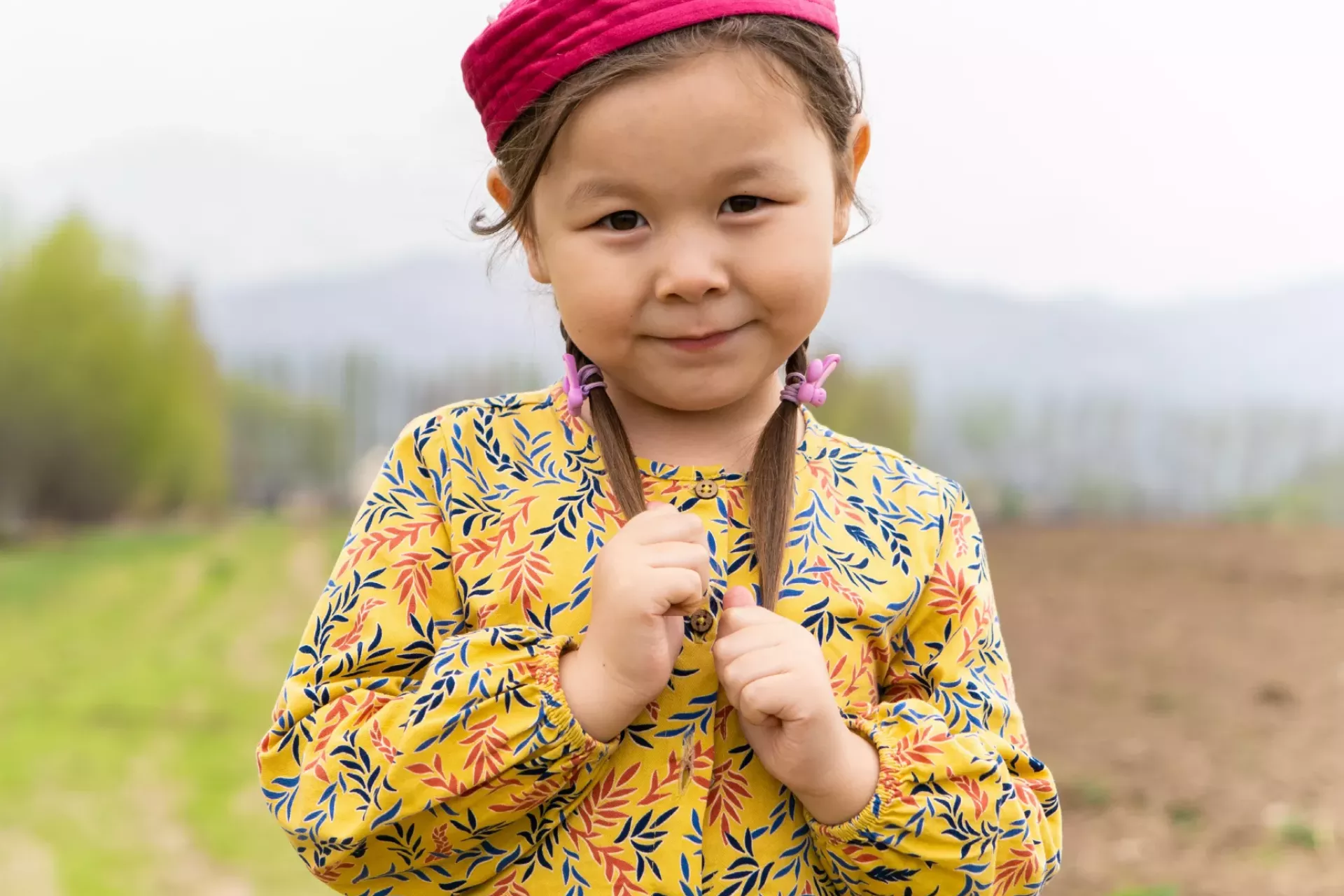
UNICEF promotes the development of country-specific measurement for child poverty which enables data-driven and result-based policy implementation for poverty reduction.
Given that the demographical proportion of children is rapidly growing and their vulnerability to poverty is greater than that of adults, understanding their monetary and multidimensional deprivation is essential for policy planning aiming at country’s development driven by future generation.
UNICEF is continuing a strong partnership with the Statistics Agency, the Center for Economic Research and Reforms (CERR) under the Presidential Administration, and the Ministry of Employment and Poverty Reduction to build capacity for regularly estimating and publishing monetary and multidimensional poverty data. In 2024 the Center of Economic Research and Reforms published the findings of the joint research undertaken with UNICEF on developing a national monetary child poverty indicator.
The findings suggest that the monetary child poverty in Uzbekistan reduced from 21.5 per cent in 2021 to 13.7 per cent in 2023. The analysis has also established that in the absence of social transfers the current level of the monetary child poverty would be as high as 21.8 per cent
UNICEF conducted the first ever multidimensional child poverty survey which shows that over 44 per cent of сhildren are in multidimensional deprivation. This means they are deprived in two or more dimensions established as part of the multidimensional child poverty methodology developed for Uzbekistan.
The Second International forum on Poverty Reduction presented some of the initial findings of this study, allowing tracking the progress of child rights implementation in the country as well as enabling kickstart of public discussions around establishing national methodology for measuring multidimensional poverty of children to be used in policy making.
The comprehensive approach UNICEF took regarding child poverty in Uzbekistan also triggered interest from the government to develop targeted poverty reduction programs for children in two regions with the highest multidimensional poverty rates in the country.
UNICEF plans to advocate curbing child poverty in Uzbekistan through several interventions. These include facilitating the development and regular publishing of age-disaggregated monetary poverty and multidimensional poverty of children. This evidence should be used used for policies and programs to address child poverty.
UNICEF aims to generate evidence on child well-being, including child engagement in economic activities followed by proactive engagement on response strategies. Through these efforts, UNICEF seeks to address the complex dimensions of child poverty and enhance the effectiveness of social protection measures in Uzbekistan.