In Ukraine, teenagers team up to tackle river pollution
Participants in UNICEF's UPSHIFT youth innovation programme are leading efforts to implement green initiatives in Bila Tserkva.
- Українська
- English
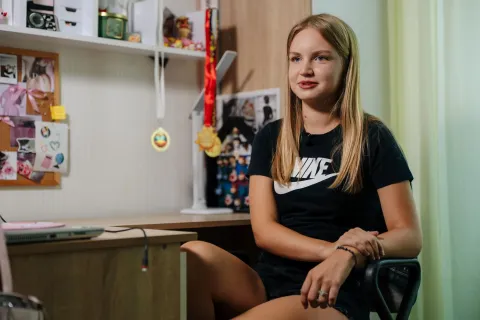
Sixteen-year-old Anastasiia is a nature lover, who loves to walk along the Ros river in her home city of Bila Tserkva. The river is a vital waterway for a number of Ukrainian cities and towns, and four drinking water supply enterprises depend on its waters. However, it now faces a critical situation due to pollution from industrial and domestic waste.
According to the Ukrainian Ministry of Environmental Protection and Natural Resources, pollution levels are alarming, with heavy metals and pesticides exceeding safe limits by threefold. The contamination has become so severe that the Ros has lost its natural ability to cleanse itself.

"You can't really swim here in the summer anymore"
Anastasiia, a student in the 11th grade, is one of the founders of the youth organization Molecule, established as part of the United Nations Children’s Fund’s (UNICEF) UPSHIFT youth innovation programme. Together with her classmates, she aims to inspire both peers and adults to take action against the environmental challenges facing their home city.
"We want to build a better future in Bila Tserkva, not just for ourselves but for our future children"

Recently, the teenagers organized a clean-up day, and found it a fun way to spend time while making a positive impact. Anastasiia says they were only expecting around 10 people to show up, but when at least twice that number arrived, she was overwhelmed with joy.
It was not only school friends who joined – concerned adults also came out to support the cause. Among them was a man wearing a panama hat and construction gloves – Mykhailo Yaremenko, the headmaster of the lyceum where Anastasiia and her friends study.

"We've done similar clean-ups before, but it was always us, the adults, who initiated them. This time, the invitation came from the children, and that's an incredible feeling. It shows that these kids are truly the future. Even our graduates came to help."
The group quickly split into teams, each tasked with collecting a specific type of rubbish. Slowly, they moved along the reed-covered riverbank, where the water was green and appeared to be coated with a film of oil.
"You sit on the bank and watch the trash float by. To be honest, it's embarrassing to bring a girl here on a date. That's why I’m committed to continuing these clean-ups – to draw attention to what’s happening to the river."

Participants spent about an hour cleaning up the river. Afterwards, everyone who helped received a Molecule-branded tote bag.
The Molecule team have pinned posters to trees along the riverbank, providing information about the river's current state. They are planning more clean-up events, as well as community workshops and meetings with local authorities to push for environmental action.


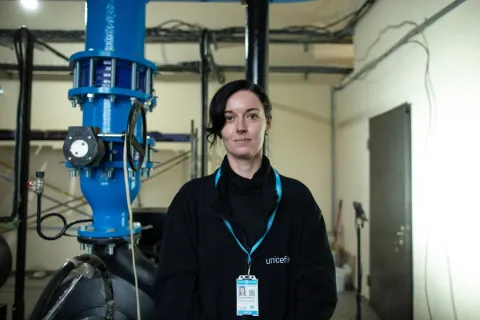
"The team members are incredibly determined young people, nothing scares them," says Maryna Budziak, 29, Molecule’s mentor under the UPSHIFT programme. "They set what seem like impossible goals and then achieve them. For example, they've managed to establish cooperation with local authorities and entrepreneurs, who play a key role in their project's success."
Anastasiia aspires to become an architect. Her goal is to integrate green projects, such as roof gardens, into urban buildings. She believes that everyone has a responsibility to care for the environment and suggests that they start with small steps, like sorting waste and reducing plastic use. She dreams of cities around the world being green and clean.
Water is vital to the survival of any community. Engaging young people in green initiatives and implementing sustainable development practices will help to restore, develop and create more sustainable and environmentally-friendly communities. By equipping young people with the knowledge and tools to protect the environment, UNICEF aims to cultivate a generation of leaders who are ready to take responsibility for creating a better future for their communities.
Molecule is one of 459 youth teams that have participated in UNICEF's UPSHIFT programme over the past year, implementing innovative ideas across various fields and improving the quality of life for more than 30,000 Ukrainians in their communities.