


Every morning, somewhere in Ukraine, a woman starts her day by turning a tap to check whether water will flow. If it does, she fills every container she can find.
It’s a habit born of necessity.
Repeated attacks have devastated energy and water infrastructure and severely disrupted access to running water.
So, the daily routine now focuses on children’s most pressing needs. What’s for breakfast if there is no water, what needs to be clean for school, can lunch and dinner be prepared with as little water as possible.
These are the daily questions and tasks that millions of women in Ukraine perform silently every day, often without acknowledgement, without adequate resources and too often without a seat at the table where decisions about their water systems are made.
This year’s World Water Day draws attention to this reality, that the water crisis is, at its core, a crisis of equality. The theme Water and Gender, "Where Water Flows, Equality Grows" reflects how access to water shapes opportunities, responsibilities, and power in everyday life.
In Ukraine, as in many countries, social norms still assign women with responsibility for managing household water, from collecting and storing water to rationing and adapting daily routines when supply fails.
This is assumed to be their struggle – one that is made much harder when the water system and services have been devastated by years of war and neglect. keep the water flowing is a matter of survival.
A water system under siege
Before February 2022, Ukraine's water infrastructure was already fragile. Forty per cent of national water and sanitation systems were in critical condition — the legacy of reflecting decades of underinvestment and an ageing infrastructure.
The full-scale war further damaged an already weakened system.
The June 2023 destruction of the Kakhovka Dam alone – one of the largest environmental and humanitarian disasters in modern history – left up to one million people without drinking water across four regions, generating more than US$5 billion in recovery and reconstruction needs.
In 2024, some 1.6 million children lacked access to centralized water supply, and 2.3 million went without centralized wastewater services.
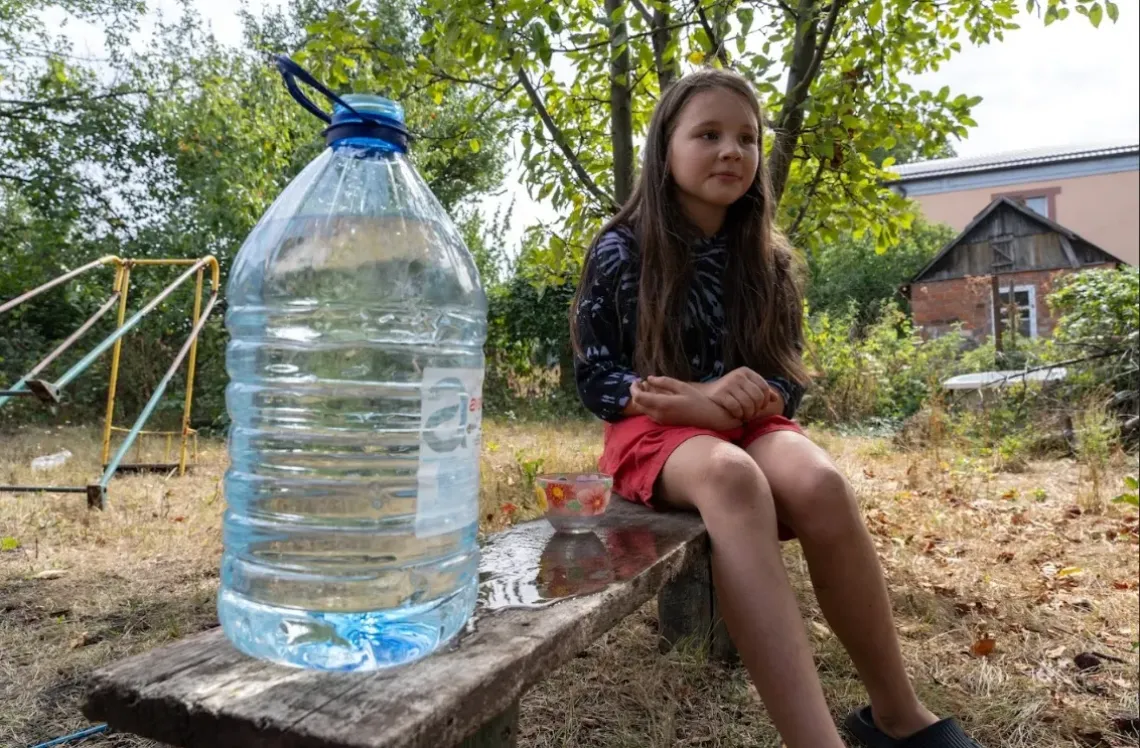
Ukraine’s brave water technicians do what they can to repair and rehabilitate water infrastructure, even under fire, but it's a race against time to prevent the collapse of a system that was already creaking under immense strain.
Women carry the crisis but are underrepresented in leadership
Women dedicate an average of 36.2 hours per week, compared to 14.8 hours for men, on unpaid care work, which includes overseeing household tasks such as water management.
Water insecurity directly lengthens and intensifies this burden. Its effects are not the same for all women.
Rural women, displaced families, older women living alone, and women caring for persons with disabilities often face the greatest challenges when water systems fail.
Women and girls often notice first when supplies run low, they adapt fastest when systems fail, and bear much of the physical and psychological strain of unreliable water services. When water access is more reliable, household responsibilities can be better balanced between women and men.
But when decisions are made about how to improve water services – and where investment flows should be directed – women remain underrepresented in decision making on water and utility governance.
Turning the dial: what we are doing – and what we are learning
Ukraine's war has triggered a major demographic shift that is also reshaping the labour force across many sectors, including water utilities. Ukraine’s vodokanals are becoming more gender diverse and increasingly female by necessity – yet governance and leadership level structures have been slower to reflect this reality.
According to a recent survey, women currently make up 21 per cent of the professional workforce of Ukrainian vodokanals. Technical water sectors historically attract few women due to gendered education and hiring patterns.
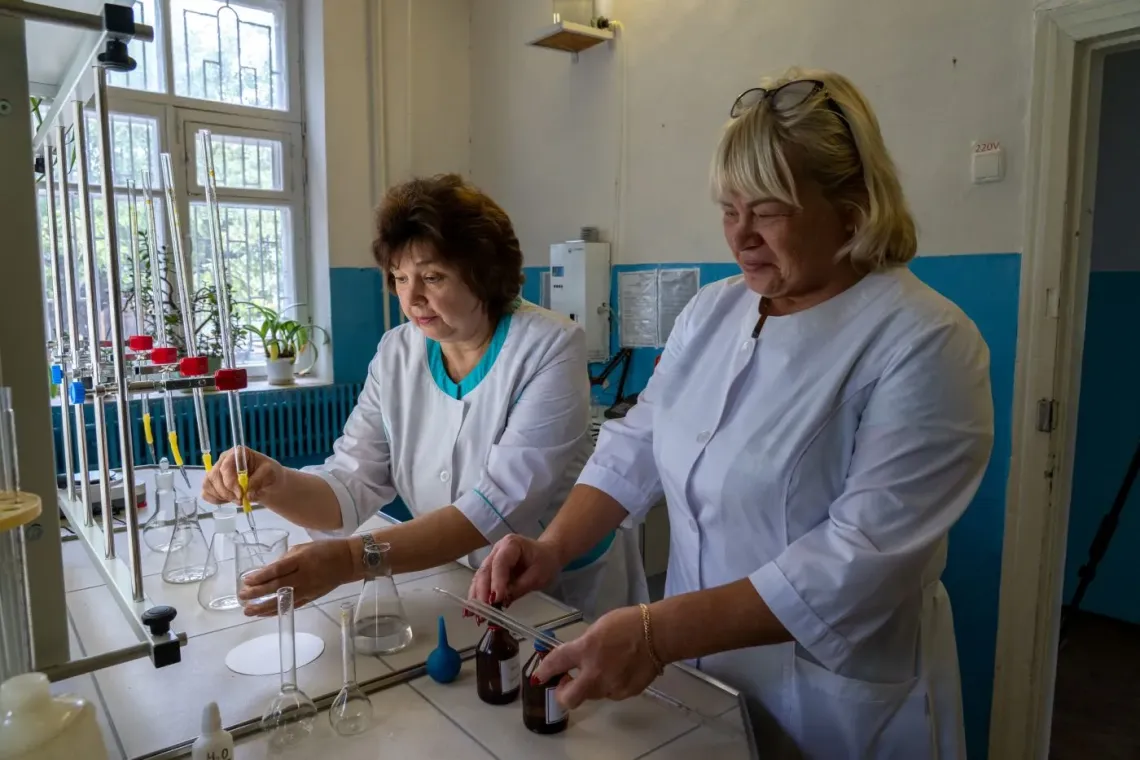
UNICEF co-leads Ukraine’s WASH Sector Working Group, alongside the Government of France, who have set a target to increase the number of women in the sector to 50 per cent.
This recognizes that the sector rebuilding Ukraine's water systems must better represent the communities it serves. Rebuilding resilient water systems also requires shifting social norms so that care and water management are shared responsibilities within households and communities.
Building vodokanals capacity
In 2025, UNICEF Ukraine's WASH programme trained 418 women in water utility operations, including engineers, operators, and managers, representing just over half of all participants. Women also participated at senior management level, with 60 women among the trainees, alongside 132 male counterparts — a ratio that must shift further if women are not just present, but leading.
While these figures signal progress, women need support not only to enter the sector, but to advance within it. Gender-sensitive content in training was received mixed reactions. Some participants saw clear relevance, while others questioned its practical value amid the daily challenge of keeping systems running during the war.
This highlights the need to link gender equality directly to service performance and system resilience.
Integrating gender into technical programmes is not about adding separate modules but showing, in practical terms, how diverse teams and leadership improve decision making, strengthen utilities, and support reliable services for communities.
Women must shape the future of Ukraine’s water services
Ukraine is at a turning point. Its EU accession momentum requires a fundamental transformation of the water sector – moving from ageing infrastructure toward resilient, transparent, EU-standard systems.
Every decision in this transition – how to prioritize supplies, how to ensure tariffs protect vulnerable households, and how utilities are governed – will be shaped by who is present when agreements are made.
Society has already been reshaped by the war in ways that will last beyond it. The workforce is more female and women are increasingly the primary breadwinners and decision-makers in millions of households.
Women make up 92 per cent of single parents, which represents up to 20 per cent of all households. An estimated 59 per cent of internally displaced people are women. The water sector reflects these shifts, which out of necessity – not design – is tackling the historic underrepresentation of women.
Where water flows, equality must grow
On World Water Day 2026, the message from Ukraine is both a testimony and a call for action. It is a testimony to the millions of women who have kept families hydrated, children clean, and households functioning through more than four years of destruction of the infrastructure they rely on.
And it is a call – to donors, governments, utility managers, and reconstruction planners – to ensure that the next phase of Ukraine's water future is built with women, not just for them.
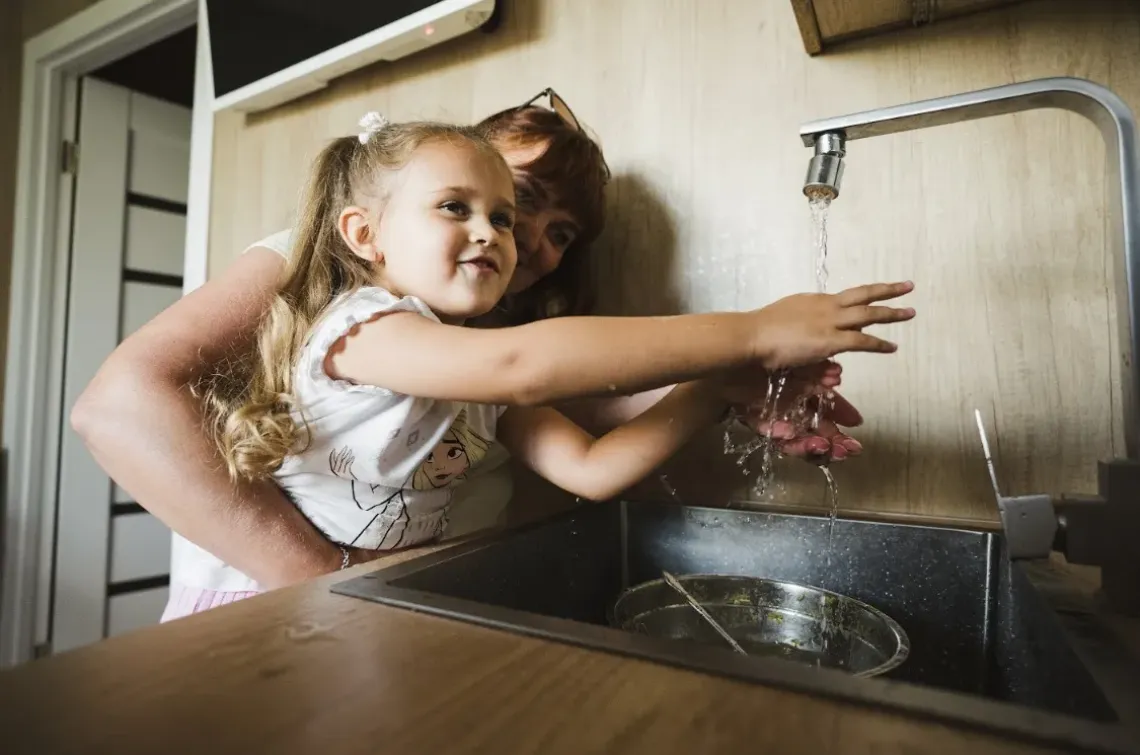
Recovery offers a rare opportunity to redesign institutions that historically excluded women from technical sectors and public utilities. Investing in women's leadership is an essential part of that through female engineers, operators, managers, and community leaders to deliver services that respond to people’s needs.
Communities where women participate in water governance achieve more inclusive, sustainable, and more equitable outcomes. Engineers and operators trained to consider gender equality are better equipped to design systems that work for everyone.
Ukraine's children — including the 1.6 million who still struggle to access reliable water — have the right to a system built not on what is cheapest or fastest, but on what keeps the water flowing for every child.
