This year, World Water Week 2025 centres on the theme “Water for Climate”. For Ukraine, the challenge of securing water for future generations is becoming increasingly urgent. In this piece, we examine the current situation and consider possible solutions.
Breaking point: understanding the crisis
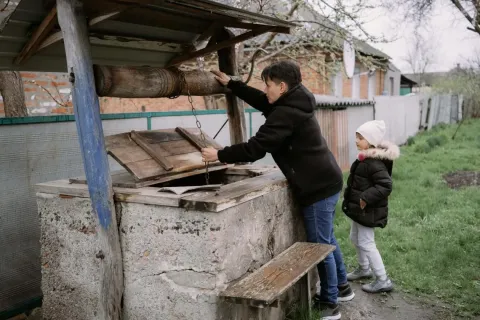
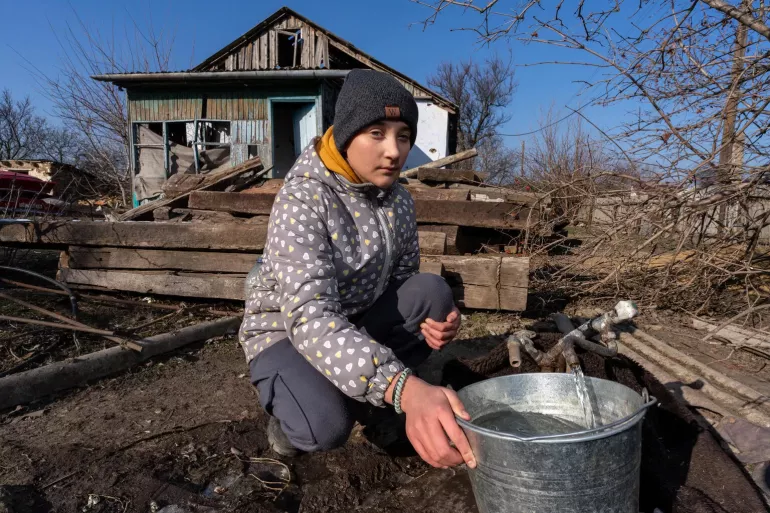
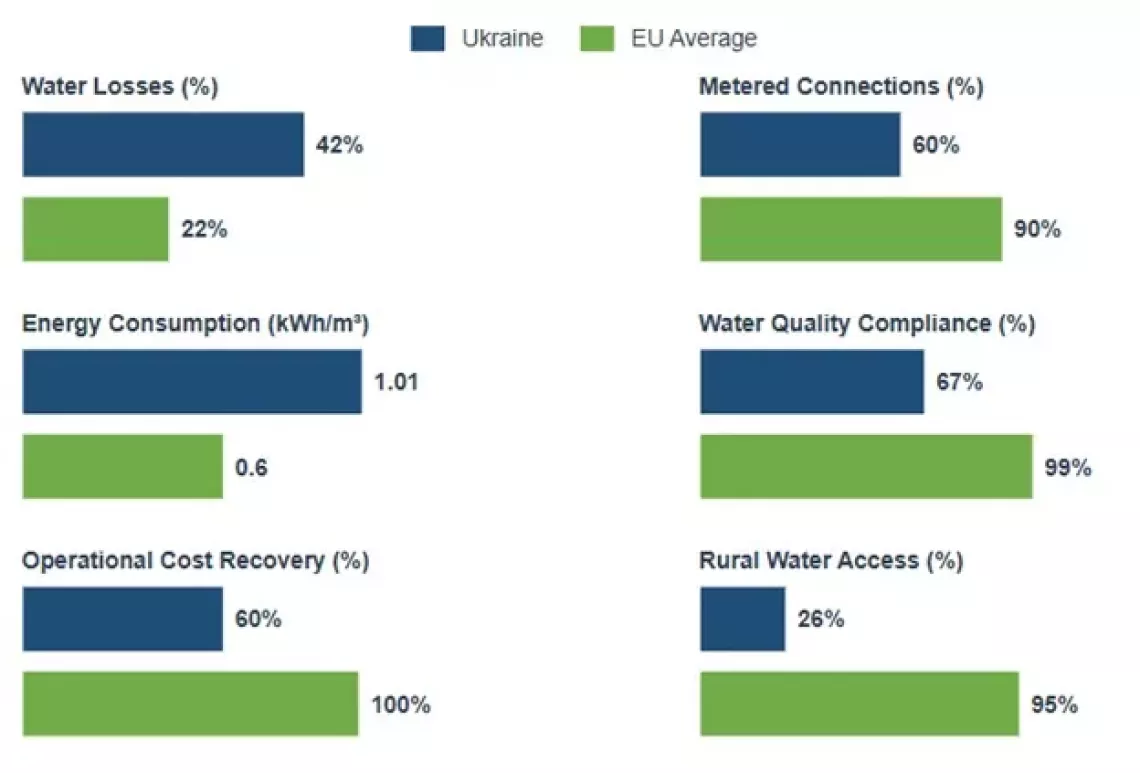
The statistics paint a stark picture of a system in collapse. Today, only 68% of Ukraine's population has access to centralized water supply, leaving 1.7 million children without safe water access. In rural areas, the disparity is even more severe – only 26% of villages have centralized water supply compared to 97% of cities.
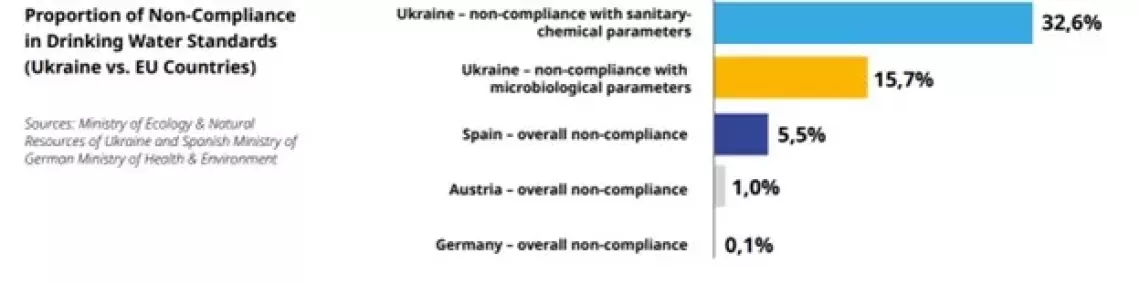
Perhaps most alarming is the quality crisis hiding behind these access numbers. One-third of all drinking water samples in Ukraine fail to meet the national standards. To put this in perspective, EU countries like Germany report only 0.1% non-compliance, while Austria maintains 1.0%.
The war has accelerated what was already a critical situation. With 39,700 kilometers of water networks damaged and total sector damage reaching $4.6 billion, Ukraine faces infrastructure destruction on an unprecedented scale. The most affected regions tell the story of the conflict's geography: Luhanska Oblast faces $1.6 billion in damage, Kharkivska $831 million, and Zaporizka $546 million, with Donetska and Khersonska also severely impacted.
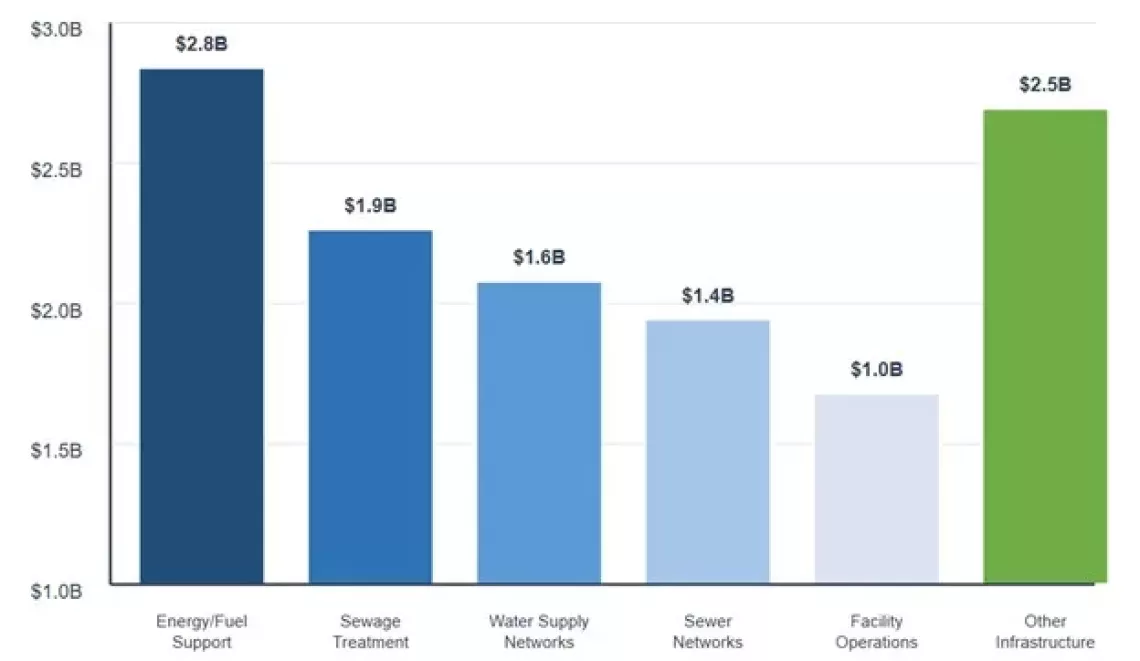
The reconstruction challenge ahead is equally daunting, requiring $11.3 billion over the next decade. The largest investment needs focus on sewage treatment plants ($1.9 billion) and water supply networks ($1.6 billion), while ongoing energy and operational support will require $2.8 billion – highlighting how the war's impact on energy infrastructure compounds water sector challenges.
The climate dimension: a preview of global challenges
Ukraine's vulnerability extends beyond immediate war damage to fundamental climate risks. Rivers contain toxic compounds 30 to 40 times higher than permissible standards, while climate experts warn that without dramatic intervention, Ukraine may need to import drinking water by 2050. The destruction of the Kakhovka Dam, which left one million people without access to drinking water and caused $700.93 million in recovery costs, serves as a stark reminder of how unanticipated disasters can instantly erase water security.
The energy crisis compounds these climate vulnerabilities. Ukrainian water systems consume 1.01 kWh/m³ of energy – nearly double the European average of 0.5-0.7 kWh/m³. Since the war began, electricity costs have risen 55%, chemical reagent costs by 269%, and chlorine prices have increased eightfold. These cost escalations, combined with frozen tariffs, have pushed utilities to recover only 55-65% of operational costs, compared to full cost recovery in EU countries.
Children: the least responsible, yet will bear the greatest burden of its effects
The human cost of this crisis, meanwhile, falls disproportionately on children. In frontline areas like Donetsk, Kharkiv, and Kherson, disrupted WASH services in schools affect not just health but education and future prospects. Girls face particular challenges, as inadequate sanitation facilities can often lead to increased school absenteeism during menstruation.
The 280,940 people across eight regions who now rely on trucked water delivery include countless children whose daily routines have been fundamentally altered. These children are growing up understanding water's fragility in ways previous generations never had to consider. Fortunately from this most unfortunate situation, this same awareness positions them as potential champions of the water security and climate resilience Ukraine desperately needs.
Through programs like UNICEF's UPSHIFT, young Ukrainians are already developing innovative solutions for water challenges. When two of those youth representatives, Anastasia and Marta, overcame their anxiety to represent Ukraine at World Water Week 2024 in Stockholm, they embodied not just courage but the innovation and determination that will define Ukraine's recovery.
Ukrainian resilience: strength amid adversity
Despite overwhelming challenges, Ukraine's response demonstrates remarkable resilience. The recent Ukraine Recovery Conference in Rome showcased unprecedented commitment, with $10 billion pledged across all sectors and over 200 agreements signed. The Kharkiv Water Supply and Sanitation Recovery Roadmap, prominently featured as a flagship initiative, exemplifies Ukraine's approach to building back better.
This comprehensive roadmap presents a transformative vision through 2045 with nine strategic priority initiatives. The projected results are impressive: $80 million in annual savings, 40% energy savings, and reducing water losses to less than 15%. With investment efficiency of $173 per person per year, the roadmap demonstrates how strategic planning can maximize impact while ensuring sustainable service delivery.
UNICEF’s capacity building efforts tell a similar story of determination. Through a comprehensive training programme, over 600 water utility staff have already been trained – with a final target of 750 in the coming month – with consistently high satisfaction ratings from the trainees.
Innovation from the frontlines: Ukrainian solutions
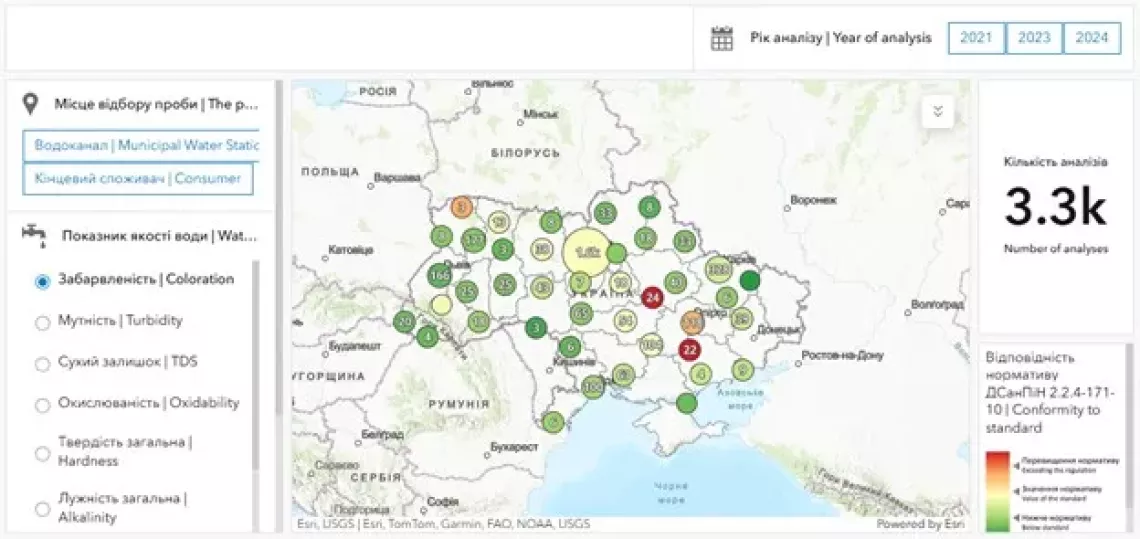
Ukrainian innovation is driving solutions even under the most challenging circumstances. NGO WaterNet is pioneering water quality monitoring that exemplifies the evidence-based practices essential for both immediate response and long-term EU alignment. Developed in partnership with UNICEF, WaterNet's interactive online map of drinking water quality across Ukraine represents a significant step toward transparent monitoring systems that characterize modern water management. By making complex data visually comprehensible, the platform democratizes access to water quality information while providing decision-makers with spatially explicit insights for strategic planning.
Such innovations complement larger institutional changes. The formal establishment of the Water Sector Sub-Working Group in Rome, provides the critical coordination framework needed to bridge emergency response with systematic recovery planning. This institutional development, launched by the Ministry of Development, to be chaired by the French Embassy and UNICEF, will create a sustainable mechanism for sector coordination and strategic alignment.
The path forward: building back better and greener
Ukraine's reconstruction presents unique conditions to leapfrog decades of incremental improvement and build water systems designed for 21st-century climate realities. As we align with EU standards through the Water Framework Directive and Drinking Water Directive, we are not simply catching up – we are positioning Ukraine to become a model for climate-resilient water management.
The scale of transformation required is substantial. With $11.3 billion needed for WASH reconstruction by 2033, every hryvnia must be invested strategically to maximize impact and sustainability. This includes not just physical infrastructure rehabilitation but comprehensive capacity building and human capital development to enable increased efficiency and alignment with EU practices.
Recent field assessments reveal both the challenges and opportunities ahead. In Odesa, the June 30 drone attack destroyed repair workshops serving over one million residents, leaving utilities without emergency response capacity. Yet this destruction also creates opportunities to rebuild with modern, energy-efficient equipment designed for climate resilience.
Similarly, smaller utilities like Zolochiv, where population has declined from 38,259 to 27,383 due to the war, face the challenge of maintaining services with reduced customer bases and damaged infrastructure. However, this also presents opportunities to implement decentralized, low-cost, energy-efficient solutions that can serve as models for rural communities nationwide.
EU integration: framework for transformation
Ukraine's EU aspirations provide both motivation and methodology for water sector transformation. While Ukraine has made progress in adopting aligned legislation, implementation remains the critical challenge. The gap between current performance and EU requirements is substantial but not insurmountable.
EU member states that joined in the 2000s provide valuable lessons. Latvia's experience demonstrates the importance of unified methodological approaches and integrated information systems. Romania offers insights into developing comprehensive regulatory frameworks and transparent consumer information systems. Slovakia shows how risk-based approaches and clear stakeholder responsibilities create effective management systems.
These experiences reveal that successful transitions require strong institutional frameworks, clear accountability mechanisms, integrated monitoring systems, and gradual but steady progress toward compliance. They also highlight the importance of adapting European requirements to local conditions rather than attempting wholesale adoption without consideration of national context.
A vision for Ukraine's water future
Ukraine's water story is being written today in the decisions we make about reconstruction, the investments we prioritize, and the systems we choose to build. The children currently among the 1.7 million without safe water access will inherit whatever water infrastructure we create in the coming decade.
We have the opportunity to ensure that inheritance is not merely restored Soviet-era systems but modern, climate-resilient infrastructure capable of supporting their dreams and aspirations. Through strategic reconstruction that prioritizes efficiency, sustainability, and climate adaptation, we can transform Ukraine's water sector into one that delivers reliable, safe, and affordable water for all.