UNICEF repairs a water supply system in Mykolaiv
Yevhen and the nine children he cares for are among scores of families in Mykolaiv that urgently need access to clean drinking water

- Українська
- English
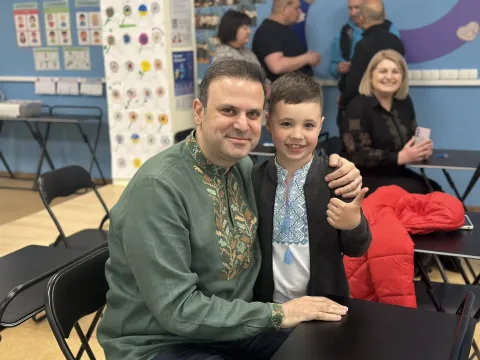
Yevhen, 51, is a caregiver for nine foster children. Like millions, his family has struggled with limited access to clean water since the outbreak of the full-scale war in Ukraine.
For over a year, due to damage to the water supply system in Mykolaiv, the water coming out of the taps here has been unfit for consumption.
"Washing your face, going to the toilet and doing the dishes turns into a daily disaster when there are 10 people in the family and there is no water," says Yevhen.
The water in Mykolaiv’s taps began to disappear in April 2022 as the result of an explosion of the water pipeline in the Kherson region.

"For the longest time, there was no water for two weeks in a row. We used to load the car with empty bottles and drive to the spring. Now, when the water disappears, the boys go to collect water together."
Yevhen remembers seeing elderly people in the centre of Mykolaiv collecting rainwater from puddles. This compelled him to start helping his elderly neighbours and bringing spring water not only for his own family's needs, but also for theirs.
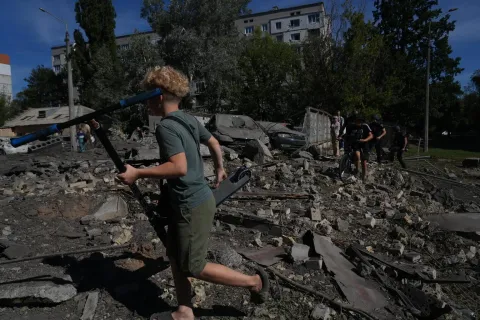
Today, due to the ongoing fighting, the damaged infrastructure in the Kherson region is still under repair. As there are no other sources of fresh water in the city, the Mykolaiv authorities have been forced to fill the system with salty water from the Southern Buh River.

"The water in the central water supply system today doesn't meet sanitary standards, it is not suitable for drinking," says Boris Dudenko, general director of the water utility in Mykolaiv.
Additionally, he says, water with a high salt content only further damages the system, as it destroys pipes and pumps.
The United Nations Children's Fund (UNICEF) is now helping with repairs to return drinking water to citizens.
To restore access to quality drinking water, UNICEF is helping the water utility by supplying equipment and necessary construction materials, such as excavators, generators, and pipes.
"We are currently working with UNICEF to replace equipment at pumping stations and treatment plants, and reconstruct the sewage system"


UNICEF continues to work to restore access to safe drinking water for families with children in areas affected by the fighting and in recently accessible regions. As part of these efforts, with the financial support of the European Union, UNICEF is repairing Mykolaiv's water infrastructure, which will provide quality drinking water to around 240,000 residents in the city. This ensures critical infrastructure remains functional and helps to prevent the outbreak of dangerous waterborne infections.