Mobile medical teams help save lives in Ukraine
Roving teams of medical specialists are assisting families across Ukraine

- Українська
- English
Mobile medical teams launched by the United Nations Children’s Fund (UNICEF) in Ukraine are helping thousands of families access quality healthcare services at home, without having to travel long distances to hospitals amid the ongoing war and violence.

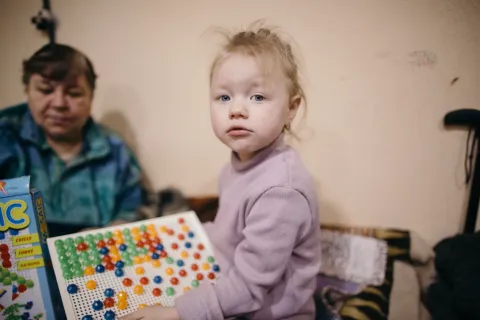
In the village of Maryanivka, in western Ukraine, eight-year-old Danylo is curiously flipping through a UNICEF information brochure. The pages are full of games that can help the young boy to reduce the stress he feels as a result of the war.
"The stress we are all experiencing now negatively affects children’s health,” explains Natalia Strunenko, a paediatrician who works with one of UNICEF’s 16 mobile teams and is helping Danylo to move forward. “The immunity of each child decreases, which can lead to an exacerbation of chronic diseases. We advise parents to work with their children using this brochure, which contains information about interesting games and colouring pages. And for sure, we also recommend contacting a professional psychologist."

Natalia, who is 49, is internally displaced herself, having fled Kramatorsk in the Donetska region, where she worked as a paediatrician. After settling in Kyiv, she joined a UNICEF mobile team, and now she and her colleagues travel daily to villages in the region to provide children and adults with medical care. Usually, she sees 10-30 children every day.
Parents and grandparents can also see a specialist. Services include professional examinations, electrocardiograms and blood sugar tests.


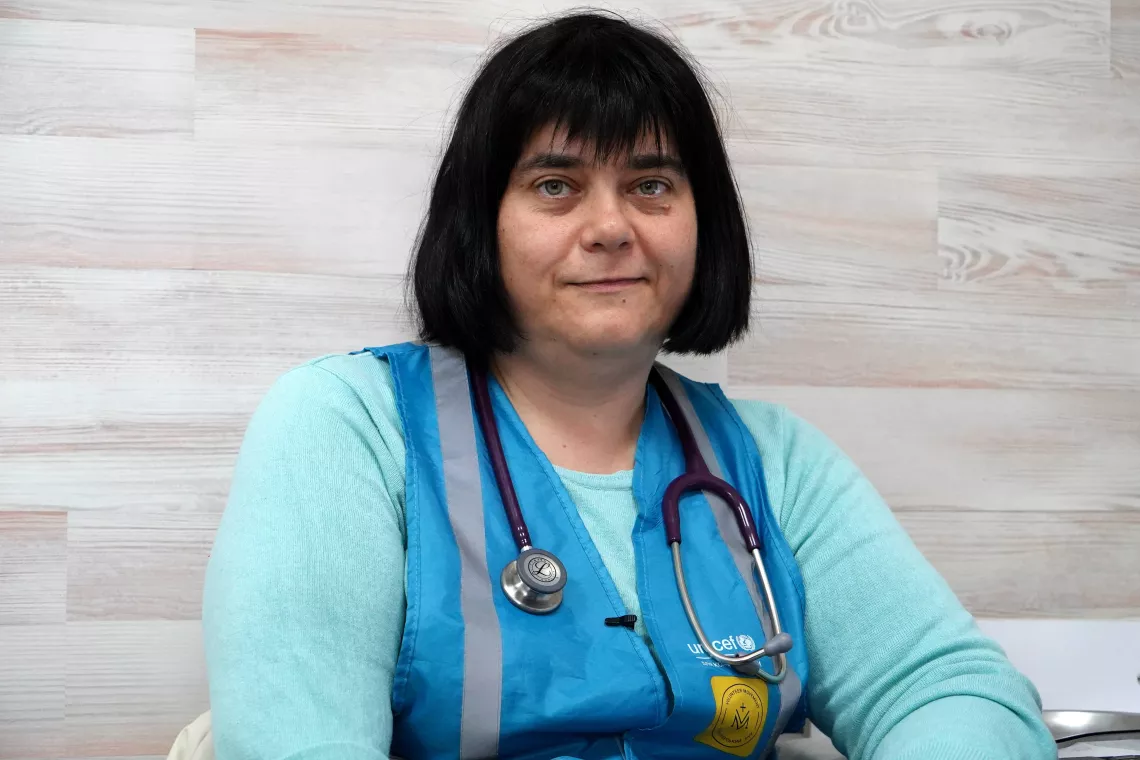
Maryna Galchenko, 46, works as a therapist with one of the mobile teams. She, too, is internally displaced after being forced to flee her home for the second time. In 2014, due to the hostilities, she fled Kherson for the Luhanska region. In 2022, she fled the fighting again, settling in Kyiv. She knows how damaging armed conflict can be to people’s mental and physical health, and advises her patients to watch television as little as possible.
"We can help ourselves by taking a pill or controlling the pressure,” Marina tells one of her elderly patients. “But we can't influence the news. Thus, watching TV once a day is enough.”


As autumn takes hold, respiratory diseases are beginning to spread, so more and more families across Ukraine are in need of help from the mobile teams.
According to UNICEF, since February 24, almost 42,000 people in 16 regions of Ukraine, including more than 22,000 children, have received vital healthcare from the mobile medical teams. The teams consist of a doctor, nurse and psychologist.