Keeping warm, keeping hope: six children facing winter near the front line
As the family goes through another difficult winter, they are facing it as best they can: with firewood, warm jackets, old but essential gadgets, lessons at the kitchen table, cash support, and faith that, together, they can get through it.
- Українська
- English
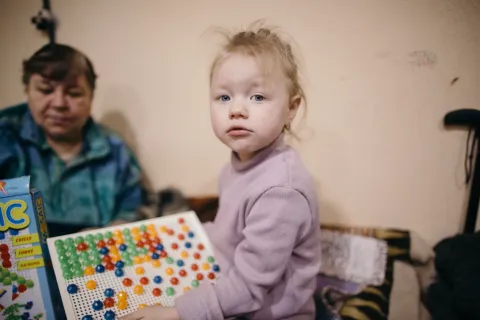
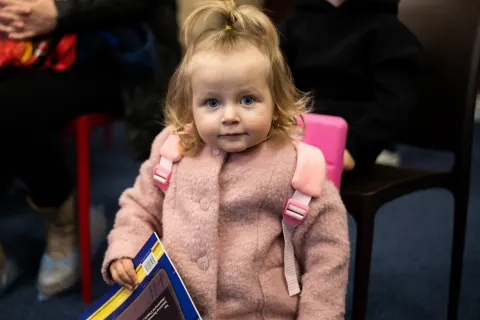
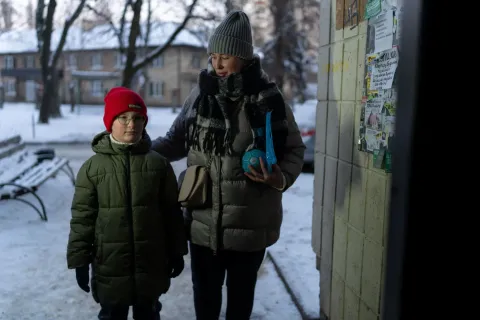
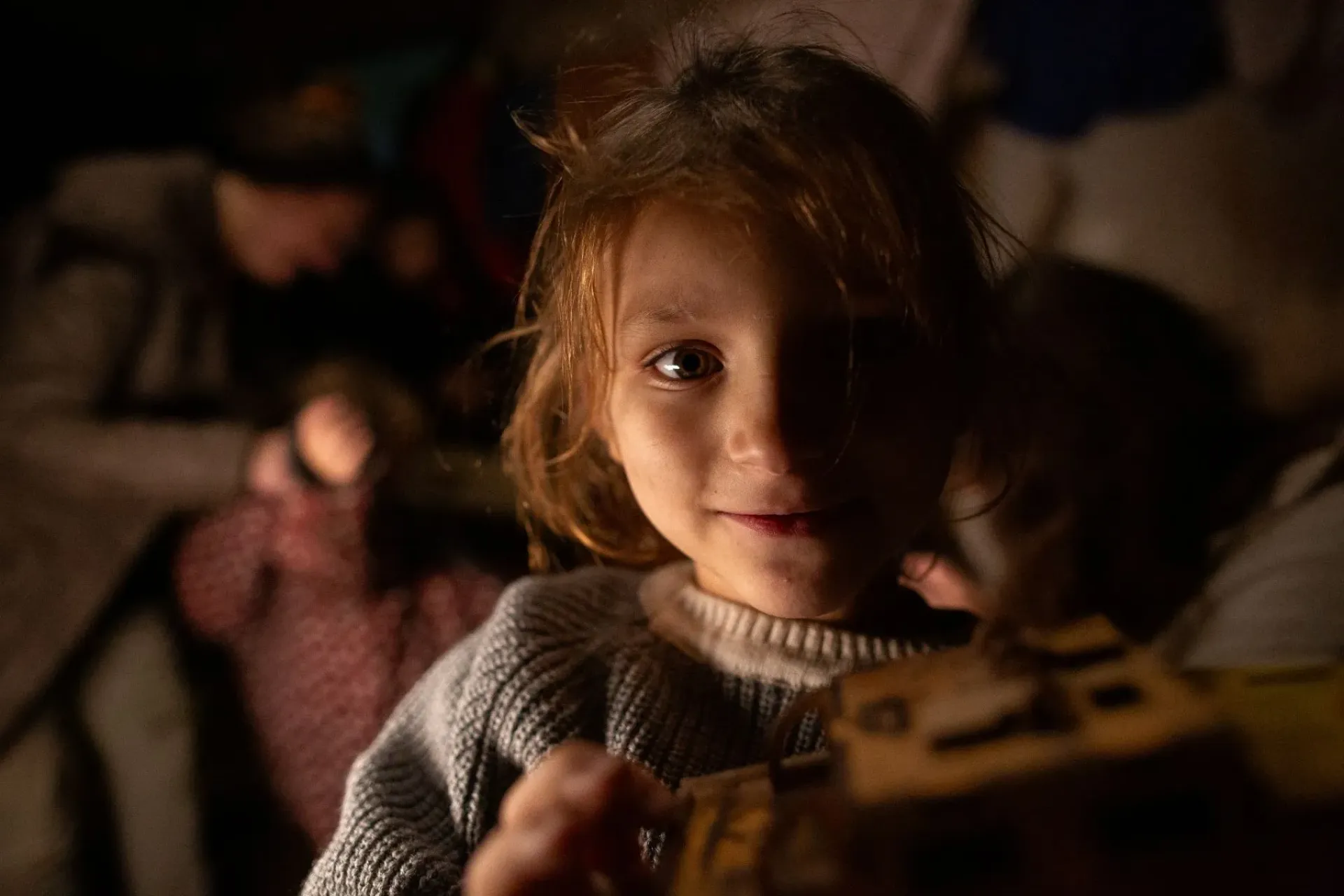
In Staryi Saltiv, Kharkiv region, just a few kilometres from the front line, six children are squeezed into a two-room house together with their parents. The family lost their home during the fighting, and the savings they had put aside for renovations had to be spent on food. Now they are experiencing yet another harsh winter.
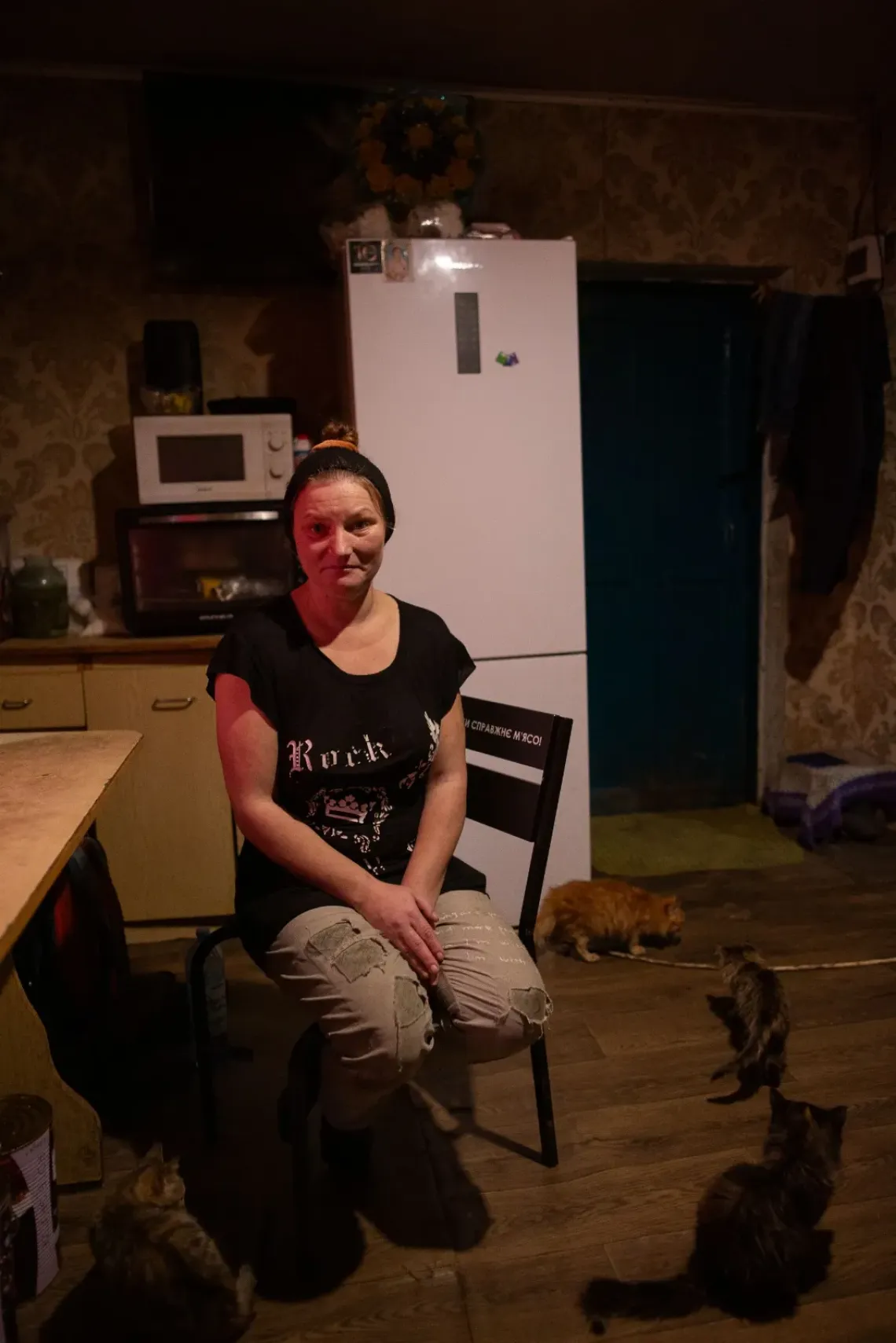
Svitlana, her husband and their six children live in a cramped house with their cats.
“Take a kitten, look how beautiful they are,” Svitlana says. “I can’t even count them any more. New ones turn up every day – people leave and abandon them when they go. I feel so sorry for them; they’ll freeze.”
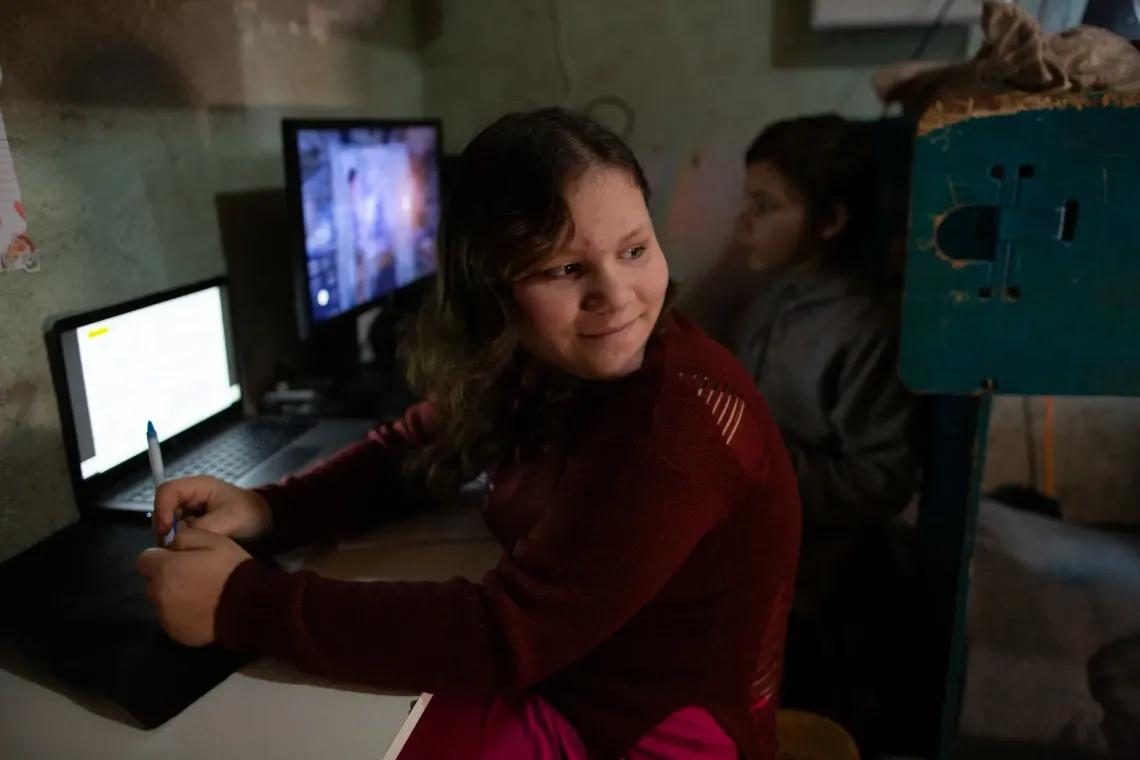
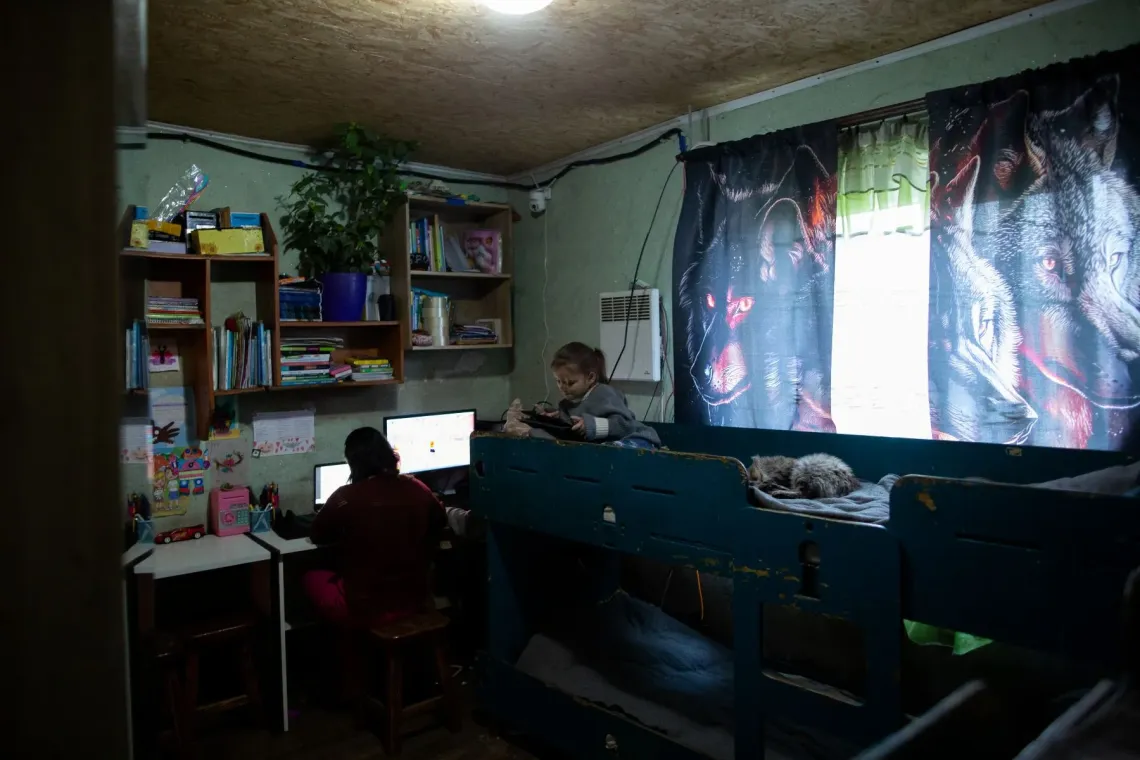
In the next room, Anya, the eldest girl, is finishing her homework on a laptop. Her brothers take turns playing on the big screen beside her. There are no doors or partitions between the two rooms: the bedroom doubles as a study. Two small tables are pushed together along the wall where everyone sits to learn. Despite the small space, life here is buzzing in every corner.
“Last year UNICEF distributed briquettes for the winter – they really saved us,” Svitlana recalls. “We got through the winter very well, in warmth. The children were hardly ill at all.”
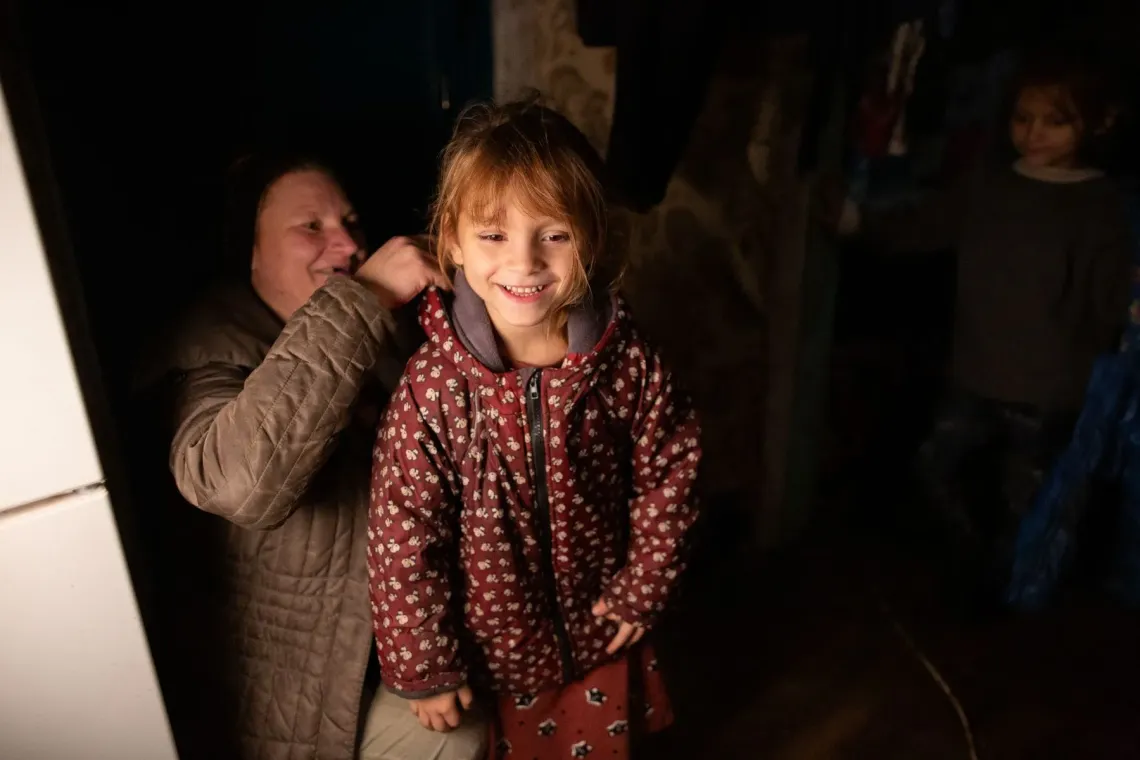
They also received winter clothes and learning devices for the children, who all study online. “We got the gadgets last year through social services with UNICEF support,” Svitlana says. “If it weren’t for that, the children would still be taking turns using one phone.”
But as the war continues, the additional challenges of winter remain.
The house they still cannot return to
Svitlana has lived in Staryi Saltiv since 2009. She has seven children and three grandchildren. The six younger children live with her and their father; the eldest daughter lives nearby, with a family of her own.
The little house where they are staying now belongs to relatives. “Before the war we were just about to start a major renovation,” Svitlana says. “Our relatives let us stay here while we did up our own house. We managed to install a sewage system, bring in water, rewire the electrics, and buy materials for partitions. And then the full-scale war started.”
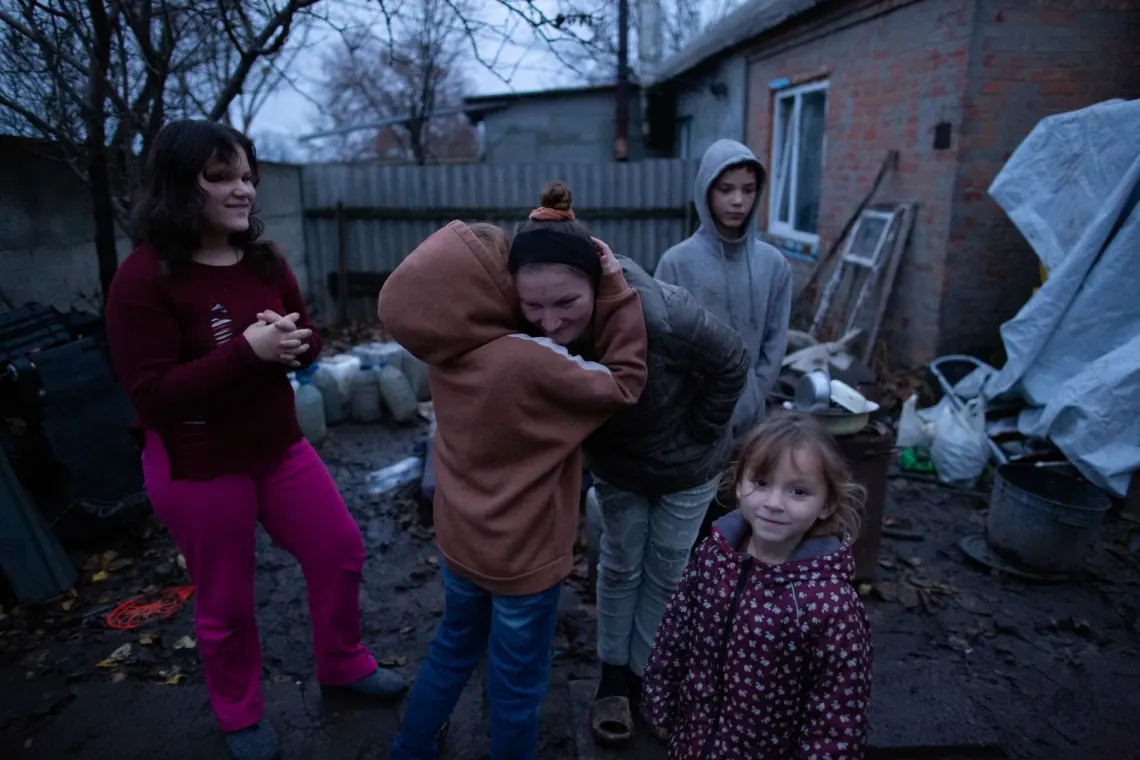
Power and water supply was cut off in their community. Her husband had to go out and get for food for their children under shelling. The family was displaced and moved apartments several times before settling back in their temporary home.
Svitlana recalls that several rockets landed in their yard, and one of them hit the house. Officially, the damage has never been recorded – there is no inspection report and therefore no compensation.
They were able to repair part of the roof and some windows, but inside the house the walls are bare and the rooms remain unfinished.
“We just can’t afford to complete the interior,” she sighs. “My husband is the only one working. To finish the house, we’d have to deprive the children – not buy fruit here, clothes there. But how do you explain to a child that instead of a winter coat we’re going to buy a door?”
Enduring a fourth winter under fire
For the 2025-2026 winter season, UNICEF is providing cash assistance to vulnerable families living in areas close to the front line. The one-time payment helps families to buy essentials for children and improve their living conditions to help them get by during the cold season.
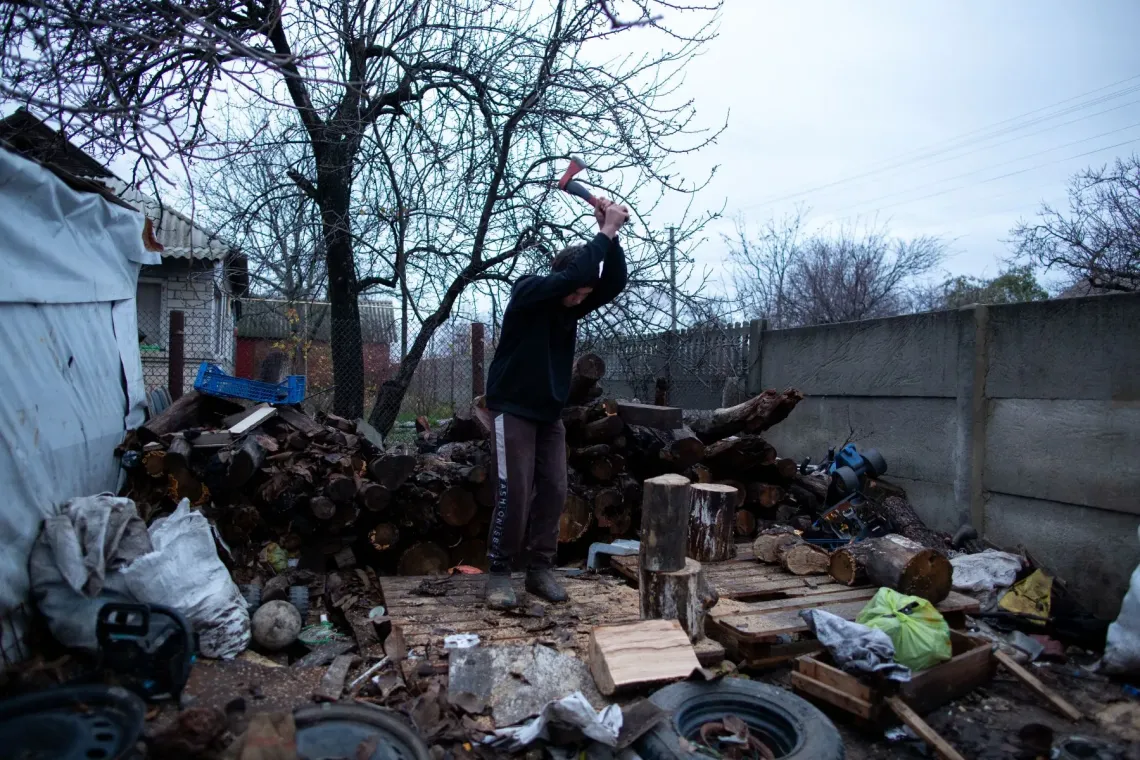
Svitlana used the UAH 19,400 they received from UNICEF to buy firewood to heat their home. With the ongoing hostilities, this winter is shaping up to be the toughest one yet and her children’s needs are mounting. The devices they use every day are wearing out quickly: the batteries no longer hold charge, the ports are loose. They will need to be replaced over time so that each child can have their own computer or tablet for lessons.
“Pens, ordinary pencils – that’s a daily problem. We bought them in bulk, everything was neatly stored. It’s only the third month of the school year – and there’s already nothing left. I sometimes joke that the kids must be eating them,” says Svitlana.
What would be ordinary, low-cost school items for most families turn into a major expense when you have six children.
The small house where the family is currently living also needs repairs: the roof leaks, the wallpaper is peeling away from the damp walls, there is no running water or sewage, and the washing machine drains into a bucket. In the tiny room, bunk beds are crammed together: the girls sleep two to a bed on the top bunks, the boys sleep on the lower ones.
Keeping hope alive
Svitlana plans to get their own house into a state where they can move the children back and finally have at least a little more space and quiet.
She dreams of simple things: that the children won’t be cold this winter; that each of them will have their own corner to sleep and study in; that they won’t have to choose between warmth and exercise books.
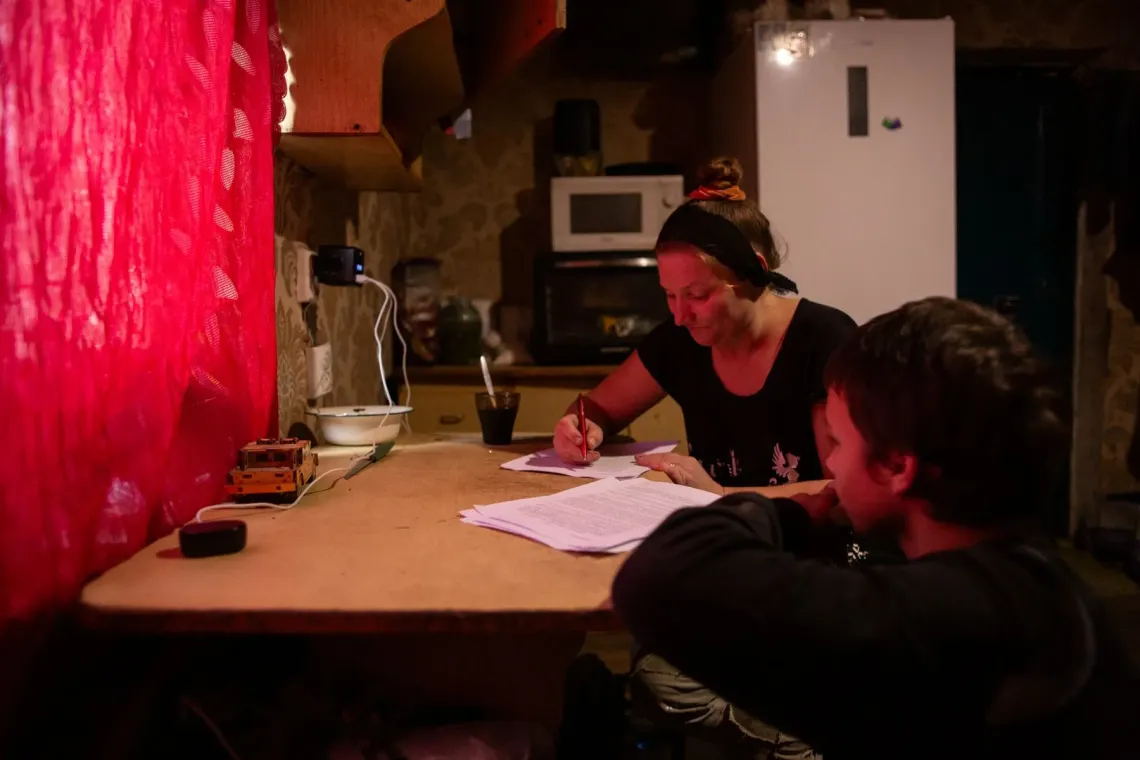
“Whatever happens, we have to finish the house and move in,” she says quietly. “After that, we’ll think about the future.”
As the family goes through another difficult winter, they are facing it as best they can: with firewood, warm jackets, old but essential gadgets, lessons at the kitchen table, cash support, and faith that, together, they can get through it.
As part of UNICEF’s winter response for 2025-2026, UNICEF is providing humanitarian cash assistance to families with children living in frontline areas to support their urgent winter needs. The winter humanitarian cash assistance programme is supported financially by the European Union; the German Federal Foreign Office; the Governments of Denmark, Norway, Sweden, and the United States; and UNICEF National Committees in Ireland and Switzerland.