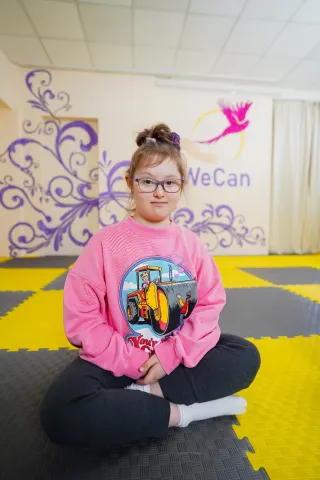
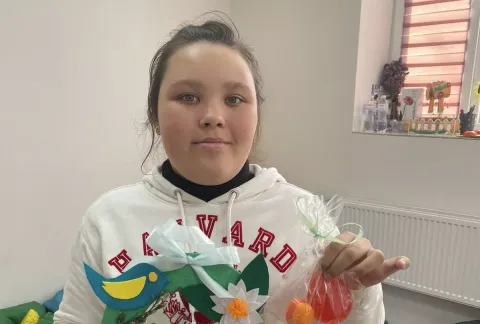
Children find safe haven at barrier-free spaces in Kharkiv
Inclusive spaces have been created for children with disabilities in the Kharkiv region
- Українська
- English
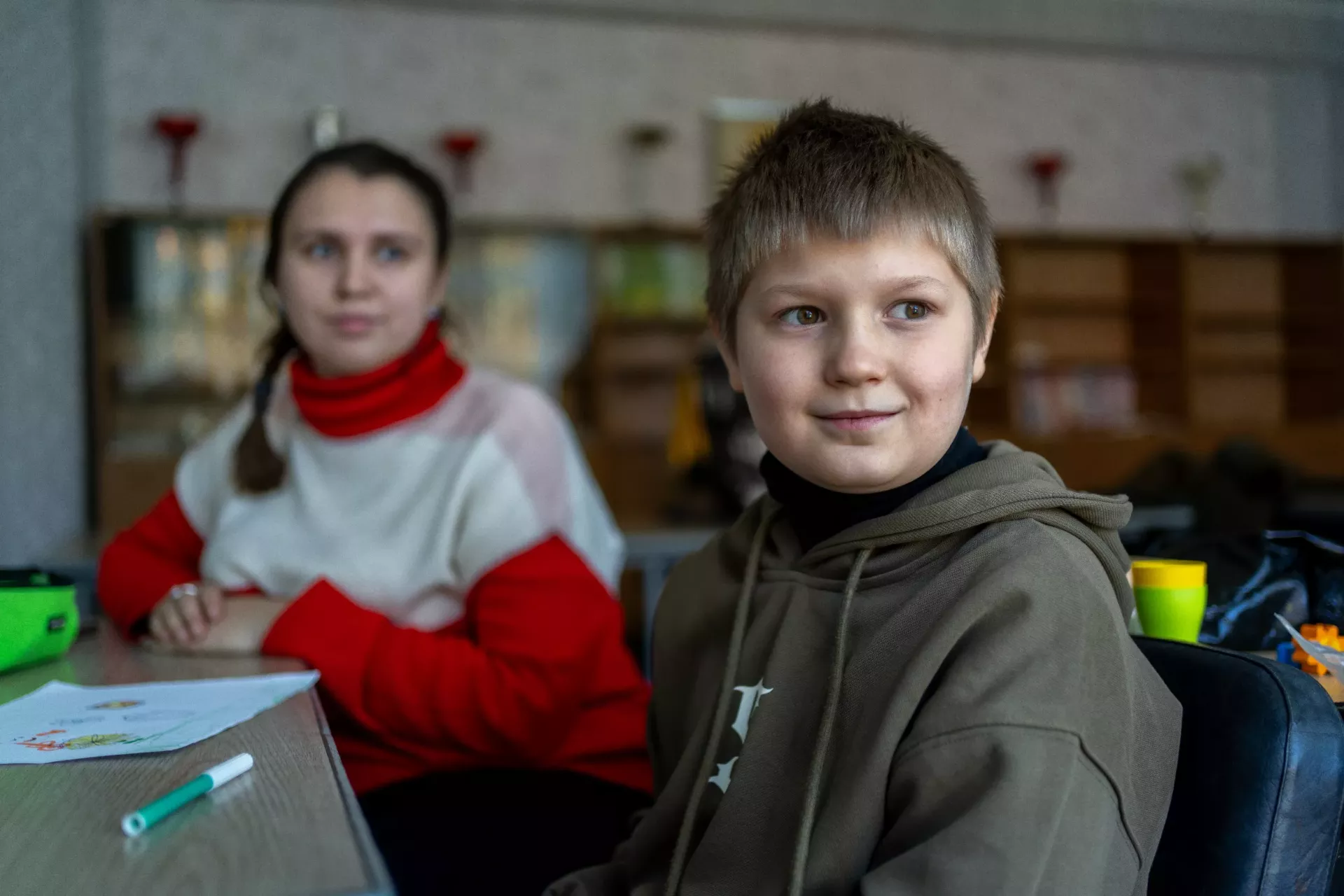
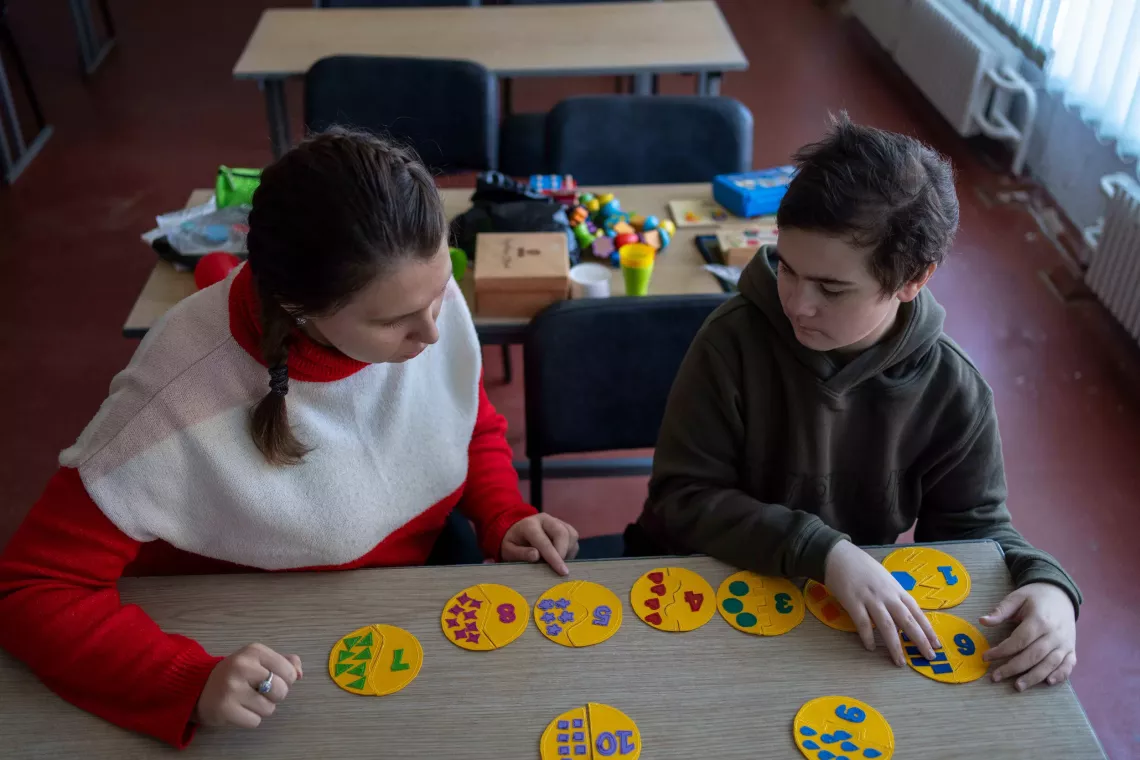
Nine-year-old Vanya, who lives in the town of Zlatopil in Ukraine’s Kharkiv region, is like many boys. He loves construction, Minecraft and learning. The war disrupted his studies – but, for the last four months, he has been thriving thanks to sessions with a developmental specialist, speech therapist, psychologist and rehabilitation therapist.
“Today, we counted and played,” the boy says, happily. “I like to build and draw.”
Vanya has been able to attend these sessions since the summer, thanks to a project that provides tailored support to children with disabilities, in safe and barrier-free inclusive spaces.
“It inspires you”
Ten children attend the daily classes in the barrier-free space in Zlatopil. Many of them have speech, vision, hearing, musculoskeletal, intellectual, autism and learning needs.
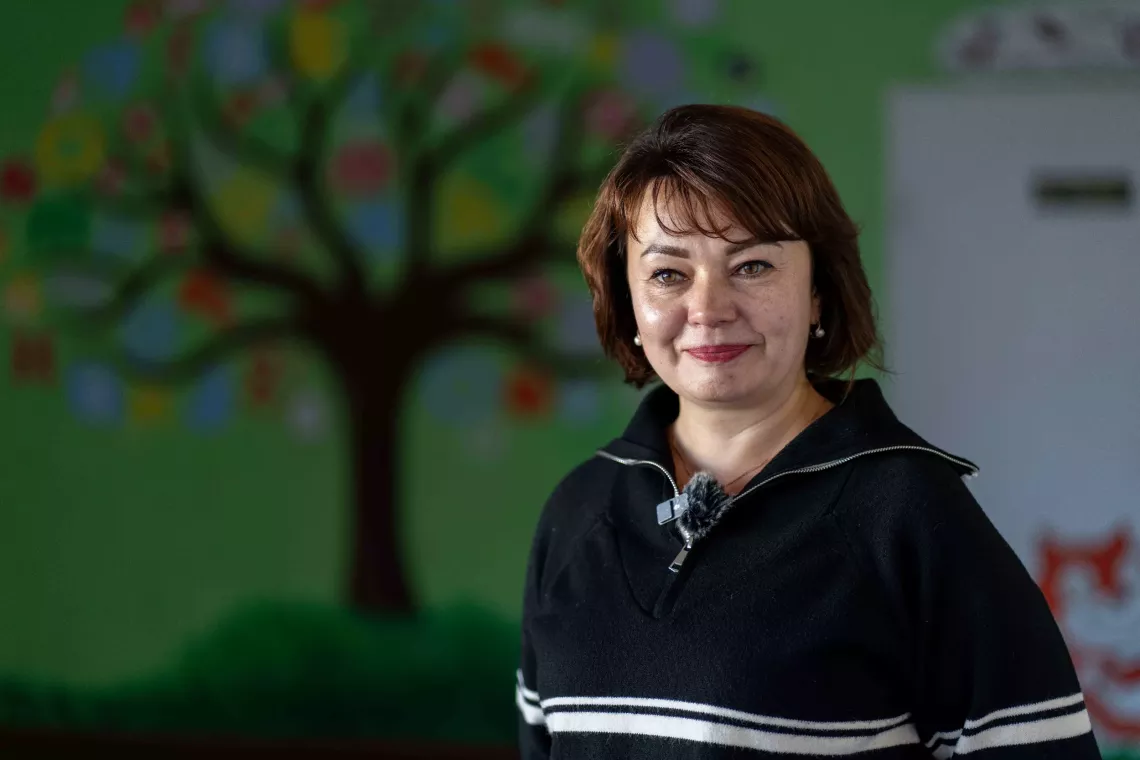
“Thanks to these developmental classes, many children are making progress. We are very pleased that children who did not speak at all are gradually starting to speak. And the parents are very grateful. They tell us: ‘Thank you!’ And you say to them: ‘Thank you!’ Because it inspires you to move on.”
Since the escalation of the war in Ukraine, the school Vanya attends has been operating online, but some classes are held on its premises to overcome educational losses.
“Vanya is happy to attend these classes,” says Iryna, the boy's mother. “I think he would like to come here even more often. Because he lacks communication. And doing home exercises will never replace lessons with specialists.”
“The children are all very different”
Before the project was launched in Zlatopil, parents of children with disabilities had to search for specialists and teachers for their children’s educational needs on their own. Sometimes, they even had to travel to Kharkiv, almost 90 kilometres away, for classes.
“There are practical psychologists, rehabilitation therapists and speech therapists in our community,” explains Liubov Pohretska. “But, unfortunately, we did not have a developmental specialist. And before, parents of children with autism spectrum disorders had to travel far for sensory integration. And the main problem is that these classes are very expensive. During the war, local residents, especially internally displaced people, simply do not have the money for this.”
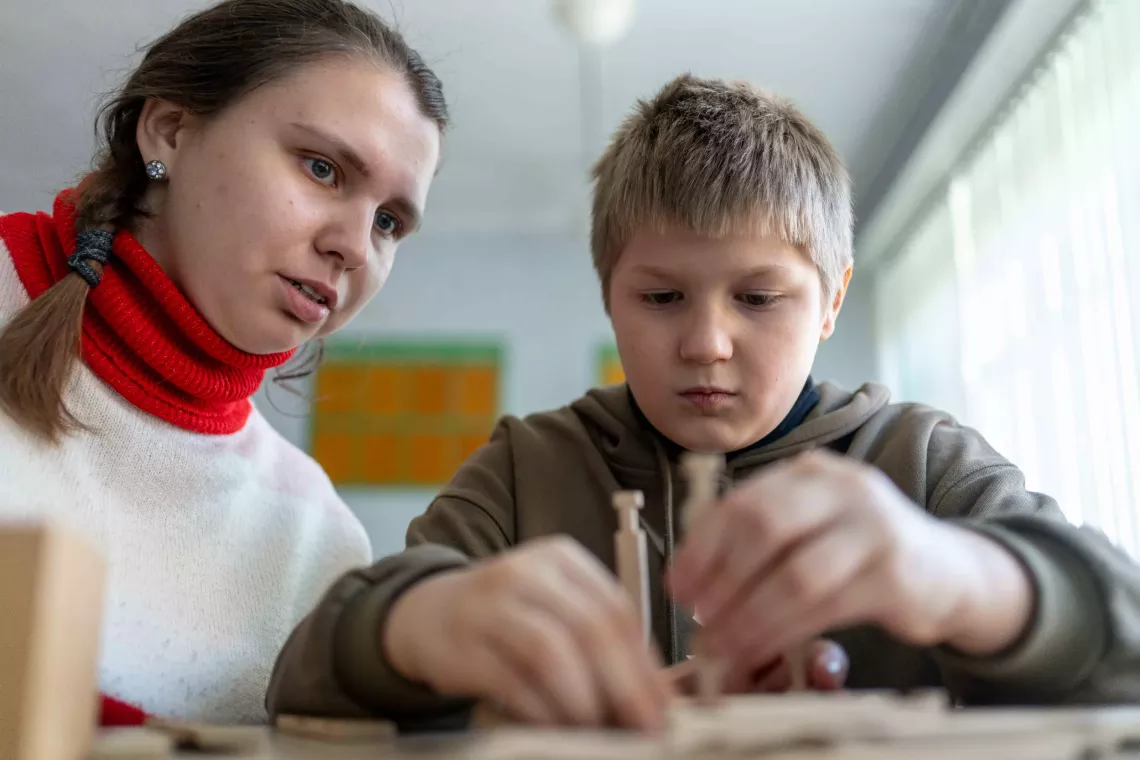
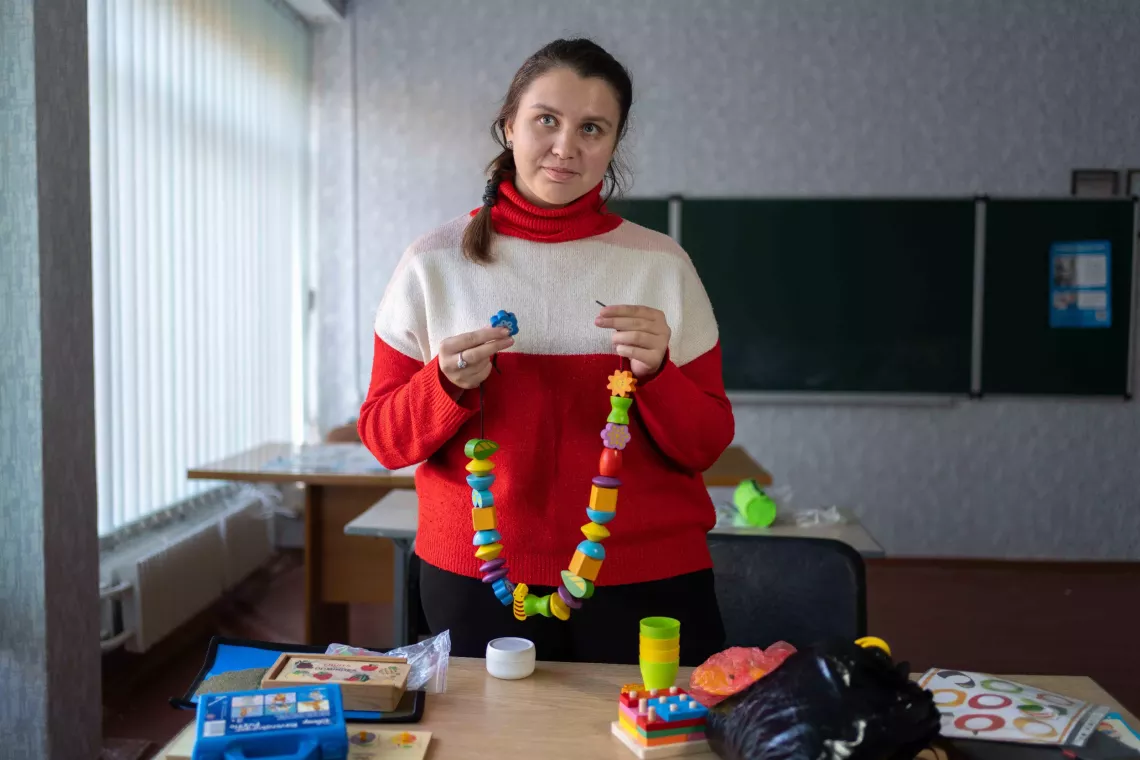
Tetiana, a child development teacher, comes to Zlatopil from Kharkiv once a week to visit her students. She works with six children and tries to find an individual approach for each one.
“The children are all very different. Each child is interesting in their own way. I prepare teaching materials for each lesson, and bring some balls and slides with me. Usually, children like outdoor games. For example, Vanya told me that he loves Minecraft, so I brought him blocks similar to those in this game. And in the process, we also studied numbers.”
The opening of these inclusive spaces is part of a comprehensive UNICEF project funded by the Government of Germany, the German Federal Foreign Office, Norway, the Committee for UNICEF Switzerland, and France, implemented in 20 communities in the Kharkiv region. The activities focus on provide access to quality education for children with disabilities, creating a safe learning environment, supporting their developmental needs, and enabling them to socialise with other people.
The project aims to support the learning and development of 3,500 children with disabilities. It involves more than 50 specialists, including developmental specialists, speech therapists, psychologists and rehabilitation specialists, conducting more than 4,000 classes by the end of the year. The programme includes the purchase of specialised equipment and the creation of resource rooms in educational institutions. The programme also organizes support groups for parents, educational training, and psychological counselling to help children adapt to the educational environment.
Activities focus on integrating children with disabilities into society, which is particularly important amid the ongoing war in Ukraine, through the development of communication, cognitive and social skills.