Nearly two thirds of mothers with young children are outside Ukraine’s labour market
Childcare gaps, labour market barriers, and social norms limit mothers’ employment in Ukraine but tackling these challenges is possible and will boost family wellbeing, gender equality, and catalyse the country’s recovery, according to new study.
- Українська
- English
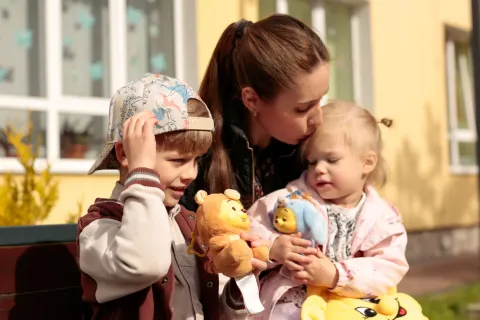
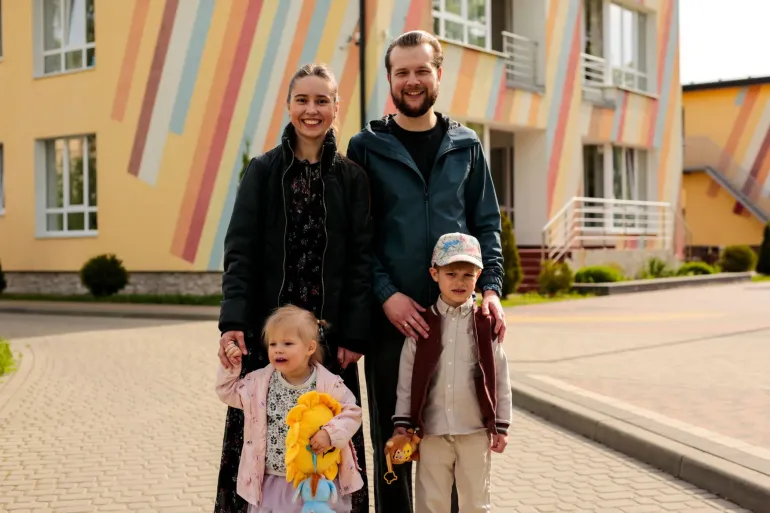
KYIV, 27 May 2026 – Only 35 per cent of women with children under six years are employed in Ukraine, falling to just 13 per cent among mothers of children under two, according to a study published today by UNICEF and the International Labour Organization (ILO). By contrast, 94 per cent of fathers with children in the same age group are at work.
The ‘Access to Early Childhood Education and Care and Women’s Economic Empowerment in Ukraine’ study reveals that gender disparities stem not from the lack of motivation among mothers to work but from systemic barriers to seeking employment, including limited early childhood care and education options, rigid labour market conditions, discriminatory attitudes, and unequal caregiving responsibilities.
The impact is increased financial vulnerability due to one income households and a key workforce cohort absent at a time of immense need. Single‑parent households, low‑income and internally displaced families, as well as families raising children with disabilities or special educational needs, are most impacted and report greater difficulty affording adequate nutrition and basic needs for their children.
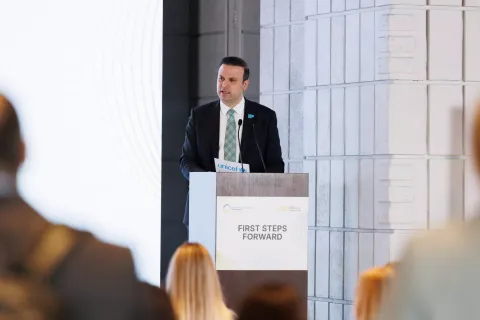
“As research and experience show, it is critical to invest in the first years of children, to give them the best start in life,” said Anne-Claire Dufay, UNICEF Representative to Ukraine. “Improving the early childhood education and care system and adopting family-friendly policies can enable women to find decent work, while their young children are nurtured through quality, inclusive and flexible preschool and childcare options,” she added.
The study notes that improving access to early childhood education and care (ECEC), family-friendly policies, inclusive social protection and a more balanced share of care, development and well-being responsibilities could help many mothers to enter or return to work. Among mothers of children under six who are not in employment, or currently seeking work, 28 per cent said they would look for employment if such conditions were in place.
“Ukraine’s recovery will be stronger when women are able to participate fully and equally in the labour market. Decent work, accessible care services, paid parental leave for both parents, flexible forms of employment, and protection from discrimination are not separate social measures, but key labour market reforms. Advancing relevant ILO standards, in particular ILO Conventions No. 183, No. 189, and No. 190, will help Ukraine respond to the current labour shortage while also building a fairer and more resilient economy,” emphasized Aіda Lindmayr, Director of the ILO in Ukraine.
Key findings of the study include:
- Gaps in childcare and preschool education are the main barrier to mothers’ employment, with only 15 per cent of places in preschool institutions available for children under three in 2024.
- Nearly 50 per cent of single mother households have monthly incomes below UAH 15,000 (US $340), compared with 14 per cent of two-parent families, highlighting the impact of one income and limited access to affordable childcare.
- Caregivers demand more flexible childcare and preschool education options, especially part-time or after-hours kindergartens, community or mobile options, holiday programmes (when preschools are closed), and workplace kindergartens.
- Workplace barriers are widespread, with 61 per cent of women perceiving bias against mothers of young children in hiring, and nearly half reporting that women’s career progression is widely seen as limited.
- 69 per cent of non-working mothers of young children report that they are not seeking employment due to expectations that mothers should devote themselves to childcare — a view shared by more than half of surveyed men.
UNICEF modelling shows that by expanding access to early childhood education and care, some 350,000 caregivers, mostly mothers, could enter or return to the labour market by 2030. The ILO care simulation tools also estimate that investing in childcare services could generate nearly 177,600 jobs by 2030, including about 159,100 in childcare and 18,500 jobs in non-care sectors.
These developments would benefit families and help tackle Ukraine’s labour supply challenges, highlighting the significant economic gains from policies that support mothers’ employment and expand childcare and ECEC services.
The study shares a number of recommendations to achieve this, including:
- Expanding access to different types of preschool education and care through licensed and monitored private, workplace and community models.
- Ensuring the safe continuity of ECEC services through financing and construction of child-friendly shelters.
- Improving disaggregated data collection, including on demand and service gaps, to ensure targeted response focusing on the most vulnerable households.
- Strengthening and reforming parental leave and flexible work arrangements.
- Scaling-up inclusive and accessible ECEC to close inclusion gaps and tackle gender and disability-related barriers to employment.
Notes to editors:
The study was commissioned by UNICEF Ukraine and the ILO in Ukraine and conducted by the Ukrainian Centre for Social Reform, with the financial support of the German Government's Federal Ministry for Economic Cooperation and Development (BMZ) through the KfW Development Bank.
Learn more about the study’s findings and policy recommendations at the link.
Media contacts
About UNICEF
UNICEF works in some of the world’s toughest places, to reach the world’s most disadvantaged children. Across 190 countries and territories, we work for every child, everywhere, to build a better world for everyone. For more information about UNICEF and its work for children, visit www.unicef.org
Follow UNICEF Ukraine on Facebook, Instagram , Twitter та TikTok.