UNICEF support boosts WASH and infection control at Kiswa Health Centre IV
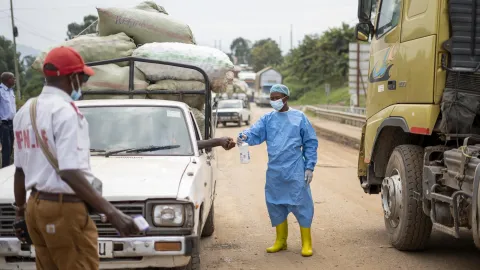
The WASH items directly bolstered the health centre’s capacity to respond to disease outbreaks like Ebola and mpox.
Kiswa Health Centre IV in Kampala saw a significant improvement in its water, sanitation, and hygiene (WASH) and infection prevention and control (IPC) protocols following the distribution of essential supplies by UNICEF. According to the Hospital Administrator Christine Imokat, the timely support was instrumental in addressing critical gaps and enhancing the facility's ability to provide quality care and respond to infectious disease outbreaks. The China-Uganda Friendship Hospital Naguru was also a recipient of this vital UNICEF distribution.
Before the intervention, Kiswa Health Centre IV faced significant challenges, most notably a severe shortage of handwashing facilities. "We had only two washing points which were not sustainable for the traffic of the facility," Imokat explained. The arrival of UNICEF's WASH and IPC items with support from the Government of Sweden and USAID was therefore a welcome development, directly addressing this pressing need.
Kiswa Health Centre IV is located in a busy part of Kampala serves over 1000 patients a month.
The items distributed to both health facilities include four units of 5-liter liquid soap, three mops for cleaning, ten litres of bleach (Jik), five pairs each of Boot size 43 and Boot size 44, four hand brushes, 16 pairs of heavy-duty rubber gloves, five handheld 1-liter trigger spray bottles, ten units of sanitizer, 12 hands-free washing facilities, four units of 25 kg Calcium hypochlorite, and ten plastic aprons. These supplies were strategically integrated into the hospitals' operations.
Handwashing facilities were prominently placed at every entrance, ensuring easy access for all individuals entering the facility. The boots were allocated to field officers, while brooms, bleach, and brushes were actively used for general cleaning purposes, with bleach specifically designated for high-traffic and sensitive areas such as the antenatal, dental, and injection rooms to maintain a high standard of cleanliness.

The impact on infection prevention and control was substantial. Imokat further highlighted the critical role of supplies like bleach and liquid soap in strengthening IPC measures. The increased availability of sanitizers was also a key factor. This enhanced focus on hygiene and IPC particularly benefited the antenatal and dental units, as well as the Ebola Treatment Unit (ETU) that was established during the just concluded Sudan Ebola Virus outbreak.
Beyond the immediate impact on the facility's environment, the UNICEF support had also influenced staff practices. Imokat noted a positive change in the use of gloves and a greater emphasis on IPC protocols among the staff.
“I was happy to see the doctors and nurses handling us with gloves and encouraging us to use the handwashing facilities, it made me feel safe for my child and I,” said Jennifer, an expectant mother who had visited the health centre for antenatal services.
The WASH items also directly bolstered the health centre’s capacity to respond to disease outbreaks like Ebola and mpox. While specific detailed protocols and training directly linked to this recent distribution were mentioned as received, the presence of adequate WASH supplies was a fundamental element of any effective outbreak response, enabling proper hygiene and reducing transmission risks.
Kiswa Health Centre IV also benefited from capacity-building support and training from UNICEF alongside the item distribution.
Despite the significant progress, some gaps remain. The hospital administrator identified a continuing need for more sanitizer, liquid soap, and bleach, particularly to sustain the improved IPC practices. Looking ahead, the hospital planned to maintain the enhanced hygiene standards beyond the emergency response phase.