Uganda's border communities are building their first line of defence against Ebola Virus Disease
In Kasese and Bundibugyo, UNICEF is working with government and partners to strengthen community surveillance, health systems and child protection, helping communities prepare for the threat of Bundibugyo Virus Disease (BVD).

In Kasese and Bundibugyo, UNICEF is working with government and partners to strengthen community surveillance, health systems and child protection, helping communities prepare for the threat of Bundibugyo Virus Disease (BVD).
Along Uganda's western frontier with the Democratic Republic of the Congo (DRC), the threat of Bundibugyo Virus Disease is measured not only by the distance between communities and the border, but also by how quickly a health alert can be detected, reported and acted upon.
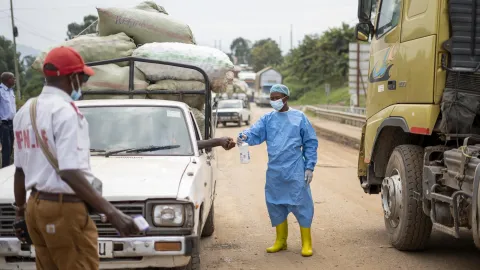
In Kasese and Bundibugyo, two districts with extensive and porous borders with the DRC, cross-border movement for trade, health care and family connections present a formidable public health challenge. People move through established crossing points and informal routes, often beyond the reach of conventional border surveillance. A suspected case that goes unnoticed or is reported too late could have consequences far beyond the immediate community.
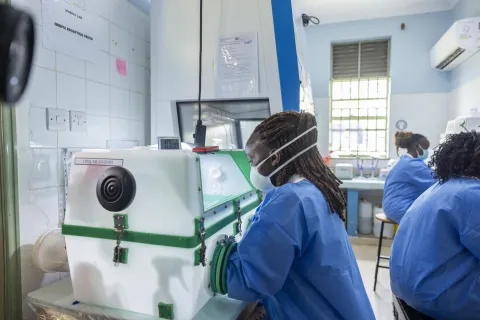
Recognizing these vulnerabilities, Uganda is strengthening its preparedness through a coordinated, multisectoral approach, with UNICEF supporting government-led efforts to ensure that communities, health facilities and local institutions are better equipped to prevent, detect and respond to potential threats.
Building preparedness beyond health facilities

Since May 2026, UNICEF, working with implementing partners and district local governments, has supported preparedness across several interconnected areas, including Risk Communication and Community Engagement (RCCE), health, Water, Sanitation and Hygiene (WASH), child protection, Mental Health and Psychosocial Support (MHPSS), and Protection from Sexual Exploitation and Abuse and Gender-Based Violence (PSEA/GBV).
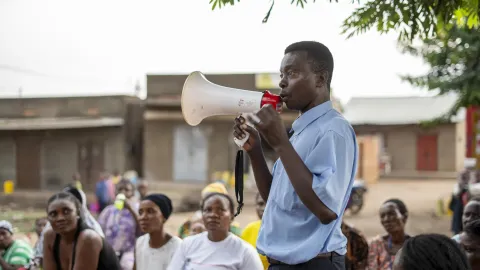
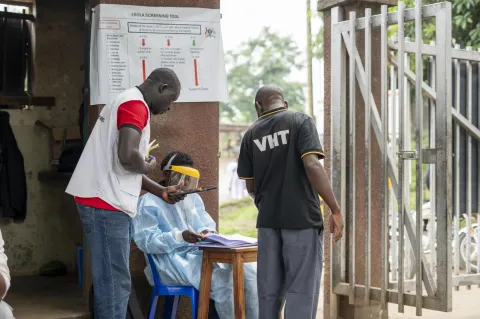
An effective outbreak response cannot depend on medical facilities alone. Communities must understand the disease, recognize potential warning signs, know where to report concerns and seek appropriate assistance. Village Health Teams (VHTs), para-social workers and other community structures are, therefore, central to awareness creation, community-based surveillance, early identification and referral.
At the same time, UNICEF-supported interventions are strengthening child protection systems, including case identification, referral and case management, while providing psychosocial support and raising awareness about protection risks and available services. This ensures that vulnerable children and families are not overlooked when public health emergencies threaten their safety and wellbeing.
Closing the gaps along the border

The urgency of these efforts was underscored during the Kasese District Task Force meeting on 6 November 2026, attended by the National Incident Commander, district officials and representatives of health, security and humanitarian partners.
Discussions highlighted the challenges posed by the district's approximately 54-kilometre stretch of porous border with the DRC, including informal crossings, movement of patients seeking health care in Uganda and cross-border travel by traders and transporters.
Participants emphasized the need to reinforce surveillance at formal and informal entry points, strengthen coordination between security and health surveillance teams, improve referral and ambulance arrangements, and orient all district task force members, including non-medical stakeholders, on BVD preparedness.
In Bundibugyo, similar priorities emerged during district-level coordination discussions, with particular emphasis on active surveillance in communities and health facilities, alert management, reporting of community deaths, infection prevention and control, monitoring travellers and returnees, and public health measures in schools and markets.
Both districts are also strengthening coordination through their District Task Forces, ensuring that government departments and partners work within agreed preparedness plans rather than implementing fragmented interventions.
However, significant gaps remain. Monitoring informal crossings, reaching hard-to-access communities, ensuring timely referral of suspected cases and sustaining cross-border information-sharing arrangements require continued investment and collaboration.
Preparedness that protects every child

Beyond surveillance and infection prevention, the BVD response also demonstrates why protecting vulnerable children must remain central to emergency preparedness.
In Hoima City, five-month-old Andrew, who was abandoned at Hoima Regional Referral Hospital two days after birth, received child protection case management support through Baylor Uganda with support from UNICEF under the BVD response. Jamesbond Anywar, UNICEF’s Child Protection Officer followed up Andrew and to track progress of his situation.
This joint intervention facilitated family tracing, including radio announcements and newspaper advertisements, as well as transportation and nutritional support. He was subsequently placed in the care of Alimuka Children's Home as the necessary family-tracing and legal processes continued.
Although Andrew's circumstances are different from the immediate disease surveillance challenges facing border communities, his experience illustrates an important dimension of UNICEF's multisectoral approach: public health emergencies require systems that protect children and address vulnerabilities beyond the disease itself.
A collective investment in prevention
UNICEF's contribution to Uganda's BVD preparedness and response is supported by the Governments of the United States and Iceland and the Mastercard Foundation. Working alongside government and partners, including WHO, IOM, Médecins Sans Frontières (MSF), the Red Cross and Baylor Uganda, UNICEF provides technical, operational and community-level support to strengthen national and district capacities.
Sustaining investment, closing preparedness gaps and strengthening coordination are essential. Ultimately, Uganda's defence depends on vigilant communities, alert health workers and rapid response systems.
The best outbreak response begins before the outbreak arrives!