Uganda triumphs over Ebola: A story of resilience, partnership and vigilance
At the heart of this response was the tireless support of UNICEF with funding from Swedish and the United States governments

On 26 April 2025, Uganda’s Minister of Health, Hon. Dr Jane Ruth Aceng, officially declared the end of the Sudan Ebola Virus Disease (SVD) outbreak in the country. The announcement marked not just the closure of the country’s eighth Ebola episode but a powerful testament to Uganda’s growing reputation as a model of resilience, strategic leadership, community mobilization and international cooperation in managing public health emergencies.
At the heart of this response was the tireless support of UNICEF with funding from the governments of Sweden and United States, whose leadership in community engagement, essential service continuity, and water, sanitation and hygiene (WASH) positioned the organization as a pillar of the national effort.
The context of outbreak
The 2025 outbreak was first recognized following the tragic death of the index case on 29 January, who had developed symptoms earlier and sought treatment in multiple districts, namely Mbale, Kampala and Wakiso. In swift response, the outbreak was officially declared the next day, 30 January 2025.
Led by incident commander, Dr Henry Kyobe, the national response was immediate and highly coordinated. Jointly chaired by the Resident City Commissioner (RCC) of Mbale City, Ms Asumin Nasike, and the Resident District Commissioner (RDC) of Mbale District, the Task Force galvanized the community, tracing and monitoring 131 contacts with an impressive 99 per cent follow-up rate.
Yet, the battle was not without challenges: misinformation, shortages of Information, Education and Communication (IEC) materials and logistical gaps such as transport and data management systems tested the strength of the response apparatus. Despite facing challenges, Uganda’s robust collaboration with international partners, such as WHO and UNICEF, helped ensure that life-saving messages and services reached the people who needed them most.

Leadership at the forefront
At a triumphant gathering in Mbale City, eastern Uganda, RCC Ms Nasike and Local Council (LC) Chairperson, Mzee Wakayeta, welcomed guests and dignitaries, offering heartfelt praise to Uganda’s Minister of Health, Hon. Ruth Aceng. Mzee Wakayeta particularly commended the minister’s steadfast leadership in steering Uganda through successive public health crises, including COVID-19 and now SVD.
Handing over the official Mbale Response Team reports to the Minister and Dr Kasonde Mwinga, WHO’s Representative in Uganda, the RCC recalled inspiring words from the ministry’s permanent secretary: "Go and work and do it in the normal way you have been working but get Ebola out of Mbale." And so they did – with UNICEF standing firmly among the essential responders.
The minister herself, welcoming national and international partners, including the US Ambassador, Mr William Popp; the UNICEF and WHO teams; and numerous implementing partners, echoed a message from the President of Uganda: "This outbreak could have been controlled earlier if you people had listened to the health workers. Use health workers and avoid going to witch doctors, especially if the case is clear."

Statistics of hope and sorrow
Uganda’s eighth Ebola outbreak saw 12 confirmed cases and two probable cases, of which four sadly passed away, representing a 28 per cent fatality rate. However, 10 of the 12 confirmed cases survived, yielding a remarkable 83 per cent recovery rate. Transmission was largely confined to family contacts across Kampala, Mbale, Wakiso, Jinja, Ntoroko, Fort Portal and Kyegegwa districts.
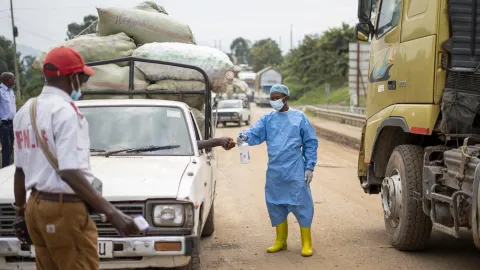
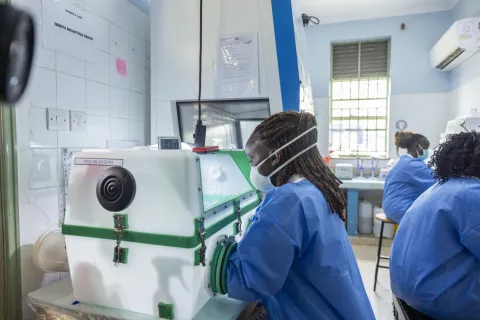
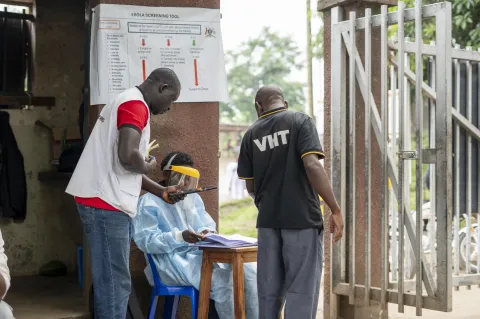
The success in controlling the outbreak was anchored in rapid detection, immediate isolation, rigorous contact tracing (with 582 individuals quarantined), cross-border surveillance and robust public awareness campaigns. Uganda's health care system, its health workers and its communities demonstrated a formidable capacity to contain, combat and overcome one of the world’s most feared infectious diseases.
This success was significantly shaped by UNICEF’s strategic interventions, which ensured that communities had the tools, knowledge and support to protect themselves and others.
UNICEF's critical role in the response
UNICEF’s contribution was both visible and indispensable across multiple response pillars, standing out as a leading actor in Uganda’s successful Ebola containment:
- Water, Sanitation and Hygiene (WASH): UNICEF ensured access to clean water and hygiene facilities in schools, health centres and communities through distributing tap stands, bleach and sanitizer critical to limiting the spread of the virus.
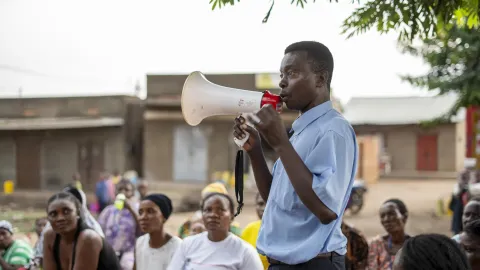
- Risk Communication and Community Engagement (RCCE): In an environment of fear and misinformation, UNICEF led efforts to provide timely, accurate information to communities, by providing Information, Education and Communication (IEC) materials empowering them to make informed decisions and trust the public health response.
- Continuity of essential services: UNICEF worked closely with community health workers to sustain maternal, child health and nutrition services throughout the outbreak, ensuring other health needs were not neglected.
This work was made possible thanks to generous support from funding partners, notably the Swedish and the United States governments. As Dr Robin Nandy, UNICEF Country Representative, aptly stated: “The success in keeping Uganda Ebola free will depend on continuous improvements in the health care systems, and UNICEF remains committed to supporting this journey.”
UNICEF’s footprint in the outbreak response was a powerful example of coordinated action, complementing clinical and logistical efforts by focusing on the human dimensions of public health.

A celebration of partnerships
UNICEF’s leadership role in community engagement and WASH was central to the overall success. Its close collaboration with WHO and the Ministry of Health exemplified a well-coordinated outbreak response.
The national effort was amplified by robust partnerships and collaborations. The United States and the Swedish governments, through its embassy staff and technical experts, supported Uganda’s Ebola fight, deploying rapid detection test kits and bolstering surveillance efforts.
Other partners, including Africa CDC, Norway, the Governments of New Zealand, France and the United Kingdom, alongside organizations such as Oxfam, AFFENET and Lutheran World Federation, brought invaluable technical expertise, logistics and solidarity.
Dr Jean Kaseya, Director of Africa CDC, underscored the significance of investing in Africa’s health systems and celebrated Uganda’s resilience and innovation. Similarly, Dr Chikwe Ihekweazu, Acting WHO Regional Director for Africa, highlighted Uganda’s global role: "Uganda has never exported an Ebola case out of the country," a proud testament to the nation’s effective containment strategies.
WHO Director General, Dr Tedros Ghebreyesus, who joined the gathering via video link, reinforced the point: "The outbreak is over, but the threat remains." He emphasized the necessity of continued vigilance and solidarity.

Hard lessons and the road ahead
The experience of 2025 offered Uganda and the global health community critical lessons:
- Preparedness saves lives: Uganda’s robust pre-existing systems, honed through previous outbreaks, enabled an immediate and organized response.
- Rapid response is crucial: Swift detection, isolation and treatment remain the most effective weapons against epidemic escalation.
- Solidarity is indispensable: The collaboration between communities, countries and organizations exemplified how health crises are best tackled collectively; and UNICEF’s role was foundational to this success.
Recognizing that the fight against Ebola is still ongoing, Uganda’s Ministry of Health has outlined a comprehensive strategy for post-outbreak management. Isolation centres, instead of being abandoned, are being converted into training and emergency response hubs. Survivor support programmes are in place across districts such as Mubende, Gulu, Wakiso and Mbale.
Moreover, vaccine trials are progressing steadily. These heralds promising developments in Ebola prevention.
The health authorities also stress that vigilance must remain high. Environmental factors such as the presence of bats and monkeys make it impossible to eliminate the risk of outbreaks. Hence, surveillance must continue, backed by sustained technical support from WHO and partners such as UNICEF.
A call to sustain the gains
As minister Aceng rightly pointed out in her closing remarks, Uganda is open, safe and ready for travel, trade and tourism.

However, maintaining this status demands unwavering commitment from all stakeholders. Health workers must continue adhering to preventive protocols. Communities must sustain good habits like Water, Sanitation and Hygiene (WASH). Leaders must ensure that health systems receive the investment and attention they deserve. And organizations such as UNICEF must continue to receive the support they need to protect the most vulnerable.
As Dr Ihekweazu noted, the only way for Uganda, and indeed Africa, to remain Ebola-free is through preparedness, science and sustained vigilance. And as Uganda has demonstrated, when UNICEF is at the table, success is not only possible, it is sustainable.
Victory belongs to all
The end of the 2025 SVD outbreak in Uganda is a shared victory: one for health workers, local leaders, national authorities, local and international partners, community members and survivors alike. It is a victory built on sacrifice, solidarity, science and, above all, the unwavering human spirit.
Yet amid this broad alliance, UNICEF’s pivotal role in protecting communities, keeping essential services running and restoring public trust shone brightly.
The SVD outbreak may be over, but the partnerships, systems and resolve forged during this crisis, especially with UNICEF’s unwavering support, together with lessons learned, and the resilience demonstrated will strengthen health systems and continue to safeguard Uganda for generations to come.