Stopping Ebola before it crosses into Uganda
How communities are becoming the first line of prevention
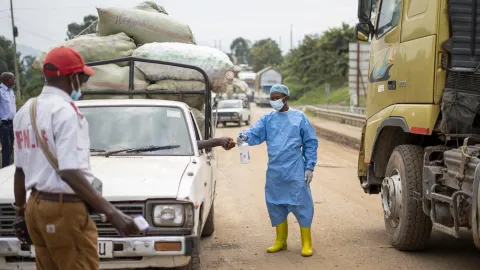
At the busy Mpondwe border crossing between Uganda and the Democratic Republic of Congo (DRC), every arriving cargo truck tells a story of vigilance.
Drivers and turnboys step down to wash their hands before undergoing temperature screening. Locator forms are completed, immigration procedures follow, and health officials remain alert. Only cargo trucks, essential workers and authorized travellers are allowed through, while security personnel monitor numerous unofficial crossing points linking communities on both sides of the border.
Uganda's preparedness comes against the backdrop of a much larger Ebola emergency in eastern DRC. Recognizing the continued risk, the Government of Uganda has strengthened surveillance, activated emergency coordination structures and implemented a comprehensive response across high-risk districts. UNICEF is supporting several pillars of this government-led response, including Risk Communication and Community Engagement (RCCE), ensuring accurate information reaches communities before misinformation can spread.
In the fight against Ebola, stopping the virus begins long before a patient reaches a treatment unit. It begins with trust.
Turning information into protection
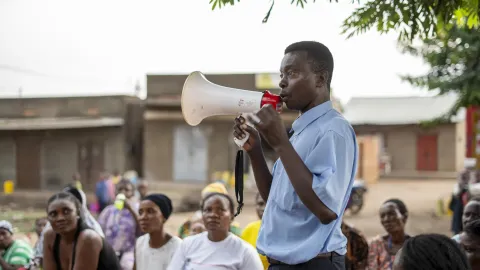
In Kasese District, preparedness starts with communication. Weekly District Task Force meetings coordinate the response, while Village Health Teams (VHTs), teachers, religious leaders and local authorities take prevention messages directly into communities.
The goal is simple: ensure everyone knows what Ebola is, how it spreads, how it can be prevented and what to do if symptoms appear.
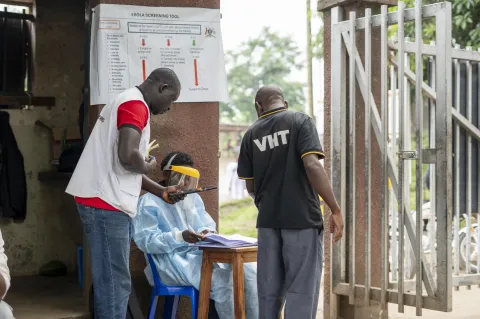
"The community needs to know that there is a problem," explains Nason Mugisa, a VHT member from Mpondwe-Lhubiriha Town Council. "When someone develops signs and symptoms, we verify the information, alert the surveillance team and ETU immediately.”
Across Kasese's 876 villages, 4,380 VHTs conduct home visits, community dialogues and awareness sessions during immunization outreaches, at places of worship and public gatherings. For many households, they remain the most trusted source of health information.

Fighting rumours with facts
Like every outbreak, Ebola has generated misinformation. Some dismissed it as politics; others believed it was fabricated for donor funding; while some thought reported cases were simply poisonings linked to land disputes.
VHTs confront these rumours every day. "We insist that Ebola is real," says Mary Kiiza, a VHT member from Nyakaina Village. "Some people tell us we are deceiving them or that we are only looking for money. But we continue explaining until they understand."
Communities living near the border often have relatives in the DRC and have witnessed Ebola's impact first-hand, making official messages more credible. "Because the Bakonzo people live on both sides of the border, they understand what is happening," explains Dr George Opong, WHO Field Coordinator for Surveillance in Kasese. "Even though there are no community cases here, many know relatives who have experienced the outbreak in the DRC."
Speaking the community's language
Information, Education and Communication (IEC) materials developed by the Ministry of Health, with support from UNICEF and partners, have been translated into Lukonzo, alongside English versions. Radio stations broadcast audio messages; posters appear in schools and health facilities, while megaphones help reach remote communities.
"The Ministry develops materials that communities trust," explains Agnes Mbambu, Kasese District Senior Health Educator. "At district level, we translate them into Lukonzo and produce audio versions for radio messages."

Schools become centres of prevention
Just one kilometre from the DRC border, Kamasasa Primary School demonstrates how schools strengthen preparedness.
Teachers trained by the Ministry of Health now educate pupils about Ebola prevention alongside regular lessons. Existing UNICEF-supported handwashing facilities installed during COVID-19 continue serving the school, while awareness posters, sanitizer and temperature screening reinforce prevention. "We tell children that if they notice someone feeling unwell, they should alert a teacher immediately," explains Senior Woman Teacher Justine Masika.
Science teacher Julius Baluku says children eagerly ask questions about Ebola transmission.
The pupils confidently repeat key prevention messages: wash hands with soap, avoid contact with sick people, do not share clothes and report illness immediately. They carry these lessons home, making children powerful messengers within their families.
Trusted voices beyond the health sector
Preparedness extends beyond the health sector. Cultural institutions, faith leaders, local councils and community organizations all reinforce prevention messages through trusted community networks.
The Obusinga Bwa Rwenzururu cultural institution, radio stations, local musicians and religious leaders help promote prevention and encourage safer alternatives to traditional burial practices that involve direct contact with the deceased.
This partnership reflects a key lesson from previous Ebola outbreaks: lasting behaviour changes come through collaboration, not instruction.

Communities become the surveillance system
Community awareness encourages rapid reporting through toll-free systems, enabling surveillance teams and Rapid Response Teams to investigate suspected cases quickly.
The growing number of alerts reflects increased public awareness and confidence rather than increased transmission. Communities have become active participants in surveillance, strengthening Uganda's ability to stop outbreaks before they spread.
A shared responsibility
Uganda's Ebola response remains firmly led by the Government of Uganda through the Ministry of Health, district leadership and local authorities.
UNICEF supports this effort by strengthening community engagement, supporting schools, empowering VHTs, helping develop and translate trusted communication materials, supporting infection prevention and control, and helping protect essential services for children and families. WHO, IOM, MSF, the Red Cross, Baylor and other partners also contribute specialized expertise.
"We are achieving what we are achieving because of support from partners like UNICEF," says Dr Amon Bwambale, Kasese District Health Officer. "But as long as the outbreak continues in the DRC, we cannot put our guns down."
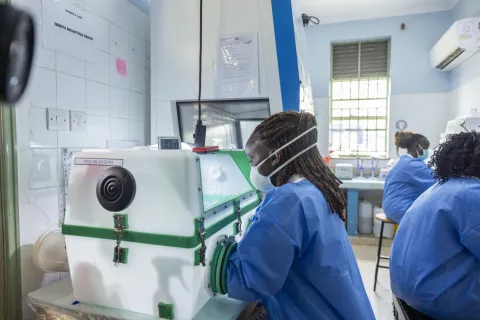
While laboratories diagnose disease and treatment units provide care, Uganda's first line of defence begins much earlier, with a VHT member talking to a family, a teacher answering a child's question, a radio programme dispelling rumours and a community choosing facts over fear.
In Uganda's Ebola preparedness, every informed conversation is another barrier against the virus. And every trusted voice brings the country one step closer to ensuring that Ebola never gains a foothold in the communities it seeks to threaten.