Playgrounds of change
Early learning and parenting in Karamoja

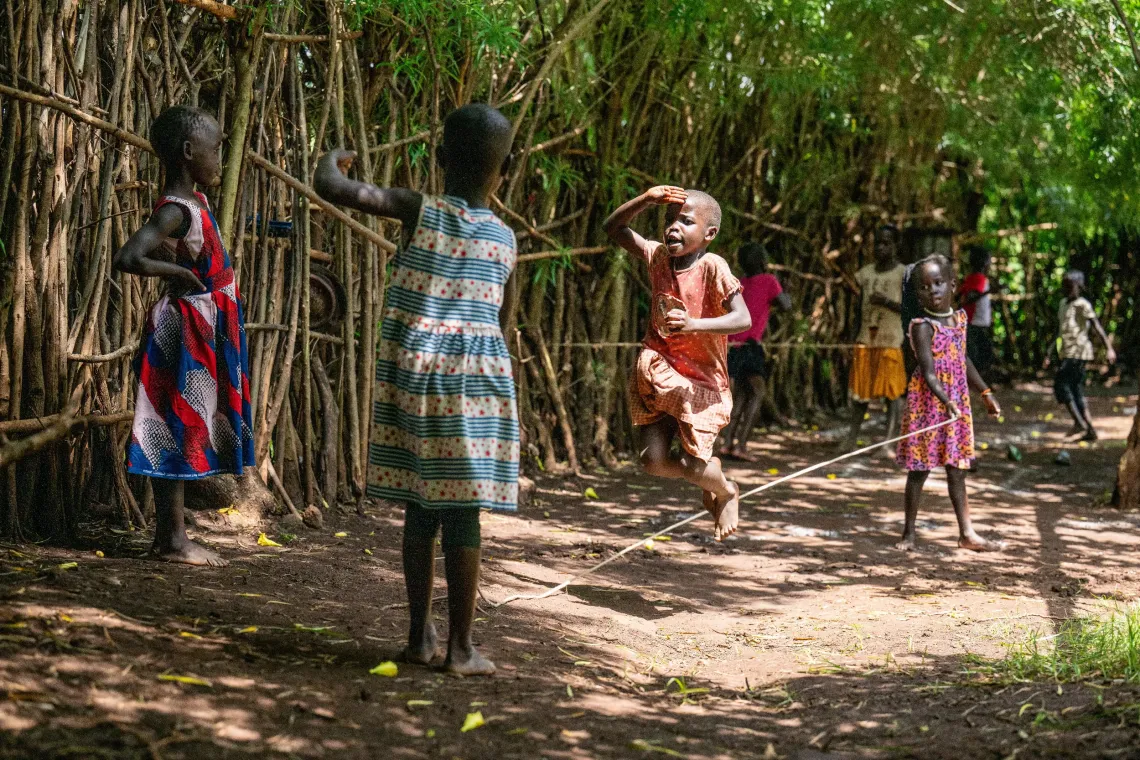
In the sun-drenched plains of Karamoja, where cattle herds roam and traditions run deep, a quiet revolution is underway. It is not found in towering buildings or sweeping declarations, but in the joyous cries of children on seesaws, in tiny feet racing across play spaces, and in mothers mixing with their toddlers, causing laughter from rope-skipping games. These are the playgrounds of change; spaces designed not just for fun, but for building the foundations of learning, growth and transformation.
Across the nine districts of Karamoja, UNICEF and Play Action International with funding through Education Cannot Wait supported the construction of 32 playgrounds at Early Childhood Development (ECD) centres, creating vibrant hubs for children between the ages of 3 and 12. These playgrounds, carefully distributed across Karenga, Kaabong, Kotido, Abim, Napak, Moroto, Nabilatuk, Nakapiripirit and Amudat, are not just physical structures; they are bridges between school and home, between potential and opportunity.
A new way to learn
Judith Ileny, Head Caregiver at Nakwanga ECD Play Lab, remembers a time when the centre had barely 30 children. “Before the playground was established, children were weak and dormant,” she recalls. “Now, they are sharp and playful. They can dance, lead the play, even without us.” The number of children at her centre has skyrocketed to 308 – a testament to how play can become a powerful incentive for education. This is corroborated by Richard Nagugu, Deputy Head Teacher at Amudat Muslim Nursery and Primary School: “Before the playground, daily attendance of school was averaging 36 children per day; but now, the average attendance has grown to 95 children. Performance has improved. They can read, write, and solve mathematical problems. But before, their performance was negatively affected by poor attendance.”
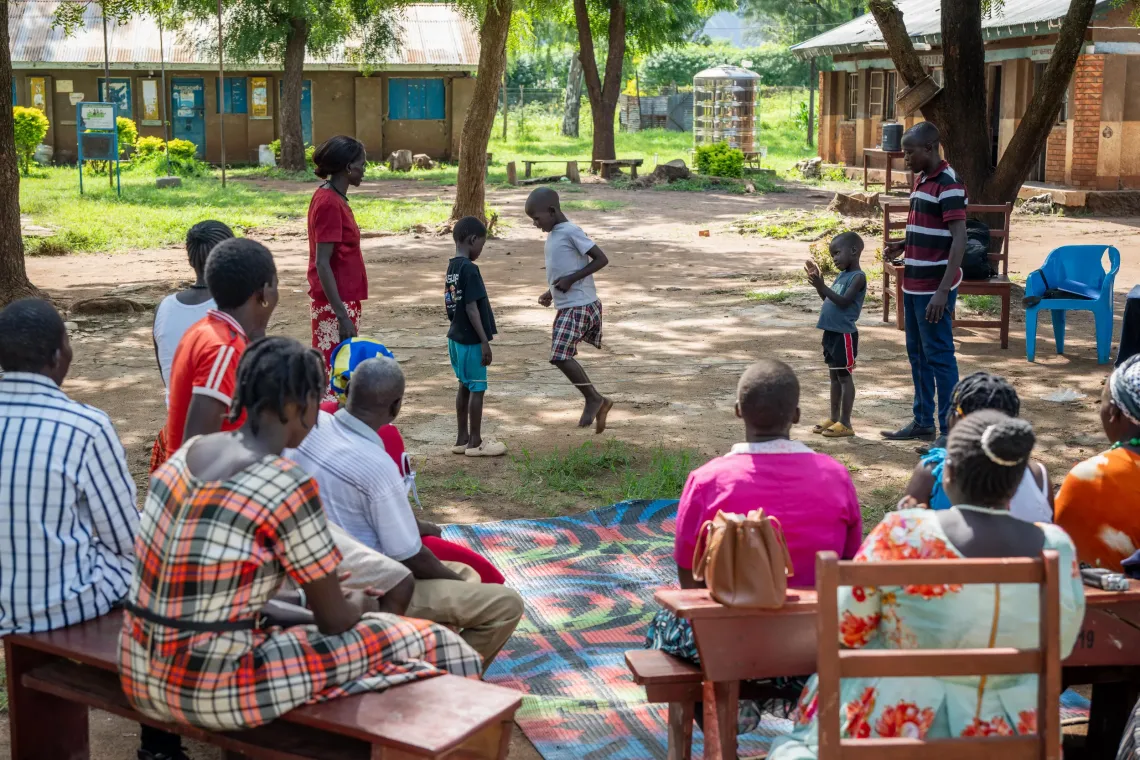
In 2024, over 38,000 children benefitted from these spaces, namely 5,785 pre-primary and 33,056 primary school learners, many of whom now attend school more regularly, participate more actively and perform better academically. With the right environment, play becomes more than just fun; it becomes learning in motion.
The power of parenting
But the playgrounds are just one piece of the puzzle. UNICEF’s vision for Karamoja goes deeper – into the homes and hearts of the community. Through its parenting education programme funded by the Ireland Government, caregivers are being trained not just to teach, but to transform.
In Nakapiripirit, Napak and Kotido districts alone, over 1,850 parents have been equipped with knowledge about child development, health, rights and nutrition, using a manual developed by the Ministry of Gender, Labour and Social Development. The ripple effects are profound.
"We were taught to welcome the children home, ask what they learned, help them change clothes, even prepare the meal together," says Anna Ochonga, a grandmother caring for 12 children and grandchildren. "Before, I didn’t know what to do. Now, we are involved. We play with them. We talk to them. We listen."

Caregivers, teachers, catalysts
The success of the programme hinges on the dedication of people like Simon Peter Achingun, a Trainer of Trainers for ECD caregivers. Through intensive sessions using national manuals, Simon and his team have trained caregivers in 10 model centres. “We cover everything,” he says, “from positive discipline to how to recognize child abuse, from health to cognitive development.”
This support, backed by UNICEF with Ireland Government funding, ensures that both the classroom and the playground become environments of safety, stimulation and structured growth. And with over 270 ECD caregivers from 90 centres trained, the reach is steadily expanding.
District voices: Systemic transformation
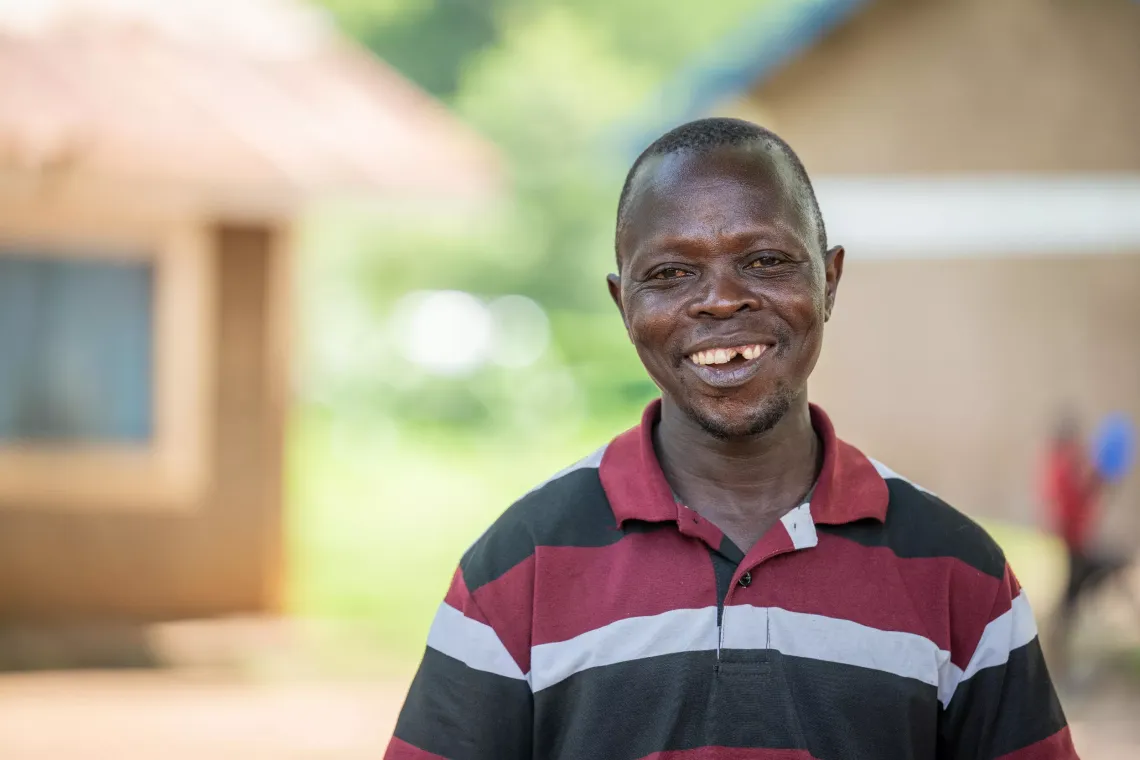
Local government leaders are quick to highlight the significance of the programme. William Iwuala Abura, Education Officer in Nakapiripirit District, explains: “We now have 30 ECD centres, up from 15. The three centres with playgrounds supported by UNICEF with funding from Education Cannot Wait each has over 300 children. Others without [playgrounds] have fewer than 100. That is the power of play.”
Parents are now active participants, accompanying children to school, waiting at lunchtime, and even contributing small fees in collaboration with centre management committees (CMCs). "ECD has bridged the gap between the home and school. It’s building trust," William adds.
The challenge ahead
Despite the gains, the work is far from done. Caregivers like Judith speak of overcrowded classrooms – 100 children squeezed into a 4x4-metre room – and a lack of basic resources. District leaders stress the need for more funding, more awareness, and more partners to join the mission.
"Karamoja still needs support,” says William. “The understanding of ECD is still low. Many parents don’t yet realize the power of starting early. In Nakapiripirit, we have ECD centres in just 30 of 208 villages.”
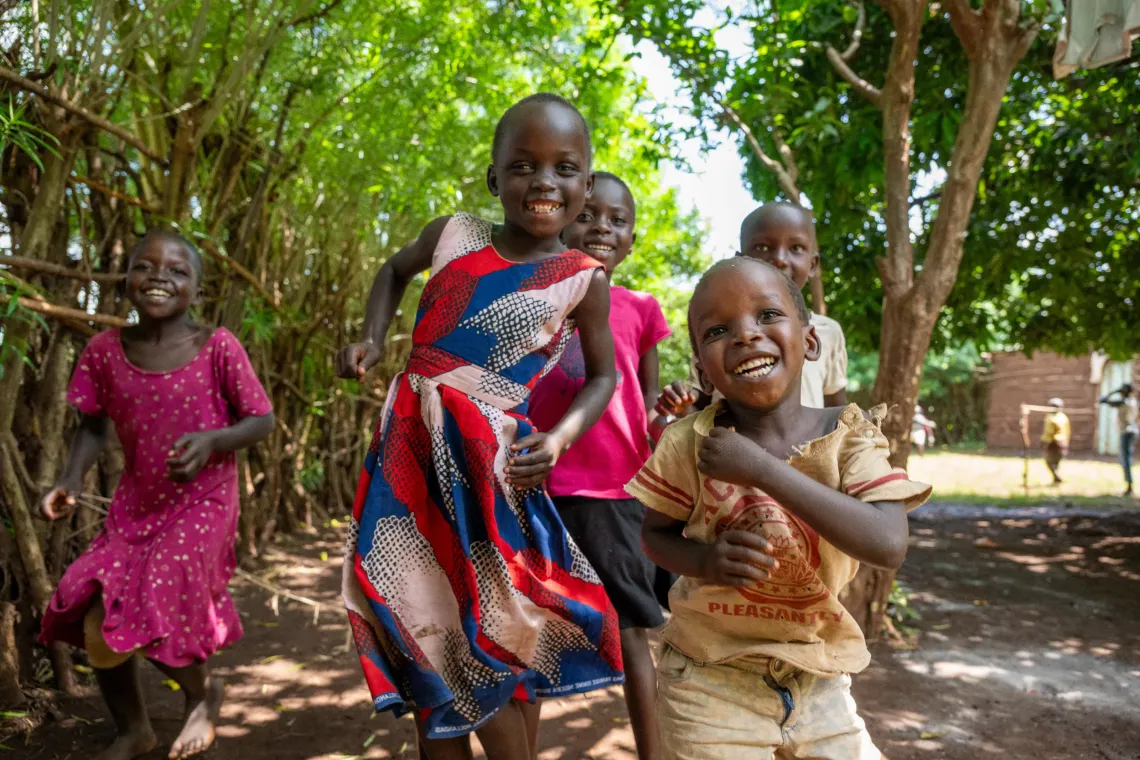
But what is clear is this: where there is a playground, a trained caregiver and an empowered parent, children thrive. They dance, sing and skip into a future where learning begins not with fear, but with laughter.