Children take their place at Karamoja's table
In Moroto, culture has always been a place where elders speak and the community listens. In September 2026, children spoke too.
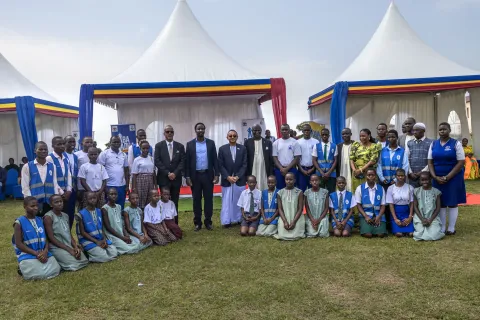
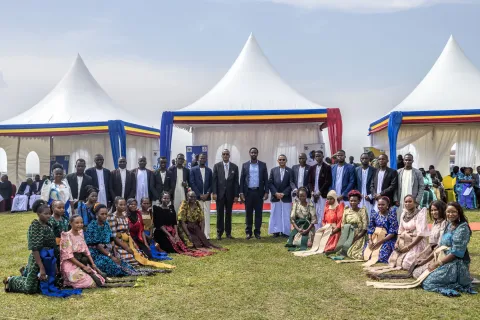
The 11th Karamoja Cultural Event ran from 6 to 12 September and drew an estimated 15,000 people. They came from across Karamoja and the wider Ateker community: the Turkana of Kenya, the Toposa of South Sudan, the Nyangatom of Ethiopia and communities from Teso and Lango in Uganda. The theme was "Unity in Culture, Strength in Peace, Prosperity through Tourism and Natural Resources." Alongside the dance and song, delegates discussed peace, education, child protection, livelihoods and the future of the region.
Opening the event, H.E. President Yoweri Kaguta Museveni called for a "cultural audit" to identify and preserve the practices that build unity, discipline, strong families and social cohesion. Culture and development, he said, should work together for a peaceful and prosperous Karamoja. Government also set out a three-phase plan to strengthen household resilience through climate-smart farming and livestock, wider irrigation and commercial agriculture.
A first for Karamoja's children
This year, for the first time, children were part of the conversation.
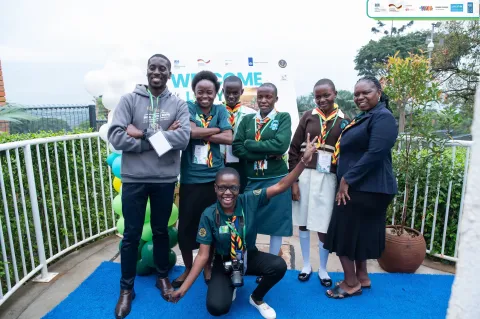
UNICEF supported the Children's Parliament and advocated for a child representative to have a dedicated slot in the High-Level Dialogue. Sixty children took part. Their representative stood before ministers, Members of Parliament, district leaders, cultural and religious leaders, civil society, media and United Nations agencies and set out what children in Karamoja need.
The response was immediate. The Cabinet Minister for Karamoja Affairs committed to support an educational visit to the national Parliament for the 60 children. Government will compile a multisectoral report on children's priorities, expand Children's Parliaments across Karamoja and strengthen coordination and accountability for programmes that reach children. Stakeholders agreed that children's participation should become a permanent feature of future events.
"Thanks to UNICEF for enabling the children to participate in this year's KCE. Let it be a routine activity to secure children's space in KCE for inclusivity, leaving no one behind."
Elders lead from within
Children did not carry the message alone. UNICEF supported a structured dialogue with elders, the custodians of Karamoja's traditions. The discussion covered education, child protection, food production, poverty and harmful social norms.
The elders made clear resolutions. They will promote school enrolment and retention. They will act more firmly against female genital mutilation, child marriage, teenage pregnancy and domestic violence. They will strengthen referral and community accountability. They also adopted a historic proposal to establish the Karamoja Cultural Union, giving elders a stronger and more visible role in the region's development.
When the Elders' Representative addressed the High-Level Dialogue, children's issues were part of the message.
Shaping the regional agenda
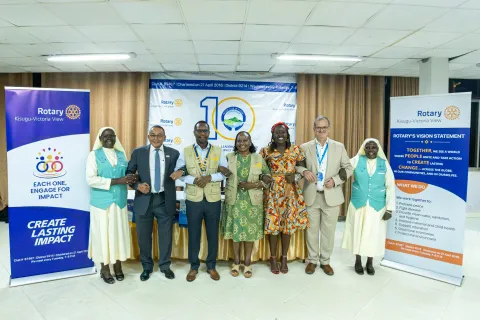
Behind the scenes, UNICEF worked through the Central Organizing Committee to shape the priorities that would go to national leadership. Four were accepted into the position paper: climate change adaptation and water for production; quality education supported by boarding facilities, school feeding and child protection; investment in the social service workforce; and financing for community nutrition services.
A song for children
Culture also carried the message in its own language. UNICEF supported a theme song rooted in local tradition that spoke to child protection, education, health, nutrition and children's welfare. It gave the event's call for children a voice people could sing.
A shared result
These results belong to many. Moroto District Local Government, particularly its Community Development and Education Departments, worked alongside schools, teachers, Community Development Officers, the Central Organizing Committee, partners, media and the children themselves. Ministers who sat in on the Children's Parliament added weight to what the children asked for.
The 2026 Karamoja Cultural Event showed that culture can protect children, challenge harmful practices and make room for young people to help shape their region. In Moroto this year, children were not only celebrated. They were heard.