Uganda’s children and youth call for climate action that protects their future
Across Uganda, children and young people are calling for urgent climate action that protects their health, education, water access, food security and safety.

Across Uganda, children and young people are calling for urgent climate action that protects their health, education, water access, food security and safety. From drought-affected communities in Karamoja to flood-prone areas in Teso and Busoga, and from refugee-hosting settlements in Isingiro to youth platforms in West Nile, their message is clear: climate change is already disrupting childhood, but children and young people are ready to help shape the solutions.
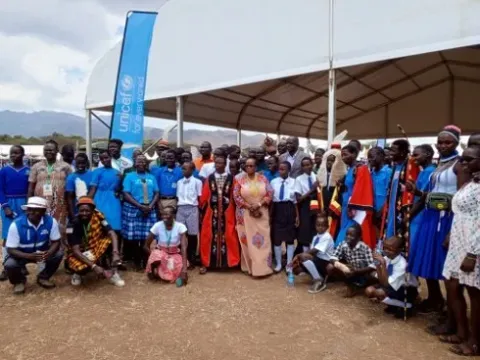
This was the focus of Uganda’s Local Conference of Youth and Children on Climate Change (LCOY Uganda 2026), supported by the Government of Uganda, UNICEF, UNDP, GIZ, the Embassy of the United Kingdom, Regenerative Africa, youth networks and partners. Ahead of the national conference in Kampala, regional consultations were held in Karamoja, West Nile, Southwestern Uganda/Nakivale, Teso and Busoga to capture children’s and young people’s lived experiences of climate change. In total, the consultations reached approximately 2,069 children and youth across 12 schools and learning institutions, with available school-level sex-disaggregated data showing participation of at least 938 girls and 1,031 boys.
During the consultations, children and young people described drying water sources, flooded school routes, crop failure, rising heat, poor sanitation, food insecurity, pollution, shrinking forests and wetlands, and families struggling to cope after repeated shocks. Water insecurity emerged as one of the strongest concerns, with unsafe or unreliable water affecting hygiene, school attendance, health and children’s daily responsibilities at home.
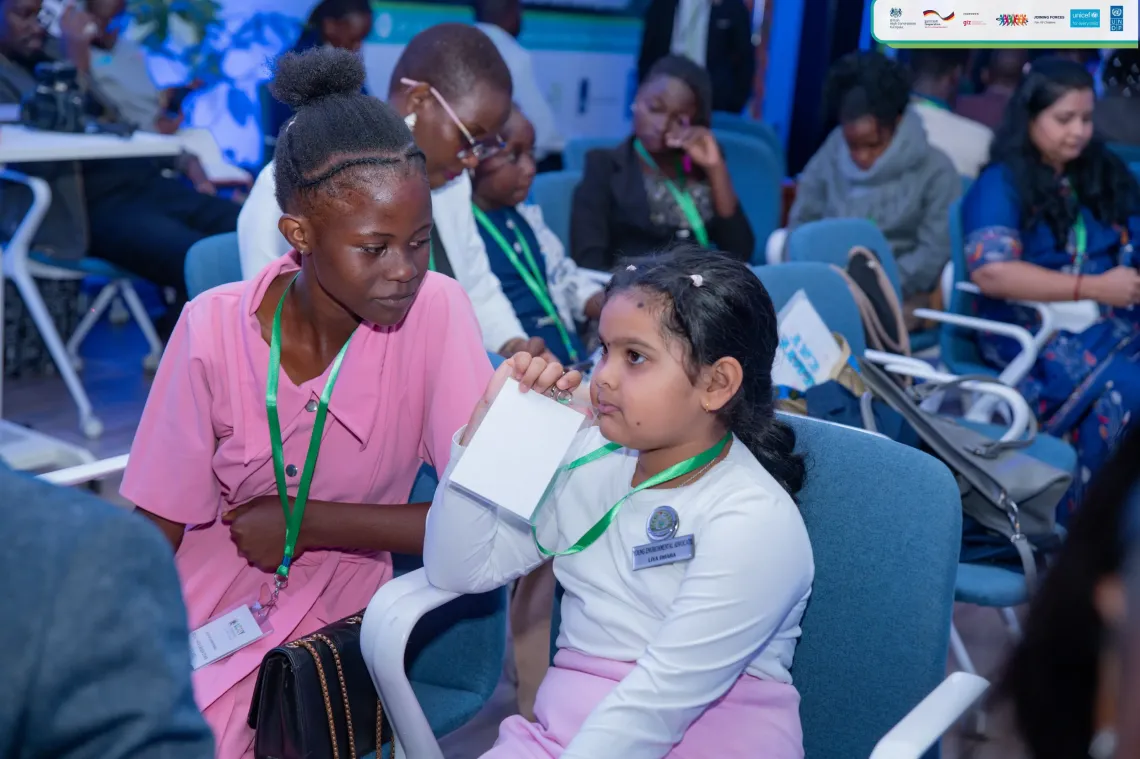
“Climate change is affecting our water, our schools and our families, but young people have ideas that can help our communities adapt. We want leaders to listen to us, support our solutions and include us in the decisions that shape our future.”
The consultations also showed that children and young people are not waiting passively for help. They proposed practical solutions, including tree growing, wetland protection, rainwater harvesting, borehole repair, climate-smart agriculture, clean cooking, waste recycling, school climate clubs and youth-led community sensitization.
The regional evidence fed into LCOY Uganda 2026, held from 5 to 7 August 2026 in Kampala, where approximately 631 participants joined in person and online. Children, youth delegates, students, innovators, persons with disabilities, civil society actors, government representatives, UN agencies, development partners, private sector actors, media and financial institutions came together for policy dialogue, innovation showcases, climate finance conversations and the development of a youth and children’s outcome document.
Through collaboration with key national and local partners, the process fostered inclusive dialogue, amplified marginalised voices and translated youth ambition into tangible, trackable climate action. It brought together the Ministry of Water and Environment, the Ministry of Gender, Labour and Social Development, the Ministry of Education and Sports, district local governments in Moroto, Arua, Isingiro, Soroti and Jinja, UN agencies including UNDP and UNICEF, the regional UNFCCC resident focal point, civil society and NGO partners, academia, private sector actors and cultural institutions, including the Busoga and Buganda Kingdoms.
For UNICEF and partners, the process demonstrated why children’s voices must be central to climate action. Participants connected climate change to WASH, health, nutrition, education, protection, gender equality, disability inclusion, livelihoods, biodiversity, clean energy and climate finance. Climate education emerged as the highest priority among respondents, cited by 59 per cent, ranking ahead of policy capacity building for instance policy orientation, regulatory compliance training, sensitisation and governance, including funding. Children and youth called for climate-resilient water and sanitation services, stronger early warning systems, inclusive climate education, financing for youth-led solutions, and meaningful representation in Uganda’s NDC 3.0 development, implementation and COP31 processes.
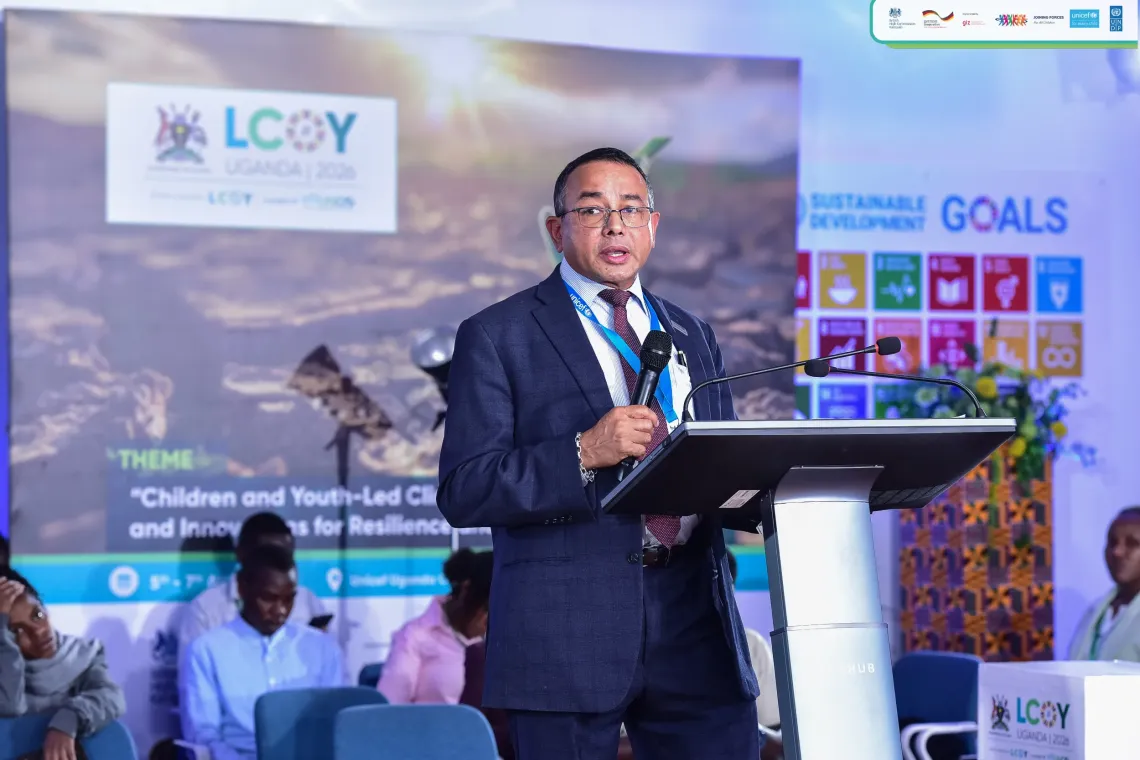
“Children and young people are among those most affected by climate change, but they are also powerful agents of change. Their voices, ideas and leadership must be reflected in climate policies, financing and action if Uganda is to build a more resilient and inclusive future.”
The Green Zone and Innovation Marketplace brought this ambition to life, with young people showcasing solutions in circular economy, regenerative agriculture, clean cooking, digital tools, disability-inclusive early warning, water security, biodiversity and green entrepreneurship. Their ideas showed that the next generation is not only demanding climate justice; it is already designing practical ways to build resilience in communities.
The process culminated in the validation of the National Youth and Children Statement, translating local experiences into a shared agenda for action. The statement calls for climate action that protects essential services and child wellbeing, restores ecosystems, reduces pollution, finances youth-led resilience, strengthens green livelihoods and creates accountability mechanisms so children and youth can see how their recommendations influence policy, budgets and implementation.
As Uganda prepares for COP31, LCOY Uganda 2026 has shown that meaningful participation is more than inviting young people into a room. It means listening to their lived experiences, valuing their solutions, connecting them to decision-making and investing in their leadership.
UNICEF’s call to action is simple: children and young people must be heard, financed, represented and acted upon. Their future is not a side issue in the climate agenda; it is the measure of whether climate action is truly just, inclusive and transformative.