#Onmymind: How I deal with mental health challenges

On World Mental Health Day, adolescents and youth in Uganda share how they cope and help others with mental health challenges.
Mercy Kolok
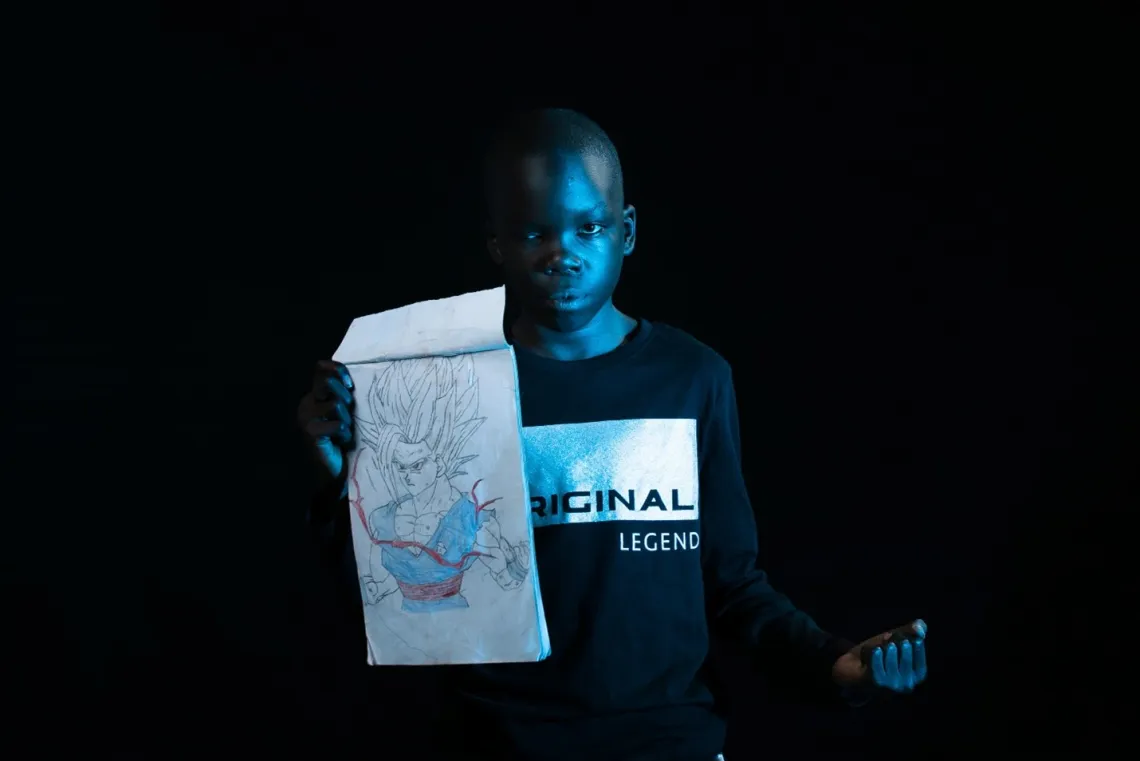
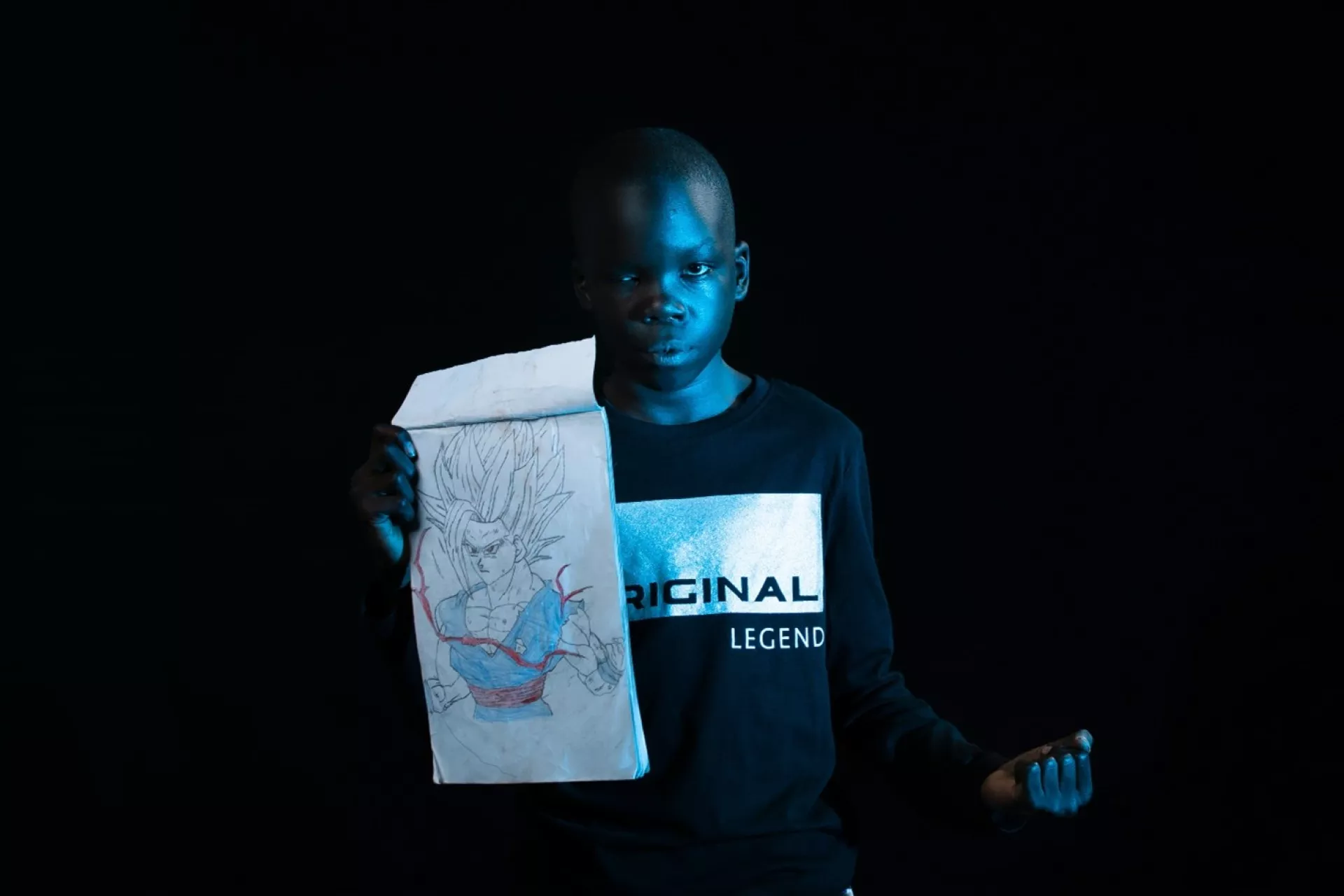
Amani Israel with one of his drawings. “Children like disturbing me at school, so when I am sad, I draw pictures of cartoons I saw on my mum’s phone and show them to my friends,” Eleven-year-old Aman says.
UNICEF/UNI444569/Abdul
10 October 2023

On World Mental Health Day, adolescents and youth in Uganda share how they cope and help others with mental health challenges. With partners, UNICEF is supporting the mental health of adolescents and young people through the adolescent-centered life skills training programme for in-school and out-of-school adolescents based on the Adolescent Tool Kit and the U-Report mental health chatbot. Both have been critical in ensuring adolescents get the help and support that they need to support their mental well-being. The Toolkit empowers affected youths to strengthen resilience and protect their mental health in challenging circumstances.  Since January 2023, 75,000 adolescents in Uganda have benefitted from adolescent-centered life-skills training and over 36,000 adolescent and young people  have benefited from the UReport mental health chatbot.
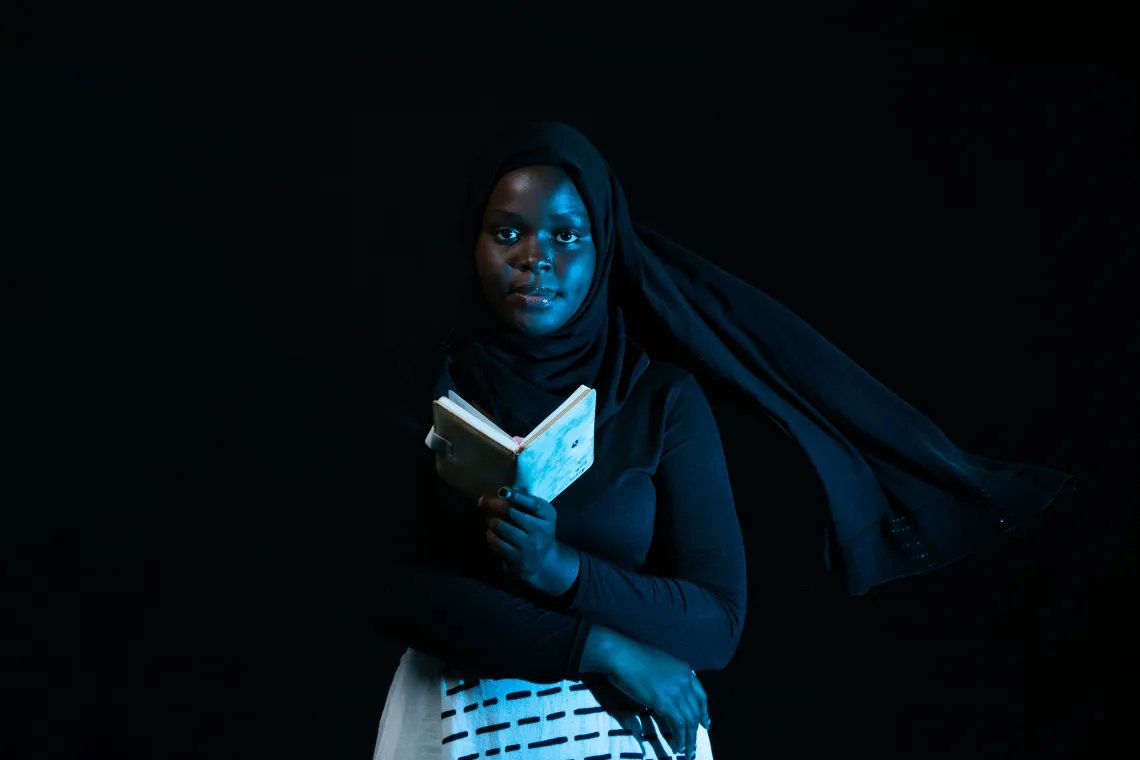
Hijirat Kaze cradling her journal. In a foreign land, with a new language and people, 20-year-old Hijirat reports feeling lost and forgotten as a refugee, until she journals. “I write in my book. I write about my journey, behavior that I want to change and everything about me.
UNICEF/UNI444583/Abdul Kaze Hijirat, 20 years old: Leaving behind my home, my culture, my friends, family and everything familiar to me has had a great impact on my mental health. As a refugee, I face many challenges having to learn a new language, find my place in a new country, make new friends, and adapt to being called a refugee. It is basically starting life afresh and sometimes; it makes me anxious and depressed. I overthink a lot. Journaling and reflecting on my life help to calm my nerves. In my little journal, I write about the good and the bad things happening to me and how I want to see my life change. I also speak to friends and family, and this calms me down. Mental health issues affect a lot of young people like me and sometimes they do not reach out for help. This mental health day, I urge everyone especially parents and leaders to always reach out to young people because we need help and at times find it difficult to reach out to you.
Amani Israel with one of his drawings. “Children like disturbing me at school, so when I am sad, I draw pictures of cartoons I saw on my mum’s phone and show them to my friends,” Eleven-year-old Aman says.
UNICEF/UNI444569/Abdul Amani Israel, 11 years: Sometimes, other children disturb me a lot in school, and it makes me very angry and sad. So, I draw to make the bad feelings go away. Whenever I draw, I feel at peace, I feel happy, I feel like the superheroes I draw. Drawing is my superpower. I would like parents and teachers to watch over children and to make sure they are not teasing others. That way, we can all be happy and play together.
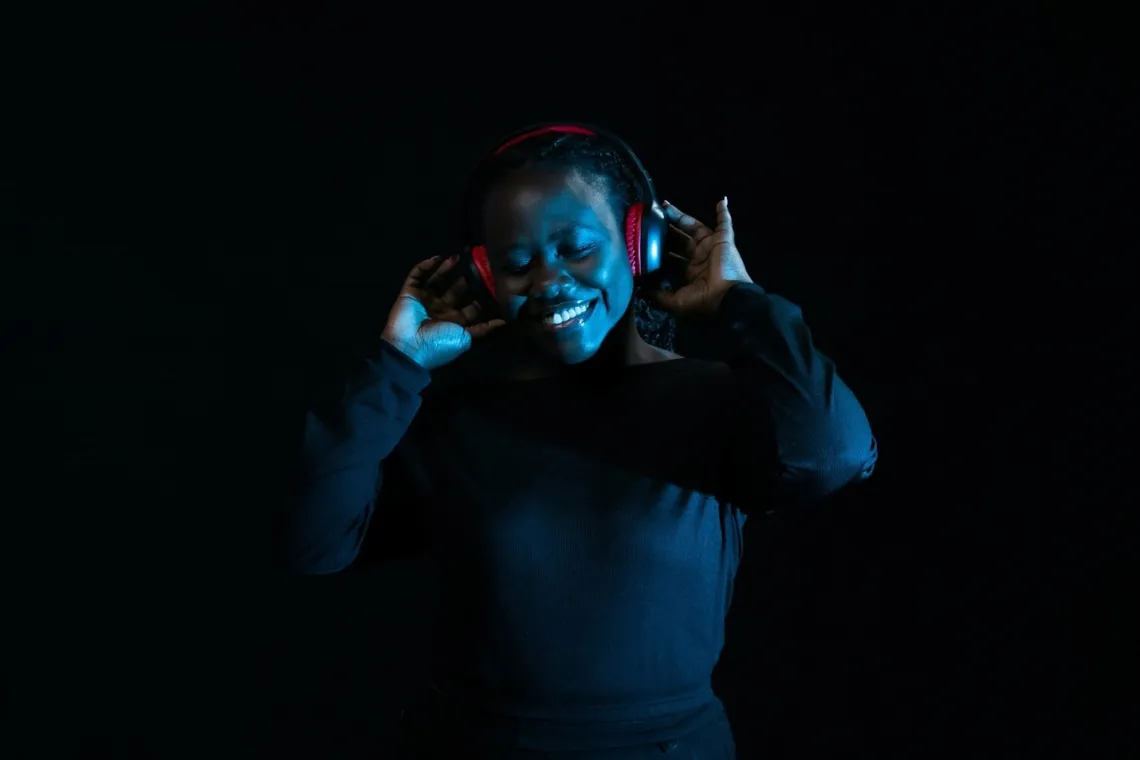
Victoria Wafula, with her headset and phone through which she finds joy in music. As U-Reporter, Victoria, 24, believes in three key ways to hasten understanding and acceptance of mental health issues in Uganda: use of the local language to create awareness; mandatory recruitment of mental health personnel in all schools; and training religious leaders to enable them to combine mental therapy and spirituality.
UNICEF/UNI444567/Abdul Wafula Victoria 24, U-Reporter Uganda: I can easily identify when my mental health is going down because I procrastinate a lot and find it difficult to complete simple tasks that I would normally do. Music and listening to podcasts on well-being help me a lot. Taking long walks and talking to friends help me to clear my mind and reduces the burden on the issues taking a toll on me. I also use the U-Report mental health chatbot for myself and to help other young people get the support that they need with regards to their mental health. I would like to urge the government and other stakeholders to allocate more resources such as assigning trained counselors or mental health therapists to schools and training religious leaders on mental health. A lot of times people seek help from religious leaders who counsel them based on religion but sometimes we need the help of a trained therapist in addition to counseling based on our faith and beliefs. It would be great to have literature on mental health in our local languages to help the local communities to not only be able to identify and understand mental health, but also to know when to seek help.
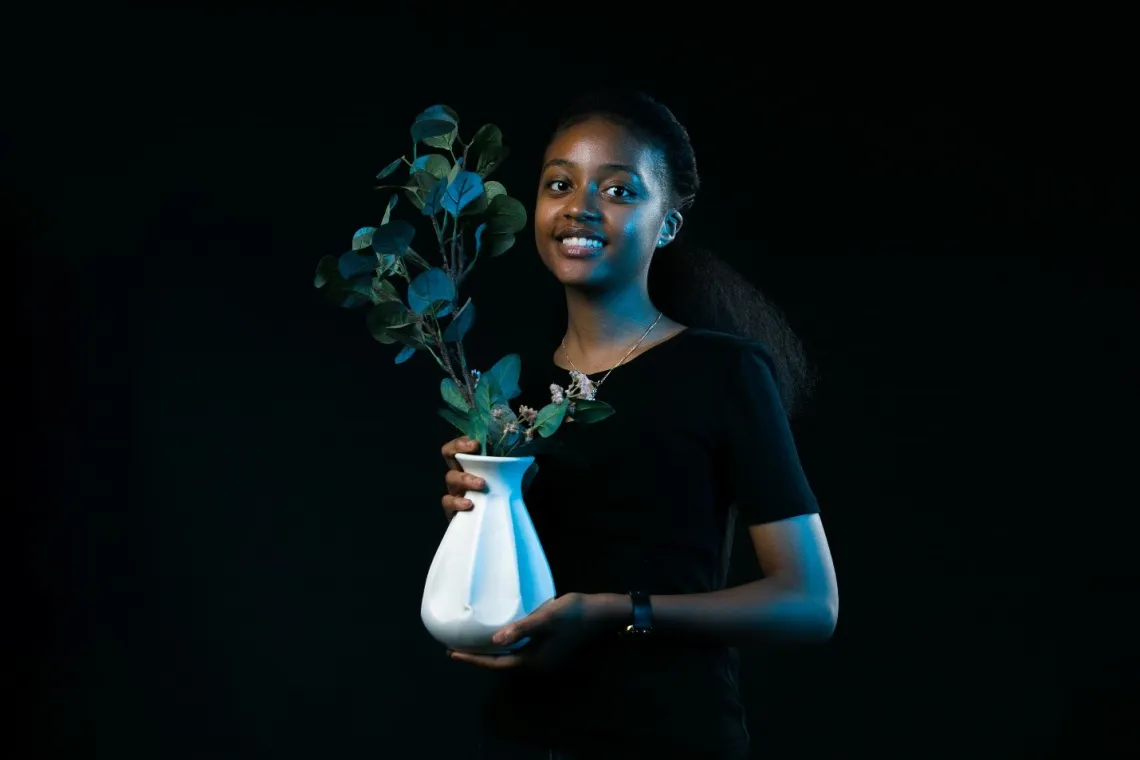
Hermon, a 17-year-old climate change activist in secondary school, firmly believes that the youth cannot fully embrace their expected leadership roles when grappling with mental health instability. She champions the 'Connect, Accept, Relax, and Explore' approach as a means to effectively address mental health challenges.
UNICEF/UNI444579/Abdul Hermon Asmeron 17, Climate Change Activist: I know that my mental health needs attention when I feel stressed about something. I become nervous and anxious and look for ways to feel better. I find tranquility in nature. The colour of the trees, the chirping of the birds, the beauty of flowers and the sky help me to calm down. This is why I am passionate about the climate and protecting our environment. A large percentage of the population in Uganda are young people and so many of us are going through mental health challenges. As we prepare to become leaders, we need a generation that is mentally sound, and this can be achieved if more investment is made into supporting youth programmes by including mental health support. We need support and care from the people around us.
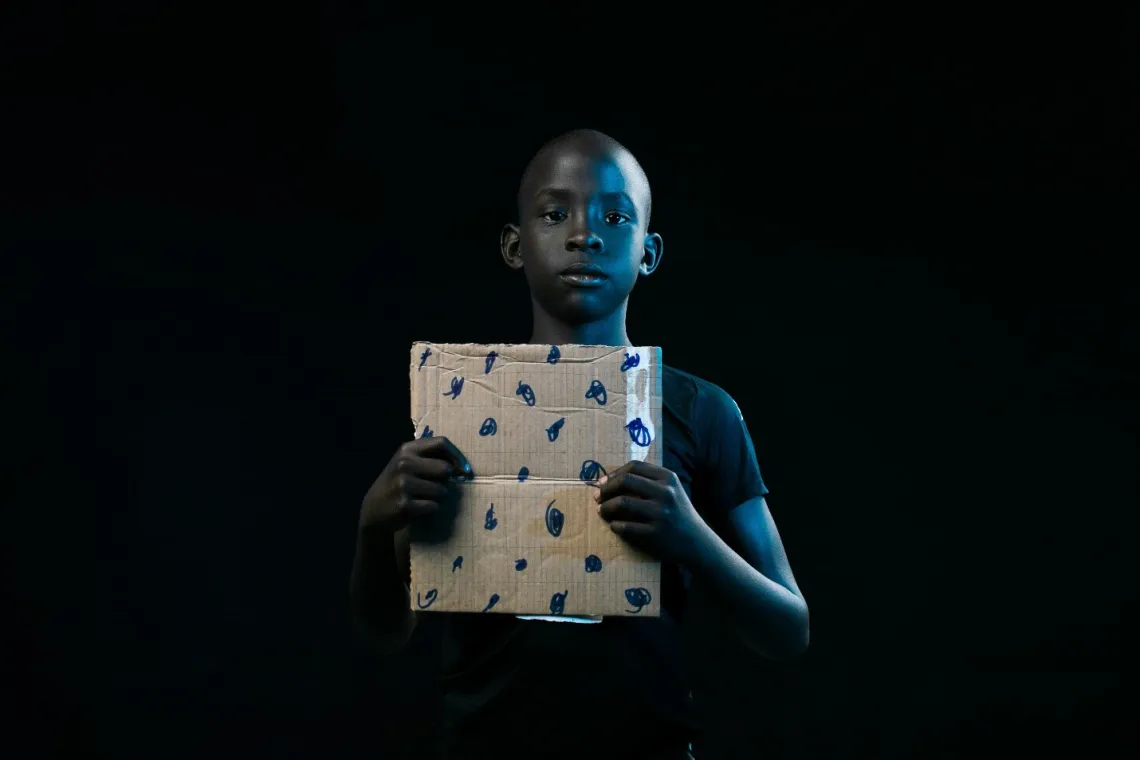
Abednego with an improvised chess game set. “Because mental health is around what happens in one’s head, I read story books, sleep and play chess to clear my mind.  Government should buy more books for libraries and materials for playing games to avoid over studying.” Abednego Esianaedeke, 10
UNICEF/UNI444577/Abdul Esianaedeke Abednego, 10 years: Mental health to me is what happens in my head and my body--- how do I feel? Am I sad or happy? Whenever I feel sad, I read books and play chess because it makes me calm. I made this chess board which I use with my friend. The challenge that comes with playing chess makes me forget all the things that make me sad. Whenever my friends are sad, I tell them to sleep or read a book or play chess with me. I would like schools to have more story books in the library and the government to support schools with toys and games. All these can help children feel better when they are stressed.
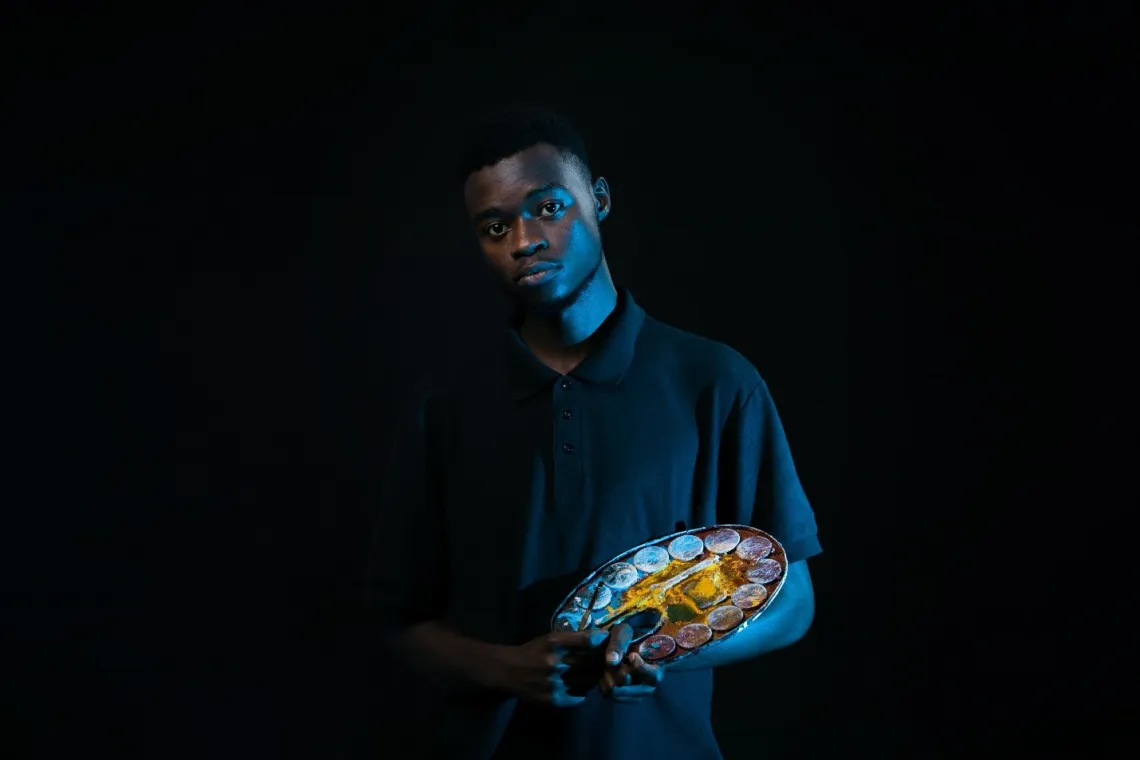
Ashahiid Juma, 22, holds his prized paint pallet. Asahiid, 22, finds mental relief from painting his life experiences and what he feels on the inside. ‘Every time I paint, it feels like my problem is shared
UNICEF/UNI444572/Abdul Ashahiid Juma, 22: I paint a lot, when I am sad, when I am happy, when I want to inspire others or when I want to advocate for certain issues in my community. From small paintings to big murals, I paint alone and with friends. My paintings tell my stories for example when I am depressed or when I am happy, and I use them to teach others about mental health. Painting brings young people together and it helps us to discuss issues affecting us but most importantly, to normalize conversations around mental health in our community. Adolescents and young people should be encouraged to talk about their mental health but also, they should have resources to support them and platforms where they can express themselves.
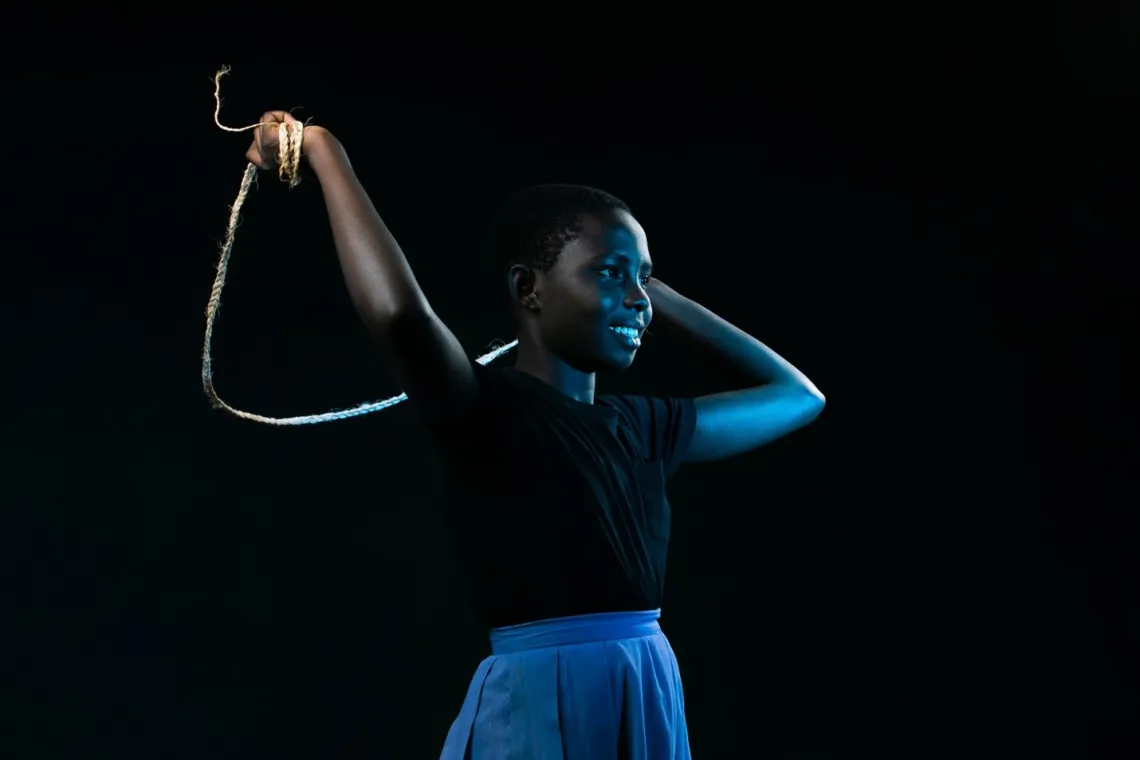
Gladys, 13, loves talking to her friends and having fun because “playing makes people happy and free.” When her friends are sad, she invites them to play.
UNICEF/UNI444575/Abdul Atuhaire Gladys, 13 years: Whenever I feel down or sad, I skip rope because it makes me feel free and happy. It helps me forget about the things that make me sad. I enjoy skipping rope with my friends even more because I get to laugh with them. On mental health day, I would like to ask the government to give schools more play materials because when we play, we forget about the things that make us sad.
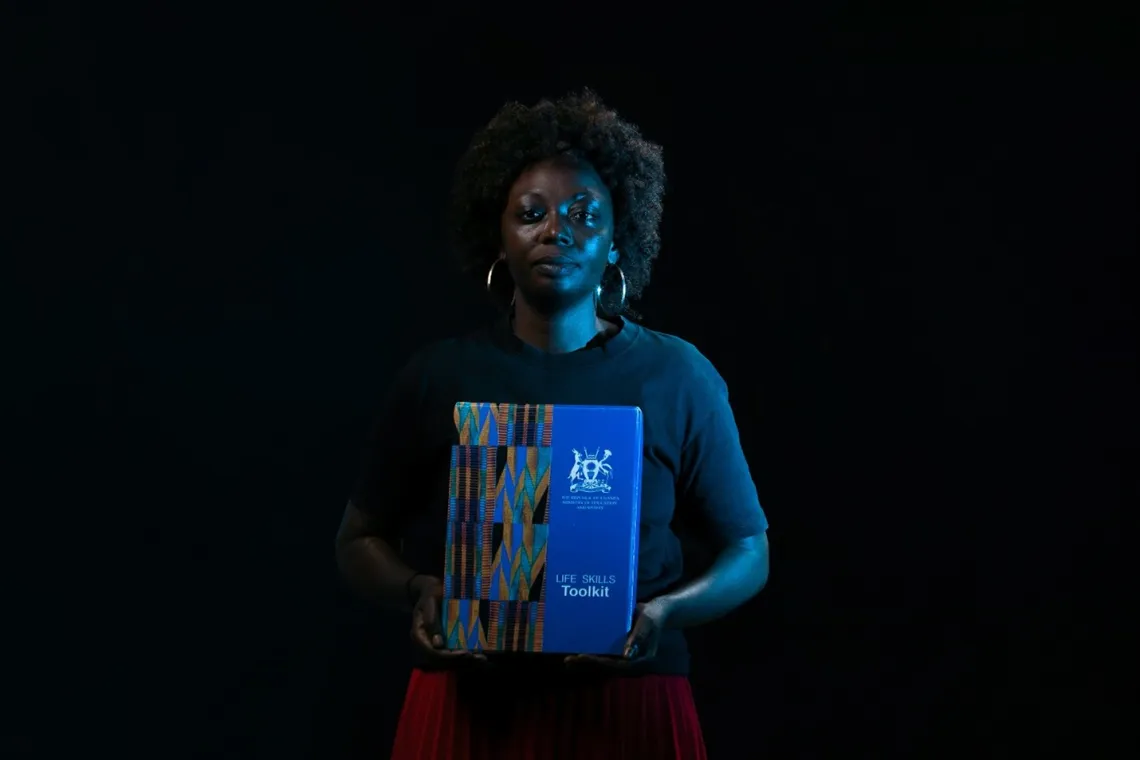
Primary School Teacher Rita Kabiira Peace holds a Life skills toolkit that she uses to help learners build Identity and self-esteem, as well as manage conflict and solve problems. Through activities like music and sports, the children open up and are able to make the right choices to stay in and complete school.
UNICEF/UNI444581/Abdul Kabira Rita Peace, Teacher: The Adolescent Life Skills toolkit gives me the knowledge as a teacher to know how to support stressed adolescents. Through different activities and games, I support children and adolescents to manage stress and emotions. My students have learnt critical 21st century skills through the lifeskills programme that helps them to identify challenges, communicate, develop problem solving skills and managing conflicts which is helping them to informed choices and decisions. They have become confident to seek help or speak about issues affecting them. Together we find ways of coping. This goes a long way in helping children deal with stress and other mental health issues. It will be great to see more teachers trained in the lifeskills programme because we shall be able to help and nurture more adolescents and young people to grow into healthy adults.
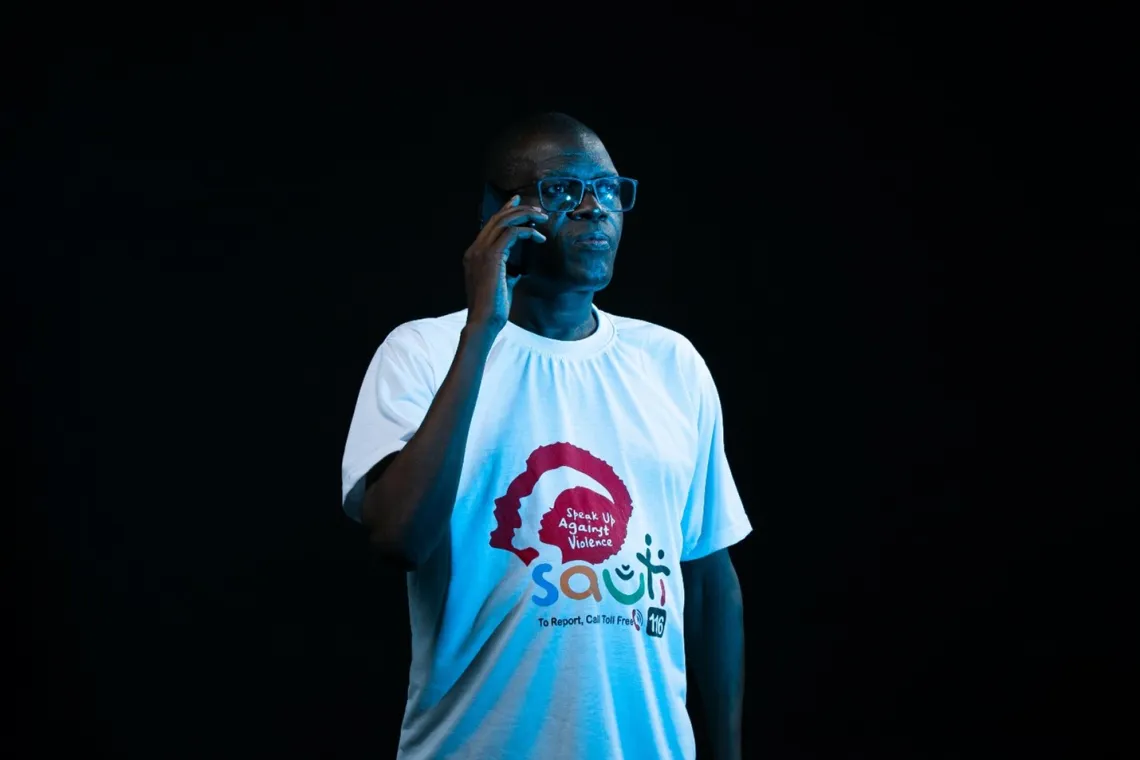
“Many people are going through mental health challenges and don’t even realize it; some think it is witchcraft. When we receive calls on U-Report, we counsel, make referrals and also give tips on prevention and reporting.” Fred Muziira, Call Centre Coordinator
UNICEF/UNI444578/Abdul Fred Muzira, Call Centre Counselor: In my work, I receive and respond to a lot of phone calls from young people needing help. The calls mostly are about child-abuse cases, gender-based violence, stress and mental health. As a counselor, I provide counseling, provide referrals for those that need more help and follow up on cases such as those dealing with mental health problems to see whether they are improving or not. The UReport polls conducted by UNICEF help many adolescents and young people because they call to ask for help. Previously much focus was put on physical health but now I see more people prioritizing mental health. Mental health issues have in the past been associated with witchcraft, so communities sought for help in the wrong places. I am happy that through the call centre, UReport polls and the mental health chatbot, we are creating and providing platforms for communities to seek and receive help. I would like to see more partnerships with communities, the media, private sector partners, development and humanitarian workers that support mental health well-being.