Female genital mutilation came with scars that refuse to heal
Three women live with the daily fallout of a practice that reshaped their trust in the people closest to them.
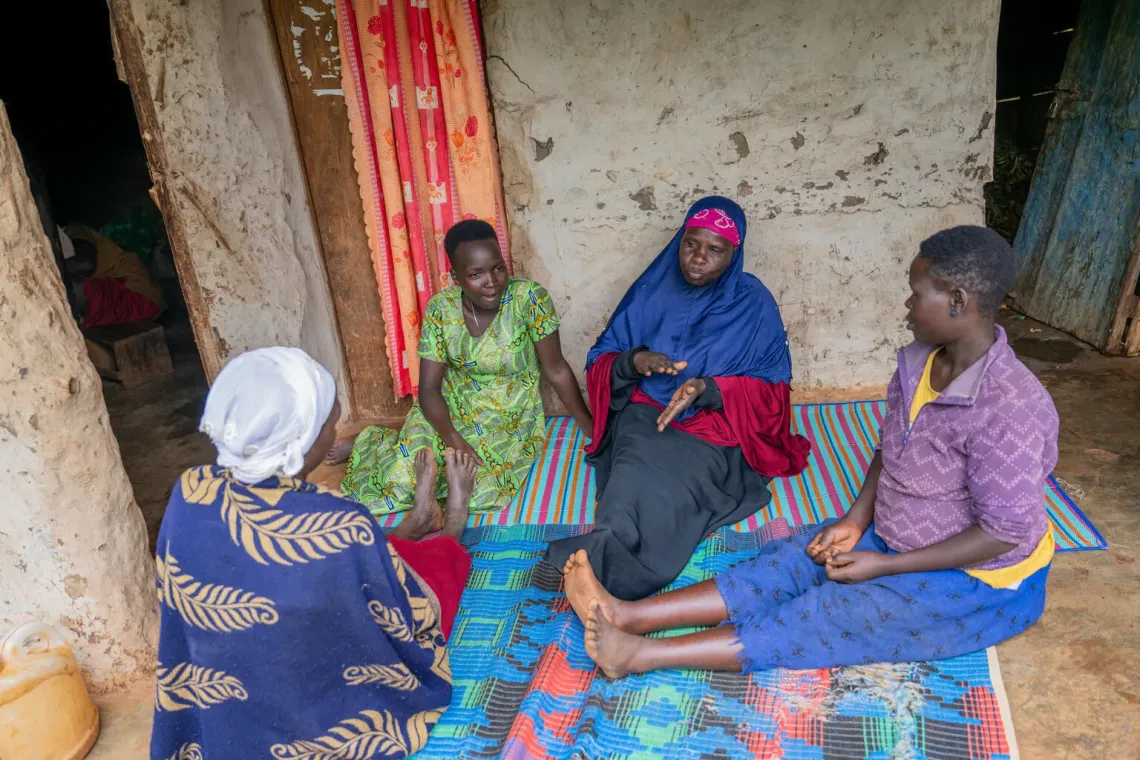
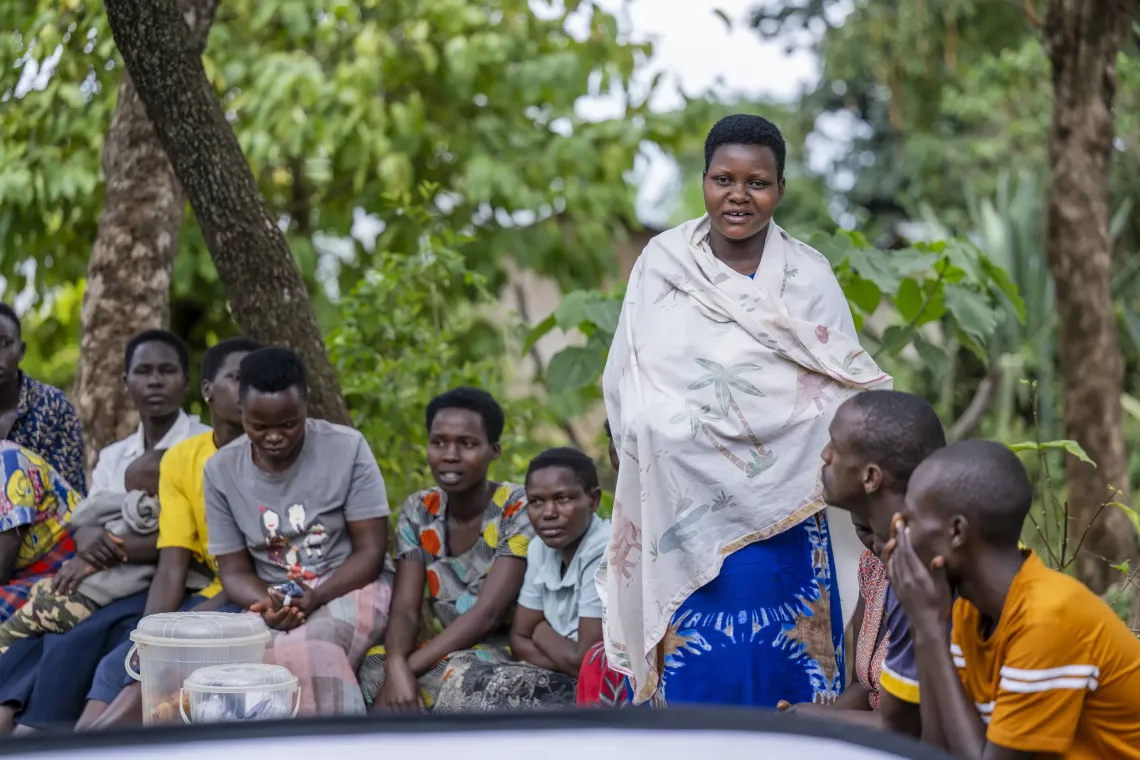
Kasifa Chebet, 58, is a seemingly jovial woman, often breaking out in song as she mentors three teenage mothers in her cosy sitting room on a rainy afternoon in her home in Moron Village, Kaptanya Parish in Kapchorwa District.
A few moments later, the mood turns sombre, revealing deep emotional scars as she recounts a past that is as painful today as it was four decades ago.
Betrayed by my father
Born in 1968, Kasifa was a promising schoolgirl with ambitions of becoming a lawyer. In 1984, at age 15, those dreams were dashed when her father forced her to undergo FGM.
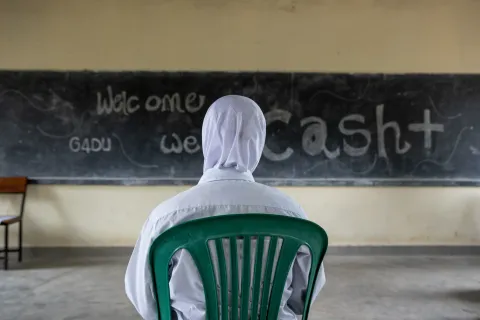
She returned to school afterwards, determined to continue her education. But the reception from her classmates was devastating. Girls who had not undergone the practice singled her out, while others from her age set repeatedly reminded her that she had been circumcised and was therefore an old woman ripe for marriage.
In a society where cutting was closely associated with readiness for marriage and motherhood, her classmates questioned why she was still in school. Even some of her teachers, who had undergone cutting alongside her, participated in the labelling.
By the time she entered Senior Three, the pressure had become increasingly difficult to bear. Her father, too, believed that having undergone FGM meant she should now marry. When he began arranging suitors, Kasifa pleaded with him to allow her to complete her education.
“Why can’t you just help me and let me finish school, father?” Kasifa recalls asking him.
“Nothing I said could change his mind, but I was determined to finish school so I started selling ripe bananas to raise fees,” she says.
It was a hard battle, and her education eventually slipped away. She left school in Senior Three and was married off anyway.
Looking back, she struggles to conceal the pain of what might have been. Her ambitions, once so vivid, remain among the things she mourns most.
“When I talk of it, it pains me so much,” she says. Even certain objects, like knives, razor blades and needles, can trigger distressing memories. Her account reveals the extent to which an experience imposed on her as a teenager has continued to affect her emotionally decades later.
While FGM is rare across Uganda as a whole, affecting less than 1 per cent of women nationwide, it remains deeply rooted in parts of the Sebei and Karamoja sub-regions. According to the Uganda Bureau of Statistics and UNICEF, nearly 13 per cent of women in Kapchorwa District have undergone the cut. In Kasifa’s age group, more than two in three women in these regions were cut, compared to fewer than one in ten young women today, a sign of steady progress, even as deep-seated pressures continue to put girls at risk.
A different kind of pain
Kasifa’s experience is not the only account of a woman whose life took a different direction after FGM.
At 51, Immaculate Chepturok is now a mentor to a youth savings group supported through a UNICEF Life Skills Initiative involving goat rearing. She provides a meeting place in her home, where young people gather, receive guidance and are encouraged to pursue alternatives to early marriage and FGM.
But her commitment to protecting younger generations is rooted in her own painful experience.
Her birth family had not subjected her to FGM. However, she married young and moved into her husband’s family home, where she struggled to meet certain expectations placed on her as an uncircumcised wife. She wasn’t allowed to do her chores in peace or even show up for public gatherings. Her mother-in-law repeatedly harassed her over these perceived shortcomings until she eventually underwent FGM.
Her story illustrates how pressure within marital families can perpetuate the practice, even among women whose parents had chosen to protect them from it.
For another, Betty Kurong, a 29-year-old woman, the experience has brought a different kind of pain.
Betty says she was subjected to FGM by a traditional birth attendant without her knowledge or informed consent. She says the experience has left her feeling betrayed and ashamed, and she feels she was duped into having the procedure.
The incident has also caused considerable tension between her and her family, who are very upset with her. What could have been a personal experience has become a point of contention and humiliation in her community.
In Sebei, the risk does not always end with childhood. UNICEF Uganda research shows that married women increasingly face pressure from in-laws or are cut during pregnancy and childbirth. This continues despite Uganda’s 2010 anti-FGM law, which bans performing, arranging or forcing anyone to undergo the practice, even under false pretences, with prison sentences ranging from five years to life.
Together, the three accounts reveal the different ways FGM and early marriage can shape women’s lives long after the events themselves. For some, the consequences include interrupted education and lost opportunities. For others, they involve pressure within marriage, betrayal, stigma and fractured family relationships.
From survivors to advocates
Their stories also offer a glimpse of what can happen when survivors are given the opportunity to speak and support others.
Drawing on her experience, Kasifa has become a leading advocate against FGM and early marriage, engaging girls and young women in her community. Over the past year and a half, she says she has reached approximately 24 girls, encouraging them to reject cutting and remain in school.
Among them was a girl who had left school to marry. Kasifa approached her and spoke about the consequences of FGM and the importance of education. The girl returned home and resumed her studies. She has since gone into nursing.
In another instance, Kasifa intervened when a young woman was being pressured by her husband to undergo FGM. Despite resistance, she persisted in speaking to the couple, drawing on the pain she herself had experienced. The woman eventually rejected the practice.
“It is me who passed through that pain, and I know what is inside of me,” she says.
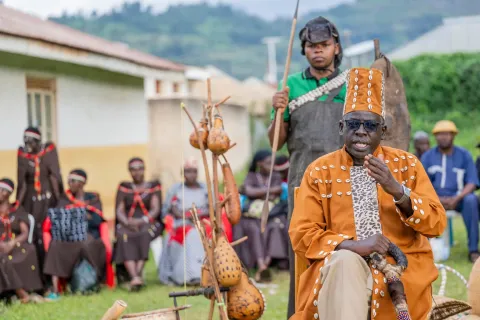
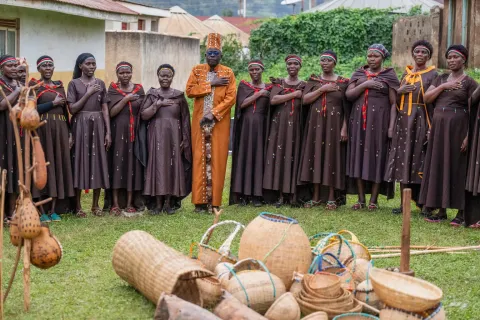
Through her involvement in UNICEF-supported engagement with cultural leaders, Kasifa has also extended her advocacy beyond individual conversations. Cultural leaders whose voices resonate in their communities are empowered to challenge harmful practices and advocate for alternatives. Kasifa has taken this further by mobilizing and mentoring younger women to become advocates in their own right.
Immaculate channels this same resilience into economic empowerment. Through the youth savings group and goat-rearing initiative at her home, she provides more than just a meeting place, offering vulnerable youth a safety net and a space to talk openly about alternatives to early marriage and cutting. By equipping young people with financial independence and guidance, she helps build the protective barriers that were missing when she was first married.
For Kasifa and Immaculate, the pain they endured cannot be undone or the past years recovered. But by turning their personal scars into a shield for the next generation, they finally give their painful experiences a purpose.