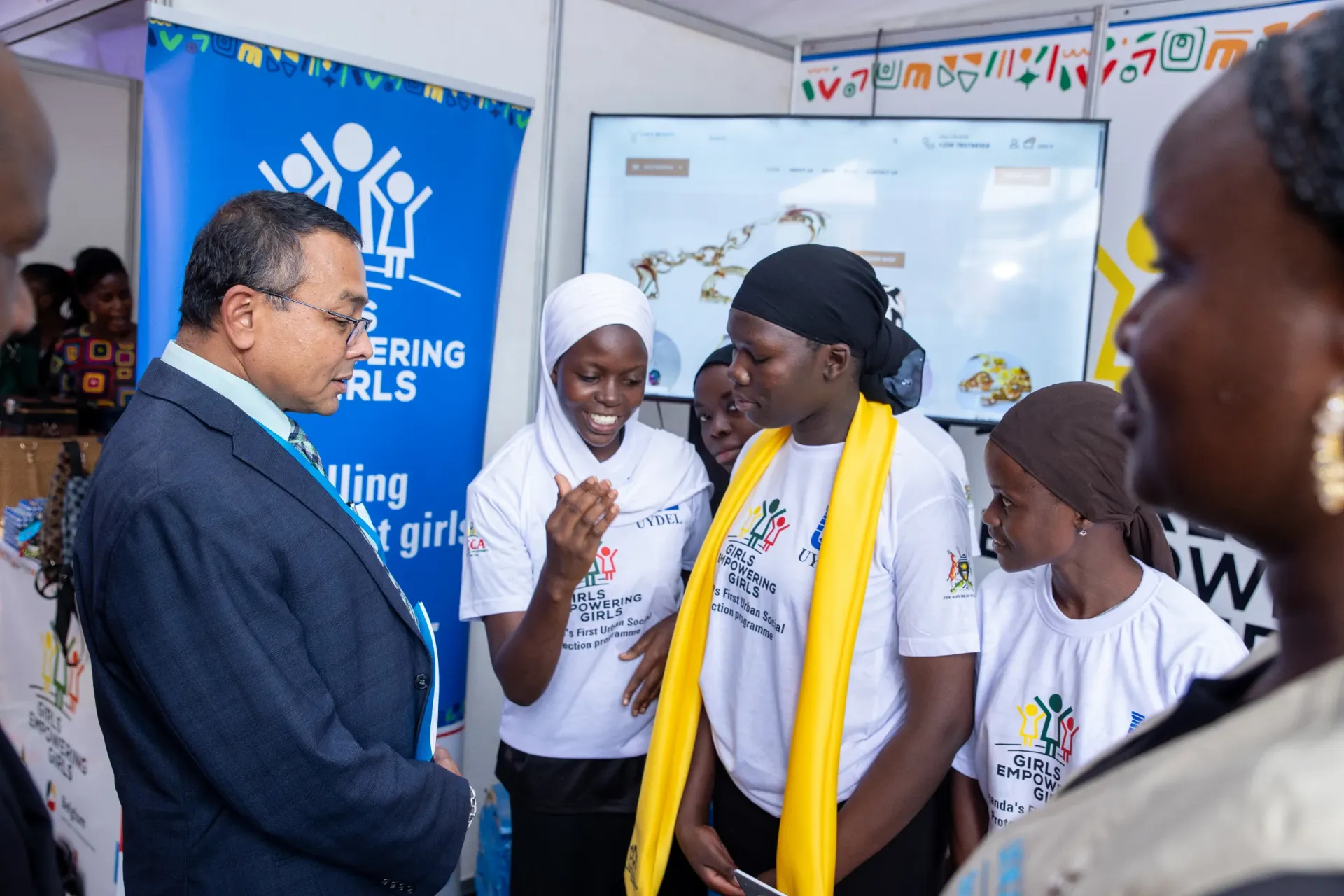
An ending that changed everything
Inside the lives transformed by Uganda’s Girls Empowering Girls Programme
At exactly 4:02 pm on April 17, 2026, the announcement came. A wave of applause surged through the room before softening into something quieter, as if the crowd was finally letting the news sink in.
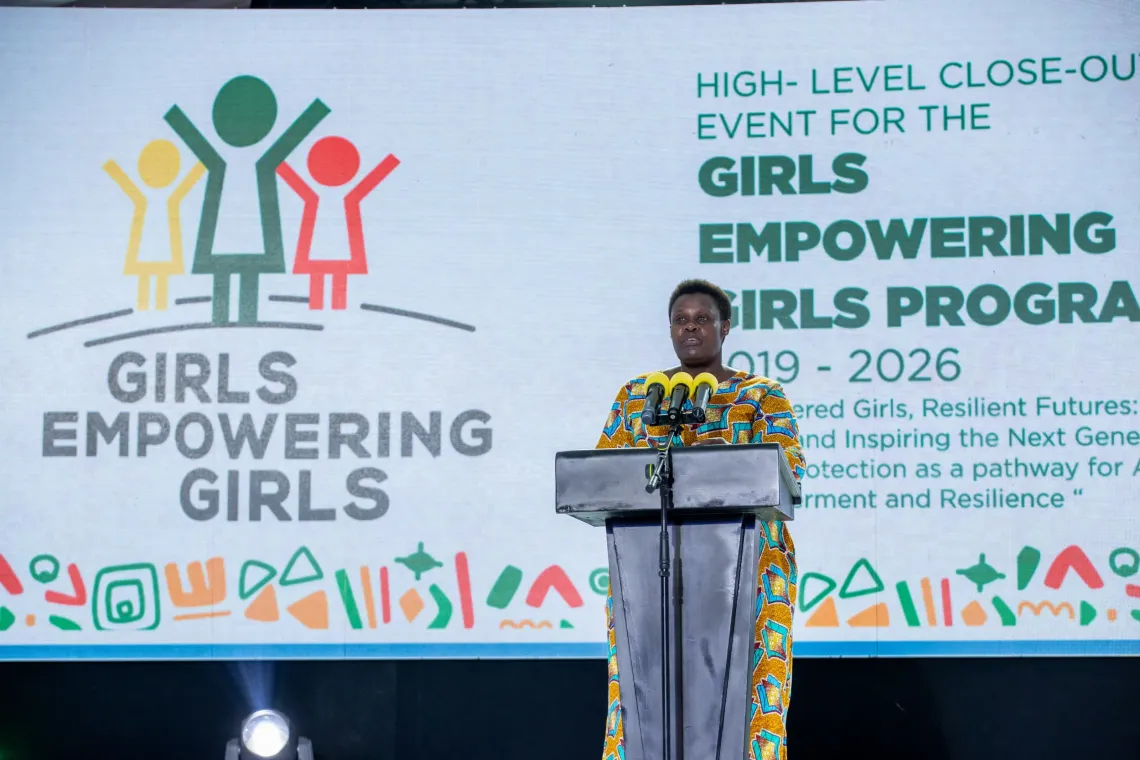
Inside the huge tent at City Hall in Kampala, rows of young girls sat shoulder to shoulder, some smiling, others wiping away tears they hadn’t expected. On stage, the H. E Vice President Of Jessica Alupo formally declared the Girls Empowering Girls programme closed. Behind her, a banner marked the moment in bold print: “High-Level Close-Out Event for the Girls Empowering Girls 2019–2026.”
Yet even as the words marked an ending, the mood in the room told a different story, something less final.
It felt like a pause between what had been proven in six years and what might come next.
For six years, the programme had reached more than 4,150 vulnerable adolescent girls across Kampala. Not in theory, but in places like Kisenyi, Kabalagala and Lungujja and many others, where the pressures of daily life often leave little room for long-term plans. School fees compete with food. Safety is never guaranteed. And for many girls, the path from childhood to adulthood is shaped more by circumstance than choice.
“Uganda is making progress in reducing monetary poverty,” said Dr Robin Nandy, UNICEF Representative to Uganda, addressing the gathering. “But multidimensional child poverty remains high at 44 per cent.” For many families, he explained, deprivation is not just about income; it is about access, opportunity, and stability.
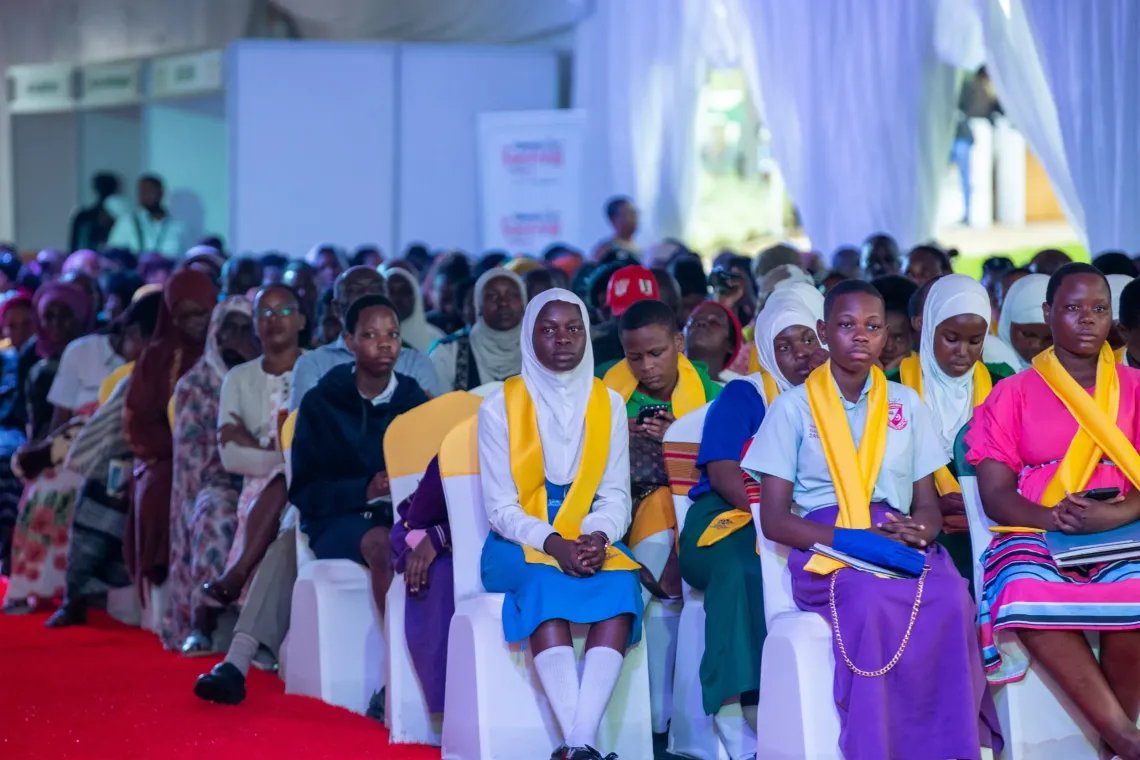
In Kampala’s informal settlements, where most urban residents live, those gaps are sharpest. Adolescent girls face a complex mix of risks, dropping out of school, early pregnancy, and limited access to services.
“This is nothing short of a crisis,” Dr Nandy said.
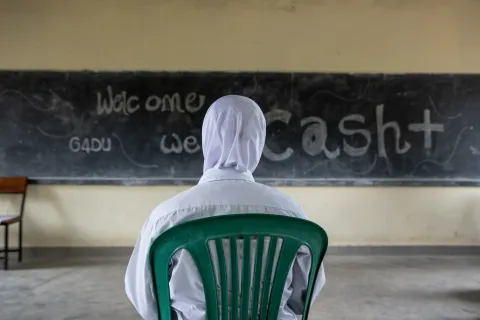
It is within that reality that the programme began in 2019, a partnership between Kampala Capital City Authority (KCCA) and UNICEF with funding from the Government of Belgium. Its design was simple, but deliberate: combine small, predictable cash transfers with mentorship, life skills and referral to services.
A ‘cash-plus’ social protection model, as policymakers call it.
In practice, it meant something more human.
It meant a girl could return and stay in school. A mother could start a small business. A family could plan beyond the next day.
Maria Ndibalekera knows that shift well.
Standing at the centre of the room, where she had served as master of ceremonies, she carried herself with a quiet confidence that hadn’t always been there. A few years ago, her life had narrowed to survival. She and her sisters had been out of school, living without consistent food, navigating an unstable home shaped by domestic conflict.
“I was struggling with depression and anxiety,” she said.
Joining the programme in 2022 did not change everything overnight. But it created a starting point. With mentorship and support, her family began to stabilize. Using part of the cash transfer, she helped her mother start a small business selling samosas and juice. The income was modest, but it was steady.
It was enough.
“I was able to return to school, along with my siblings,” she said.
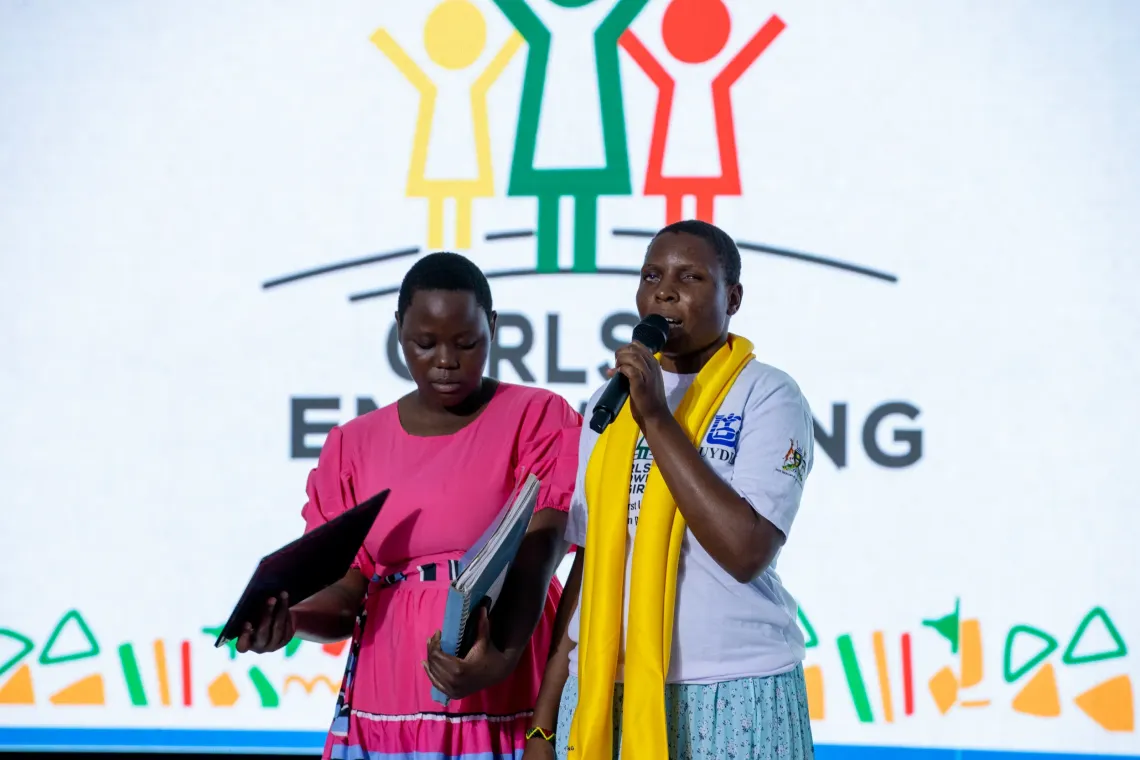
Today, Maria is in Senior Six at Kampala Secondary School. She wants to become a lawyer, driven, she says, by what her family went through. More than that, she has found her voice.
“I can now stand before you and share my story, something I once thought I could never do.”
Around her, similar stories unfolded, not identical, but connected by a shared pattern.
Sixteen-year-old Nakagiri Elizabeth’s childhood was marked by instability that followed her into the classroom. Nights were unpredictable. Food was not guaranteed. At one point, her family relied on whatever her mother could gather from the market.
“I remember one Christmas when our neighbours prepared meals, but we had nothing,” she said. “My mother (a refugee from Juba) boiled sugarcane.”
The experience stayed with her. It shaped how she saw herself and what she thought was possible.
Through mentorship, that began to change. She learned practical skills. She started a small business, making bags with her sister. The income helped support their household and her education.
“My mentor taught me something I will never forget,” she said. “I am unique, and there is no one else like me.”
For Namutebi Josephine, a senior six student at St. Francis School for the Blind, Madera, a government school, the barrier was different.
Visually impaired, she had completed primary school but stayed home when her family could not afford further education. Returning to school seemed uncertain.
Through the GEG programme, she did.
“I am proud of who I am today,” she said. “Although I am visually impaired, I can stand here, speak, and be heard.”
She now studies History, Literature and Divinity, with plans to continue to university. Her message to others is simple: “Disability is not inability.”
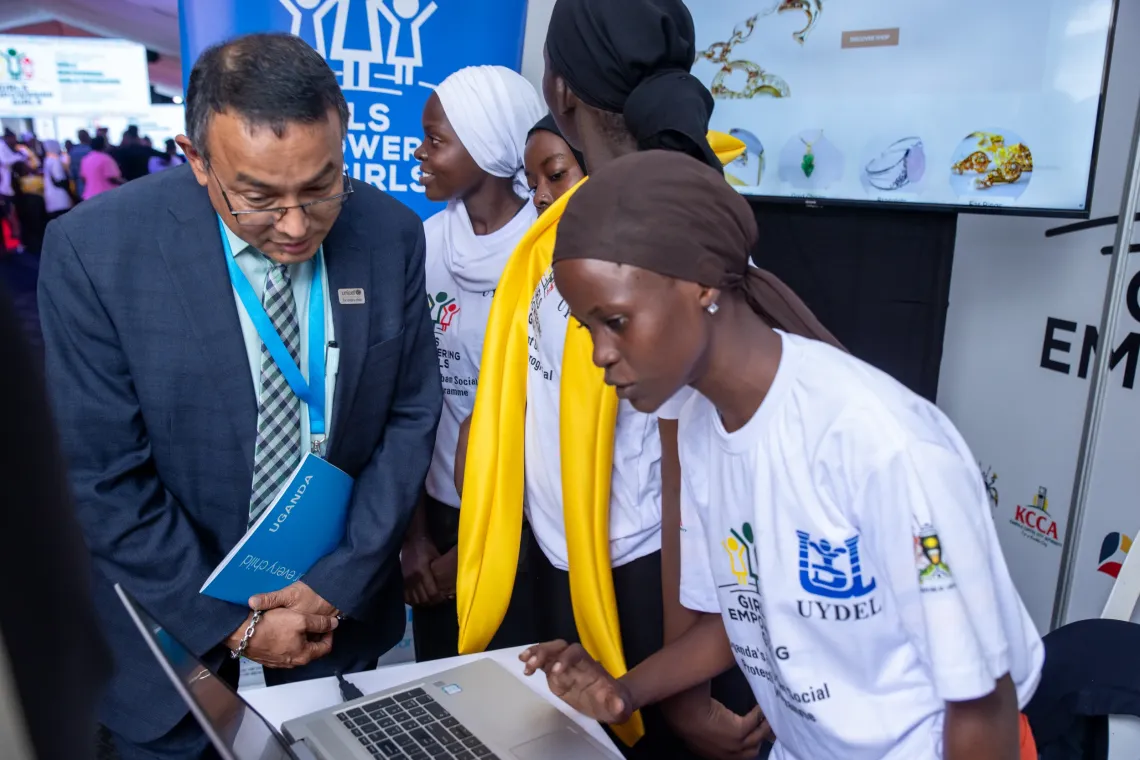
For Apini Veronica, 20, the change came through stability. As the eldest of eight children, she had watched her father struggle to keep the family afloat. The programme’s support eased that pressure, allowing her education to continue uninterrupted.
“It has truly changed my life,” she said.
And for Fatuma Nabirye, a Senior Three student at Kansanga Secondary School, who joined the programme in 2020, the impact extended beyond school.
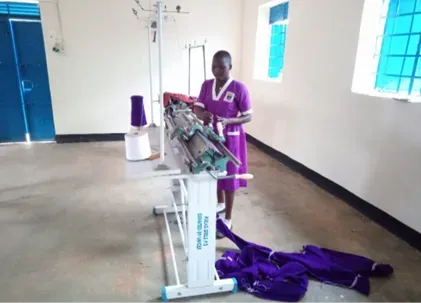
After losing her father, her family faced financial strain. Through vocational training in sewing and baking, she began earning an income, about UGX 500,000 (US$133) a month, helping to support her education and daily needs.
“This programme gave me hope and independence,” she said.
Taken together, these stories form a pattern that policymakers are now trying to understand and replicate.
Since its launch, the programme has not only reached 4,150 girls but exceeded its initial target. According to programme data shared at the event, 95 per cent of girls who completed primary school transitioned to secondary education. Among those who had dropped out, 76 per cent returned to school.
Behind those figures are thousands of individual decisions, girls staying in class, families investing in small businesses, and communities shifting expectations.
“This initiative has restored dignity, confidence, and hope,” said Sharifah Buzeki, Executive Director of Kampala Capital City Authority.
She described the programme as more than a short-term intervention. It has, she said, demonstrated how social protection can be integrated into city systems, supported by data, coordinated across services, and linked to national frameworks.
That system-level thinking is part of what reassures development partners.
The programme’s Management Information System is now integrated into the National Social Registry, allowing for better targeting and continuity. Its model has already influenced Uganda’s National Social Protection Strategy and is being extended to other regions, reaching thousands more girls.
“Investing in girls is both a moral imperative and a smart development strategy,” said Belgian Ambassador H. E Hugues Chantry.
The results, he added, are already shaping similar programmes beyond Kampala.
Vice President Jessica Alupo placed the programme within a broader national vision.
“When girls are educated, skilled, and protected, they contribute to economic growth and community transformation,” she said, linking the initiative to Uganda’s long-term development goals.
Yet even as the achievements are celebrated, the underlying message is clear.
The need has not ended.
Multidimensional child poverty remains high. Urban populations continue to grow. For many families, the same pressures that shaped these girls’ lives are still present.
“This moment is not only a conclusion,” Dr Nandy said. “It is a call to action.”
A call to expand what works. To sustain financing. To move from pilot to policy.
Back in the audience, Maria listened closely.
For her, the programme’s end is not abstract. It is immediate. School fees still need to be paid. The small business still needs to grow. The future she is working toward is still fragile.
But something has shifted.
“I stand here not just as a beneficiary, but as a voice of hope,” she said.
That may be the programme’s most lasting impact, not just the services delivered, or the numbers reached, but the change in how these girls see themselves.
The programme has closed.
The story has not.
What happens next will determine whether the gains seen here remain isolated successes, or become the foundation of something larger.
Because in the end, the value of this work will not be measured only by what was achieved over six years.
It will be measured by what continues.