On the occasion of the National Water and Sanitation Handbook launch
Remarks by Shadrack Omol, UNICEF Representative in Uganda a.i.

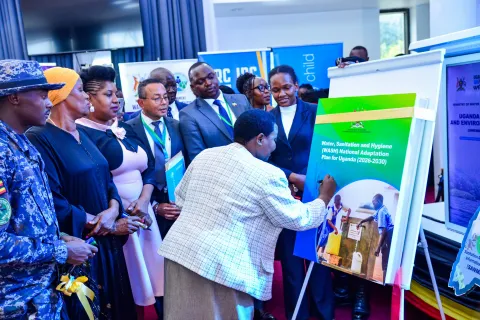
On behalf of UNICEF, I am pleased to be part of today’s launch of the National Micro-Planning Handbook for Water, Sanitation and Hygiene in Government Primary and Secondary Schools in Uganda.
UNICEF is grateful to the Ministry of Education and Sports and other development partners for organising this event, and for their leadership in developing the Handbook.
As we all know, WASH services in schools are essential for children to
- Perform well,
- Stay healthy,
- And remain in school.
And yet, schools in Uganda continue to lack the WASH infrastructure needed to support the wellbeing of learners.
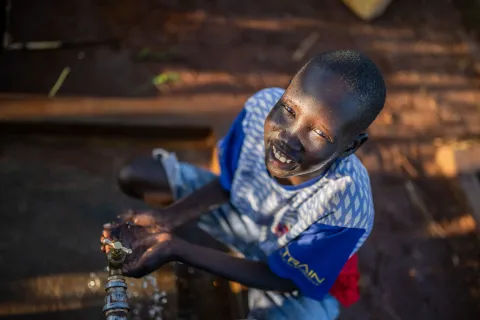
According to data from the Ministry of Education and Sports, 42% of primary schools in Uganda did not have access to water. The current pupil-to-latrine ratio in Uganda, meanwhile, continues to be almost twice as high as it should be, with an average of 71 students per latrine instead of the national target of just 40 students per latrine.
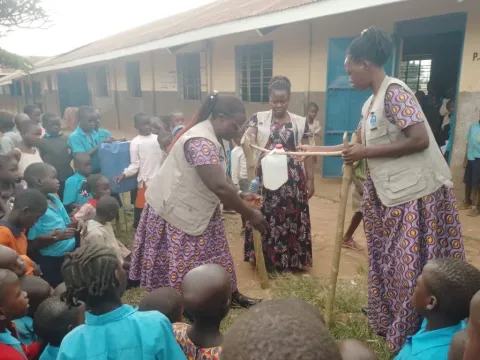
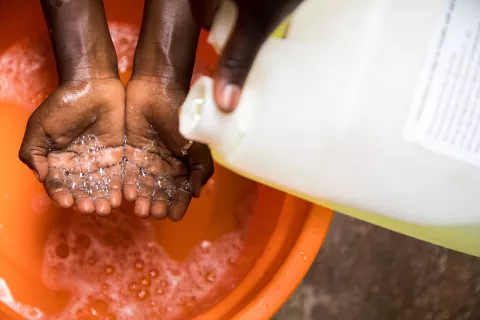
The arrival of COVID-19 has made us all acutely aware of just how central WASH services are to schools, not only in the battle against the novel coronavirus, but as the first line of defense against other preventable diseases. Some of the most effective and inexpensive ways to keep children alive and thriving include infection prevention and control, hand-washing, and basic hygiene promotion.
UNICEF is proud to partner with the Ministry of Education and Sports to help ensure that schools in Uganda are able to provide the following, in accordance with national targets:
1. 1.5 litres of safe drinking water provided every day to all learners and staff;
2. Separate latrines for girls and boys, and latrines that can accommodate children with disabilities;
3. One handwashing facility for every 40 learners, with water and soap in all school latrines;
4. Annual school budgets to operate and maintain all school WASH facilities.
Meeting these targets won’t happen overnight, but the Micro-Planning Handbook that we are launching today is an important milestone in helping us achieve these goals.
On behalf of UNICEF, I want to thank the Ministry of Education and Sports for its collaboration. I very much look forward to continuing our joint partnership to supporting water, sanitation, and hygiene in schools.
Creating healthy and safe learning environments is one of the most effective ways to support quality education for all children. Working together with other national partners, we can make that happen.
I thank you for your attention.
Media contacts
About UNICEF
UNICEF promotes the rights and wellbeing of every child, in everything we do. Together with our partners, we work in 190 countries and territories to translate that commitment into practical action, focusing special effort on reaching the most vulnerable and excluded children, to the benefit of all children, everywhere.
For more information about UNICEF and its work for children, visit www.unicef.org/uganda