The journey of girls’ empowerment in Timor-Leste
The journey of girls’ empowerment in Timor-Leste

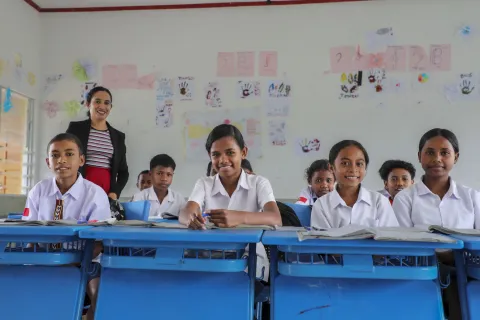
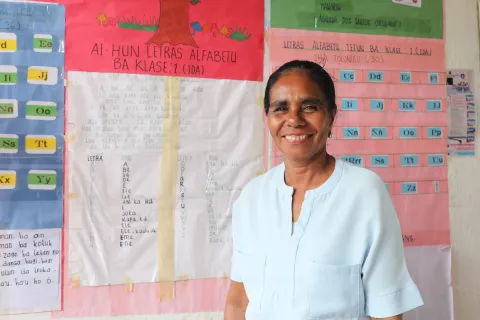
Monday, 27th January 2025 - After school, 15-year-old Maia from Ermera Municipality in Timor-Leste, rushes home, which also serves as her mother’s, thriving café. She knows that once her mother, Candida Maria, finishes attending to her lunchtime patrons, she will have sufficient time to engage in rich and powerful discussions about life with her.
“My mother is very hardworking and smart – she is my motivation and talking to her always makes me feel better,” says Maia, who has inherited a lot of her mother's values, resilience, courage and self-belief.
Today, Maia is eager to talk to her mother about the worrying trend of her friends dropping out of school. With the start of the new school year, a few of her friends did not return to school, as their families do not place much value on girls’ education.
“Many parents believe that sending a girl to school is a waste of money, because she will get married and her husband’s family is the one who will benefit from her education,” says Maia, saddened that her friends will never achieve the dreams that they had.
Sharing in Maia’s concern, Candida takes a moment to share her own struggles as a young girl who was denied the opportunity to continue her education.
“I know how your friends feel, and it is sad that we still hear these stories” says a teary Candida, moved by Maia’s words. “When I was a young girl, I dreamt of becoming a teacher, unfortunately, I could not realise that dream because I could not go to school beyond grade seven. There were no schools in our village, and the nearest school was more than 10km away.”
From that early age, Candida’s life, like many other girls in her village, revolved around helping their parents with the fieldwork and household chores such as fetching water. Opportunities were limited, and the only “aspiration” for girls was to get married, a fate Candida faced at just 17 years old.
“I was too young to get married, to be a young wife and mother, and at that time, there was no one to advise our parents that this was not right,” says Candida, who now wants better opportunities for her seven children. “I want my daughters to get married after 21 years, when they have finished school,” says Candida, who feels she is now living her dreams through her two daughters.

Maia’s admiration for her mother deepens as she realises the full extent of the adversities her mother faced. She also begins to understand that, despite the experiences of her friends, opportunities for girls are better today than during her mother’s youth.
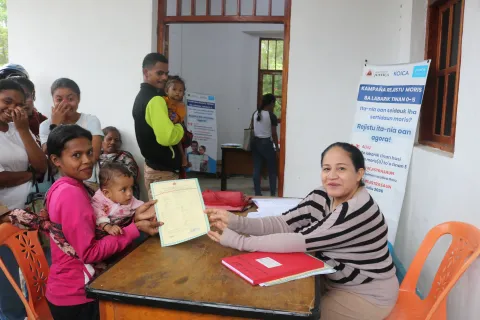
For example, Maia has been an active member of the Girls’ Empowered group, UNICEF’s community-based girls’ empowerment programme, which is implemented by a local Non-Governmental Organisation, Pradet. The programme equips adolescent girls with essential life skills, leadership abilities, and knowledge to navigate challenges, advocate for gender equality, and inspire peers.
The programme includes emotion management and reproductive health. These sessions prepare girls for changes in their body, such as menstruation, and educates them about the risk of early pregnancies, while also providing the girls with information on how to prevent them. This knowledge empowers them to make informed choices about their reproductive health.
In addition, awareness-raising activities address harmful traditional and social norms that have hindered the progress for girls. This includes helping society to accept and support pregnant and lactating young mothers.
“I am grateful that, as girls today, we have access to information and opportunities to improve our status. The transport network has improved, and it only takes me ten minutes to get to school,” says Maia.
“We also have access to technology, which helps us connect with different people from around the world, and improve our knowledge on various topics,”
Maia says she is very proud of her mother’s resilience, her strength and tenacity, which have inspired her to pursue a non-conventional profession.
“I want to join the military when I finish school because I want the world to see that girls can do any job they want.”
///Ends