Japan and UNICEF Partner to Strengthen Public Health and Community Resilience in Kigoma, Tanzania
Building a safer future

Dar es Salaam, 18 September 2025 - As part of its continued support toward strengthening Tanzania’s public health resilience, the Government of Japan has allocated US$450,000 to support UNICEF Tanzania’s work in preventing and responding to public health emergencies in the Kigoma Region. This funding is part of a broader US$39.1 million contribution by Japan to 29 countries.
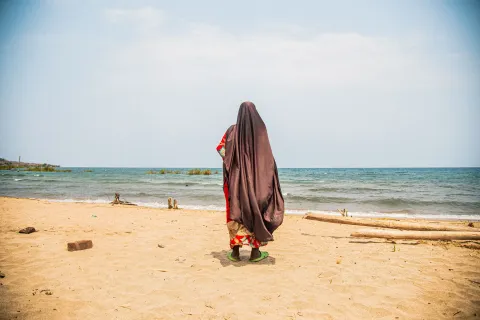
Kigoma Region, located in the western part of Tanzania, is frequently affected by public health emergencies, particularly disease outbreaks such as cholera and measles. Its geographic location along international borders further contributes to increased vulnerability to cross-border disease transmission.
Visiting Nyarugusu refugee camp in Kigoma today, Mr Jin Hashimoto, Head of Economic and Development Cooperation of the Embassy of Japan in Tanzania, witnessed how Japan’s support through UNICEF is providing essential supplies to strengthen public health among vulnerable populations in refugee camps, particularly in the context of potential health emergencies.
“During my visit to the refugee camps in Kigoma, I witnessed firsthand how access to water, sanitation, and hygiene is essential for safeguarding public health and the dignity of refugees. I sincerely commend our longstanding partner, UNICEF, for its pivotal role in averting public health crises and making a profound difference in the lives of many,” said Mr Hashimoto. “The Government of Japan remains firmly committed to providing protection and assistance to refugees in need, promoting better living conditions and building resilience.”
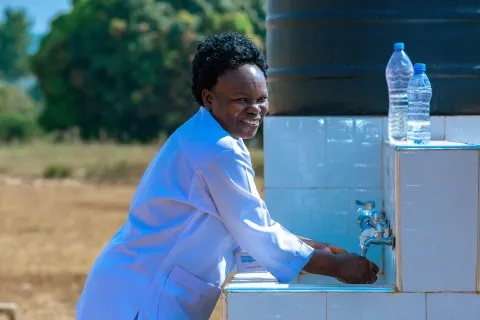
During the visit, Mr. Hashimoto observed the distribution of water, sanitation and hygiene supplies—including buckets, bar soaps, children's potties and dignity kits—and interacted with community members to learn how these supplies are helping address sanitation and hygiene challenges.

He also met with Good Parenting Champions (GPCs) from the Hondohondo programme, which promotes responsible parenting and family care. Initiated in 2021 with support from the Government of Japan, Hondohondo, named after the Kiswahili word for the hornbill bird, links positive parenting with the uptake of COVID-19 vaccination. To date, the programme has reached over five million people, including refugees and host communities in Kigoma and surrounding regions.
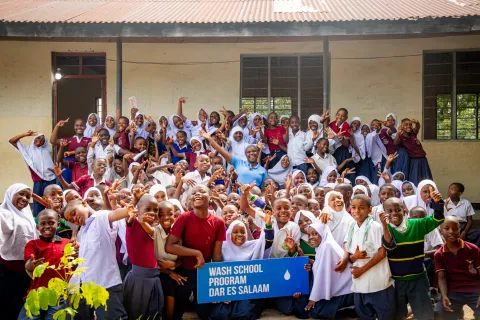
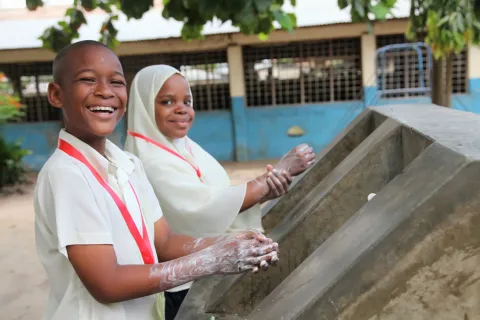
In addition, Mr. Hashimoto visited Sifa Primary School and the site where a block of ventilated improved pit (VIP) latrines and handwashing facilities are being rehabilitated with Japan’s support. The school is among four in the camps that is benefitting from this programme.
The one-year programme focuses on sustaining infection prevention and control (IPC) measures and strengthening risk communication and community engagement (RCCE) in refugee camps and host communities in Kasulu and Kibondo districts, in Kigoma Region, through:
- Increased public awareness on public health emergencies such as cholera transmission and other infectious diseases while promoting preventive measures.
- Procurement and distribution of multi-sector emergency supplies to ensure timely response.
- Strengthening the capacity of the healthcare workers and community health workers to plan, manage, implement, monitor and scale up gender sensitive and equity-focused WASH-related activities; and
- Increased sanitation coverage in schools within the refugee camps.
The programme will directly benefit over 254,000 people, including 80,000 children, and additionally reach166,000 individuals, among them 76,000 children. Beyond addressing immediate health needs, the initiative contributes to long-term improvements by strengthening community resilience and reinforcing public health systems in the region.
“We are grateful to the Government and the people of Japan for their generous continued support, which enables us to deliver critical services where they are needed most. This partnership reflects our shared commitment to advancing children’s rights and improving their well-being,” said Elke Wisch, UNICEF Representative to Tanzania. “UNICEF, together with the Government, development partners, civil society organizations and communities, will work to ensure no child is left behind.”
The programme is being implemented by UNICEF Tanzania in collaboration with civil society organizations (CSOs), Kasulu District Council and other UN agencies with overall support from the Government of Tanzania.
This initiative aligns with Tanzania’s efforts to accelerate progress toward the Sustainable Development Goals (SDGs), particularly those related to health, gender equality, clean water, climate action, and building strong institutions.
Media contacts
About UNICEF
UNICEF promotes the rights and wellbeing of every child, in everything we do. Together with our partners, we work in 190 countries and territories to translate that commitment into practical action, focusing special effort on reaching the most vulnerable and excluded children, to the benefit of all children, everywhere.
For more information about UNICEF Tanzania and its work for children, visit www.unicef.org/tanzania.