

Sumaya dreams of space
“What if I make it?”

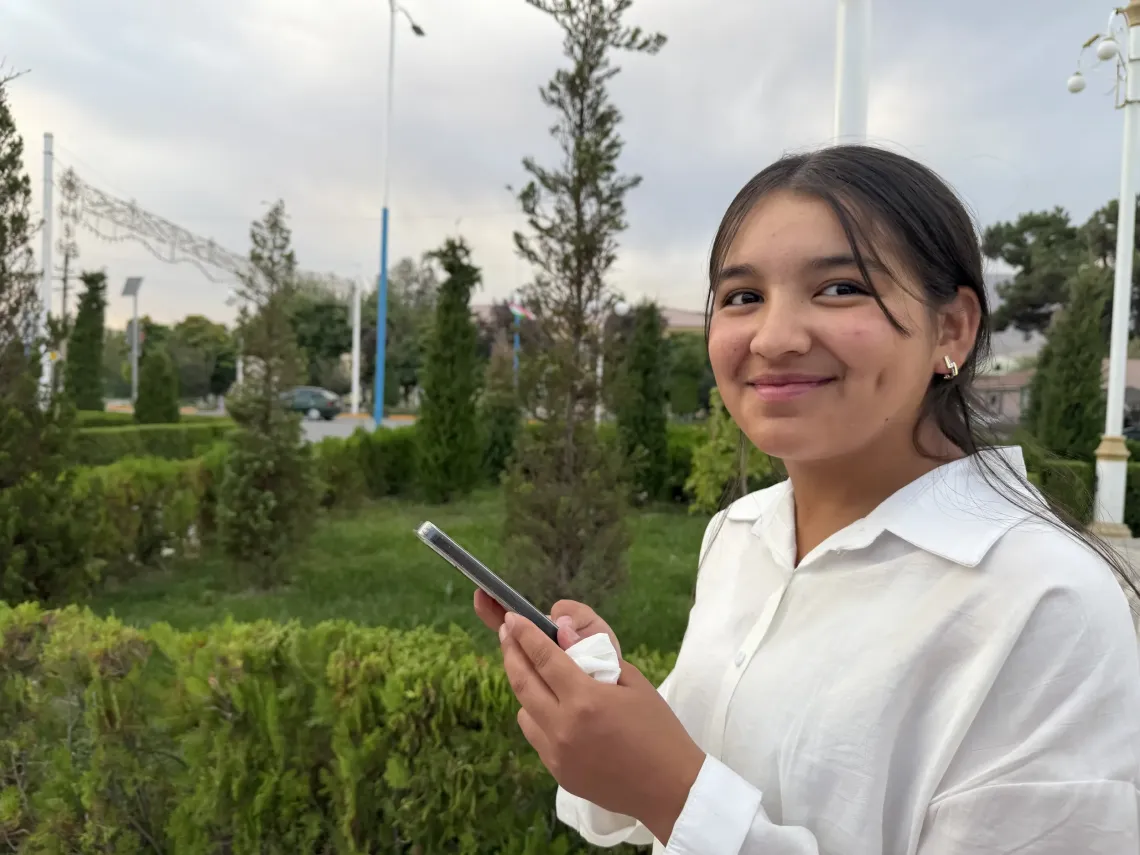
Sumaya, a 15-year-old schoolgirl from northern Tajikistan, dreams of one day flying into space. She lives an ordinary rural life with her mother and sister in Panjakent, a city in a mountainous area 230 km north of Dushanbe, with no local opportunities to study astrophysics. Yet, every morning she wakes up motivated to do well in school as her ultimate lifeline toward achieving her dreams.
“I look at the sky, and space makes me think about how huge our world is and how much there is that we still don’t know. There are so many questions that scientists have not yet found answers to. I want to become an astronaut and find the answers to these questions,” she says.
Sumaya has a long way to go to reach her dream. Her passion for astronomy and determination to become an astronaut are not common in her city, not least because of the gender stereotypes she has yet to overcome.
“My mom supports everything I do. She says, ‘Don’t look at others. Do as you aspire to,’” Sumaya says with a smile. “My friends, to be honest, don’t support me. They think it is impossible.” Her smile fades a little as she continues.

UNICEF/Tajikistan/Shukrona Mirzoeva
UNICEF/Tajikistan/Shukrona Mirzoeva
“I want to try. What if I make it?” she says, looking up at the stars.
The lack of support is not surprising. In Tajikistan, girls continue to face social expectations that can limit their educational and career choices. Many leave education earlier than boys or are encouraged to prioritize marriage and family responsibilities over professional aspirations. As a result, girls remain underrepresented in higher education and STEM-related fields, narrowing opportunities both for themselves and for the country's future growth.
Women make up the majority of Tajikistan’s population, with a ratio of 10 women to every 9.7 men. This ratio, however, does not translate into equal participation in economic or academic life. Women account for 77 per cent of the total Not in Education, Employment, or Training (NEET) population. Overall, women are significantly underrepresented in the paid workforce, while economically active women earn only 60 per cent of what men earn on average. More than half of all women in Tajikistan are engaged in unpaid labour, thus foregoing opportunities for education and career development.
A recent study conducted by UN agencies and the Strategic Research Center under the President of Tajikistan has shown that this path is particularly predictable for girls who marry before the age of 18.

The number of child marriages in Tajikistan is steadily declining. Yet, despite government efforts, such as establishing the minimum legal age for marriage at 18 and enforcing compulsory school education, more than 3,800 girls a year become child brides due to weak enforcement of marriage registration requirements and existing legal loopholes.
The report on child marriage shows a strong and consistent correlation between early marriage and lower levels of education and income among women. Moreover, the study finds a significantly higher risk of stunting among children born to women who married early, regardless of the economic well-being of the family. This costs the country more than US$19 million in potential economic returns every year.
The findings of the study provide reasons for both optimism and action. They show that most parents and caregivers in Tajikistan recognize some of the negative consequences of early marriage and believe it should end. Yet many still see marriage as one of the best alternatives available to girls when other opportunities are limited.
This indicates that there is a need for a clear pathway that offers girls meaningful alternatives through quality education, skills development, health and protection services, and pathways to decent work and economic participation. With these opportunities in place, it will not take long for young girls like Sumaya to fill the economic space with their aspirations.
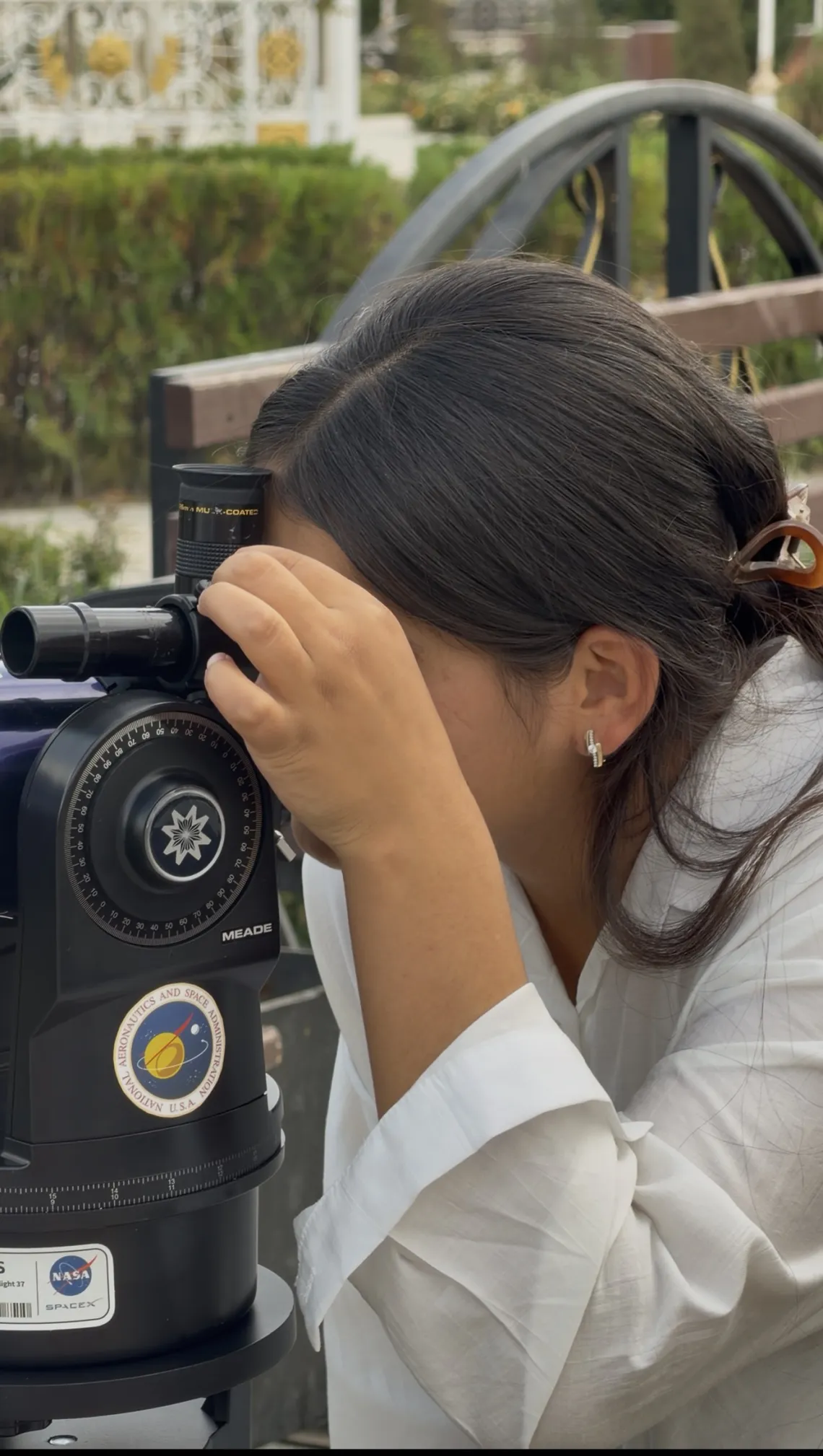
Sumaya is only beginning her journey, but today she came one little step closer to her dream. Being vocal about her unusual dream has gained attention and a Tajik blogger specializing in Astrophysics came to Penjikent with his telescope. Parviz Orzu, a young aspiring scientist, has a different dream: He wants to tour the country to share his love for science and to promote academic path to students. For Sumaya it was the first time to see through a telescope, experiencing the view of the moon like she never has before.
She understands that reaching space requires knowledge, hard work, determination, and, at times, resources that are currently beyond her reach. Yet she uses every resource available to her. In school, she keeps her focus on studying physics, mathematics, and English, all subjects she believes will help her carve out her dream path.
Her plan is to prepare for further education in either Russia or the United States, countries that could give her the opportunity to pursue an advanced degree in astronomy. She does not yet know if she will succeed, but she is determined to try.

