National Trainers Prepared in Dushanbe to Support Rollout of an Innovative Integrated Social and Health Service Delivery Model for Vulnerable Families

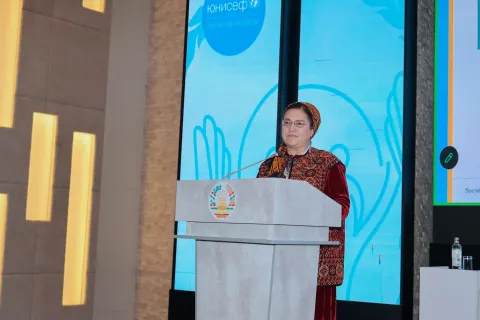
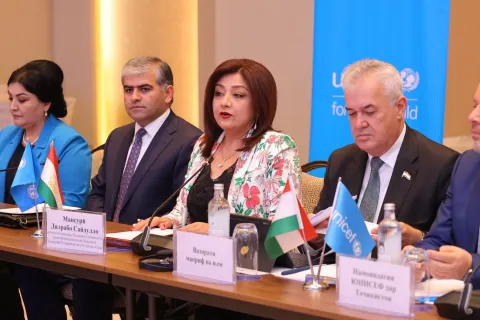
DUSHANBE, 17 July 2026 — A five-day Training of Trainers (ToT) on piloting the Integrated Case Management (ICM) model for delivering integrated social and health services concluded today at the Serena Hotel in Dushanbe. The training was organized by the Project Implementation Unit for the Social Protection Modernization and Economic Inclusion Project, with the support of the World Bank and UNICEF, in close partnership with the Government of the Republic of Tajikistan.
The Integrated Case Management model brings social and health services together through a one-stop service approach, meaning that vulnerable families no longer need to navigate multiple institutions or repeatedly explain their circumstances. Instead, a dedicated case manager conducts a comprehensive assessment of the family's needs, develops an individualized support plan, coordinates services across the social protection and health sectors, and supports the family until sustainable outcomes are achieved.
In addition to receiving targeted social assistance benefits, vulnerable households receive holistic case management. The case manager assesses the full range of household needs—from social protection to health care—and coordinates the support required to help families overcome difficult circumstances.
"This represents an important milestone in the reform of Tajikistan's social protection system. We are moving from a passive system of benefit distribution to proactive, comprehensive support tailored to the needs of every vulnerable family," said Hayotzoda Nurkhon Sharifovich, Project Manager.
The primary objective of the initiative is to establish a national pool of Integrated Case Management trainers who will subsequently train social workers, supervisors, case managers and primary health care professionals. This will enable the integrated model to be scaled up nationwide while improving the quality and effectiveness of services for those who need them most.
The new approach not only addresses existing social and health challenges and strengthens the protection of children's rights, but also represents one of the most effective investments in the country's human capital.
"Every child and every vulnerable family has the right to timely, professional support. A child's well-being is inseparable from the well-being of their family and, for vulnerable families, depends on how effectively social, health and other public services work together. When professionals coordinate their efforts, they can identify risks earlier, provide timely assistance, and support families until sustainable outcomes are achieved," said Tinatini Tsertsvadze, Chief of Child Protection at UNICEF in Tajikistan.
During the five-day training (13–17 July), participants studied international case management standards, family needs assessment methodologies, intersectoral coordination mechanisms, and professional ethics. Particular emphasis was placed on practical skills for coordinating social and health services, managing complex cases, and supporting families with multiple needs.
The pilot programme will be implemented in selected cities and districts across Tajikistan. Lessons learned from the pilot will inform the country's broader strategy for modernizing the social protection system. The results will generate the evidence needed to support the future scale-up of the integrated model and the continued modernization of social protection and social services nationwide.
"The Ministry places the modernization of the social sector among its highest priorities. Integrating social services with primary health care services is a critical step forward," said Habibullo Khayrullozoda, Deputy Minister of Health and Social Protection of the Republic of Tajikistan.
"Today, we are laying the foundation for a fundamentally new approach to targeted support—one that places people and their individual needs at the centre of the system. Preparing a cadre of national trainers will ensure the sustainability of this reform and enable its successful expansion across the country," he added.
For more information, please contact: Rukhshona Nazhmidinova Chief of Communications, UNICEF Tajikistan by Email: [email protected]
Media contacts
About UNICEF
UNICEF promotes the rights and wellbeing of every child, in everything we do. Together with our partners, we work in 190 countries and territories to translate that commitment into practical action, focusing special effort on reaching the most vulnerable and excluded children, to the benefit of all children, everywhere. UNICEF operates in Tajikistan since 1993.
To receive more information about UNICEF and our work in Tajikistan, please visit https://www.unicef.org/tajikistan/
Follow UNICEF on Facebook, Instagram and Twitter